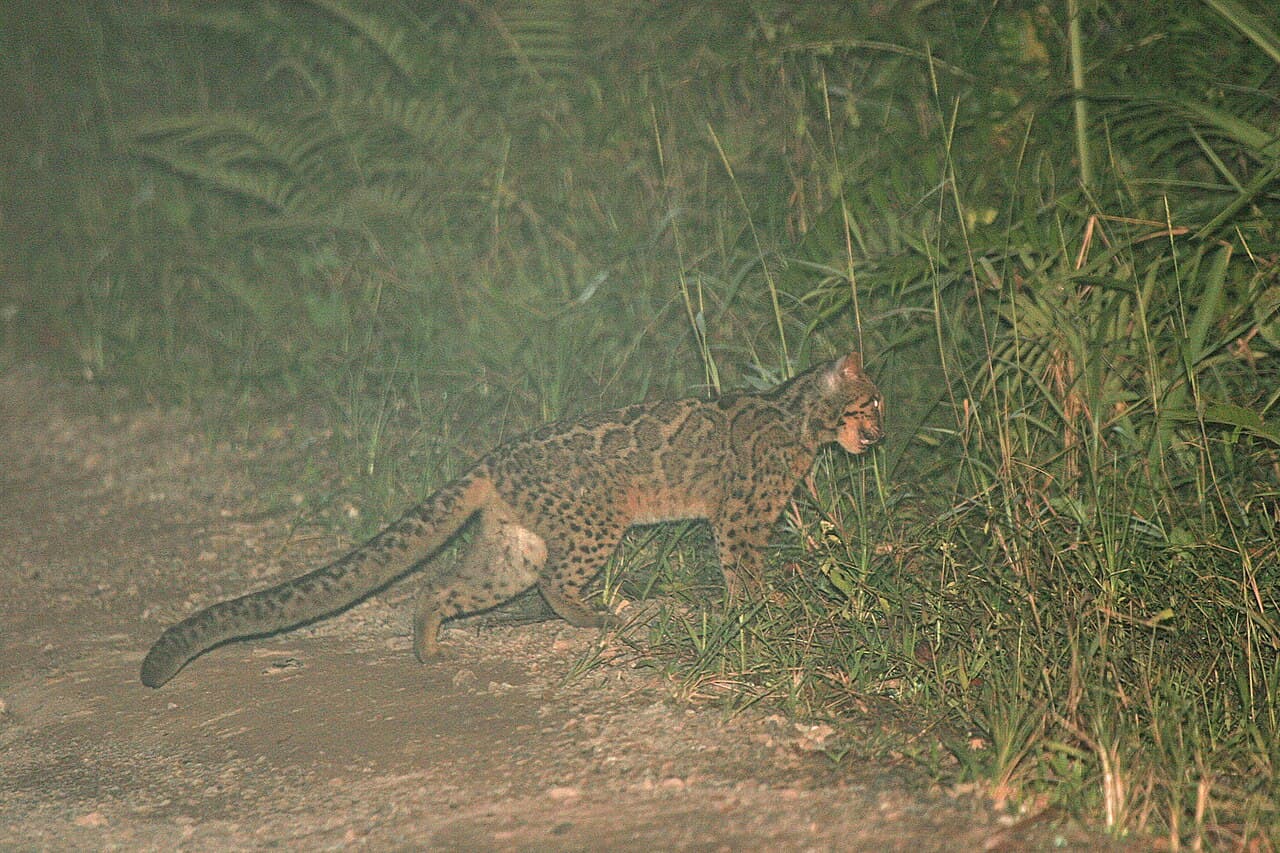
A marbled cat's tail can be almost as long as its head and body combined. Behind a small feline with cloud-like markings, it stretches out like a balancing pole.
Pardofelis marmorata resembles a clouded leopard in pattern, but it is a separate, much smaller cat.
A coat that looks familiar
The IUCN Cat Specialist Group profile describes irregular blotches outlined in dark fur, a rounded head, and rounded ears.
Genetic research places it closer to the Asian golden cat and bay cat than the resemblance to a clouded leopard might suggest.
A pattern is a useful clue, but it is not a complete family tree.
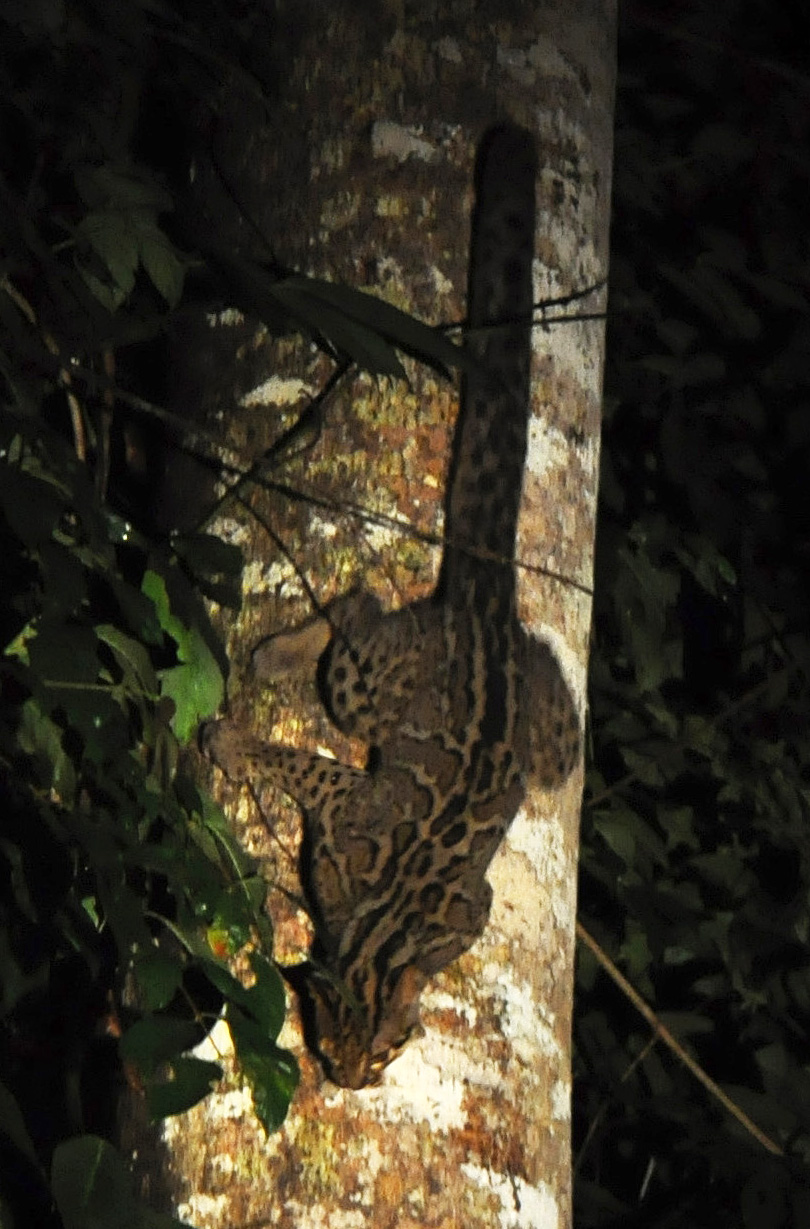
A tail suited to the trees
Short legs, broad feet, and a long tail suggest strong climbing adaptations. The cat also appears in ground-level camera-trap photographs.
Neither view cancels the other. A forest animal can use different levels of its habitat during the same life.
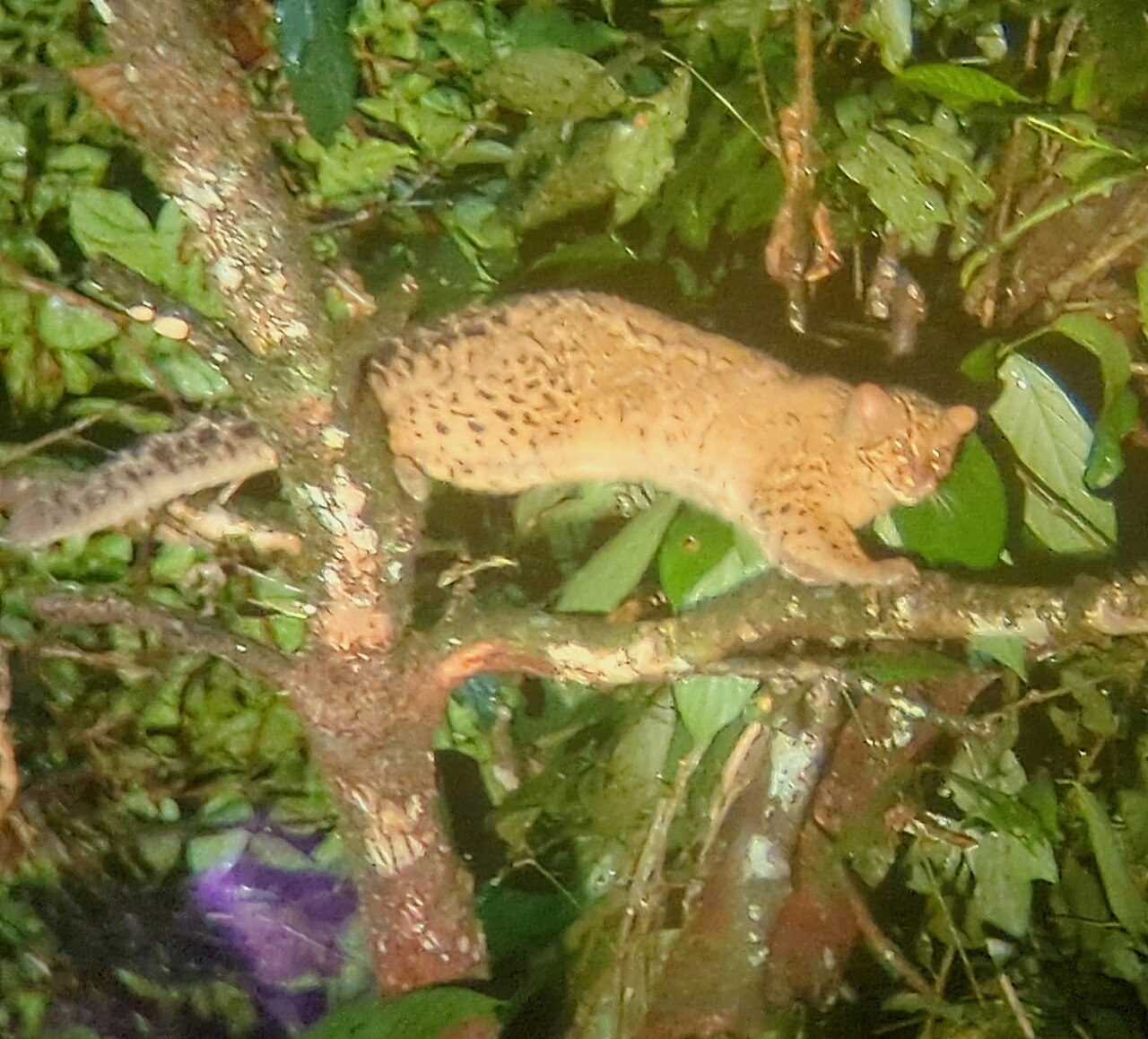
An elusive resident needs real protection
Marbled cats inhabit parts of South and Southeast Asia. Forest loss and hunting create pressures, while many details of their numbers and behavior remain uncertain.
A scarce photograph does not provide an exact population count. Research and habitat protection need to move together.
The marbled cat invites us to look beyond the best-known big cats. One small forest resident holds a remarkable combination of pattern, proportion, and unanswered questions.
Photo credits
Featured image: Pardofelis marmorata - James Eaton - 339015539.jpeg — James Eaton; CC0.

Body image 1: Marbled cat borneo.jpg — Johan Embréus ( Embreus ( talk )); CC BY 3.0.

Body image 2: Pardofelis marmorata 300280177.jpg — Harsha Jayaramaiah; CC BY 4.0.

Photographs resized for web display where available.