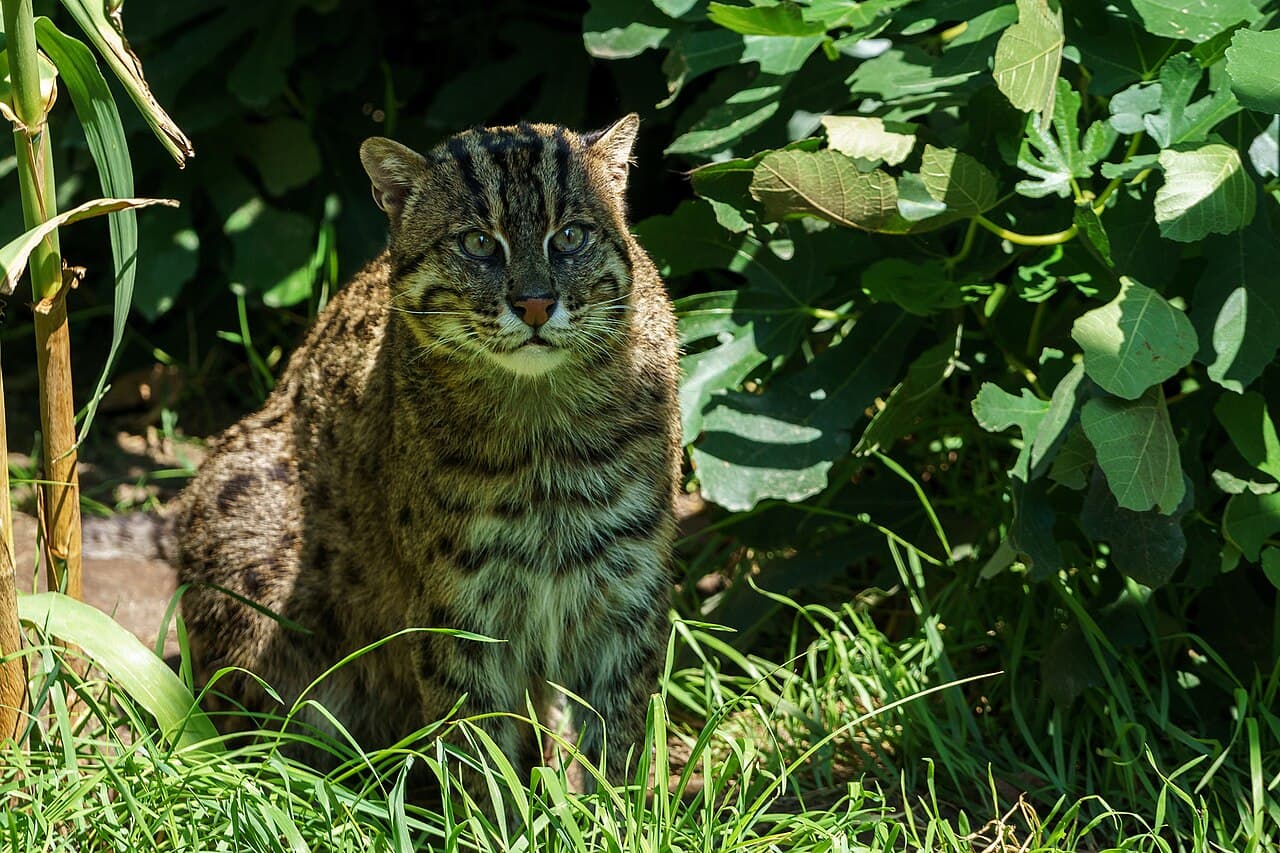
A fishing cat searches where many people would expect a cat to hesitate: at the water's edge. Fish are an important part of its menu, making a healthy wetland part of a wild feline's home.
Prionailurus viverrinus is a stocky, spotted cat with a broad head and a relatively short tail.
More than a name
The IUCN Cat Specialist Group account describes hunting in shallow water, with the front feet available to seize prey.
The species occurs in parts of South and Southeast Asia, including Sri Lanka. Fish matter, but they are not its only possible food.
A wetland contains changing water levels, vegetation, prey, and hiding places. Hunting there means working within that shifting setting.
A common claim needs care
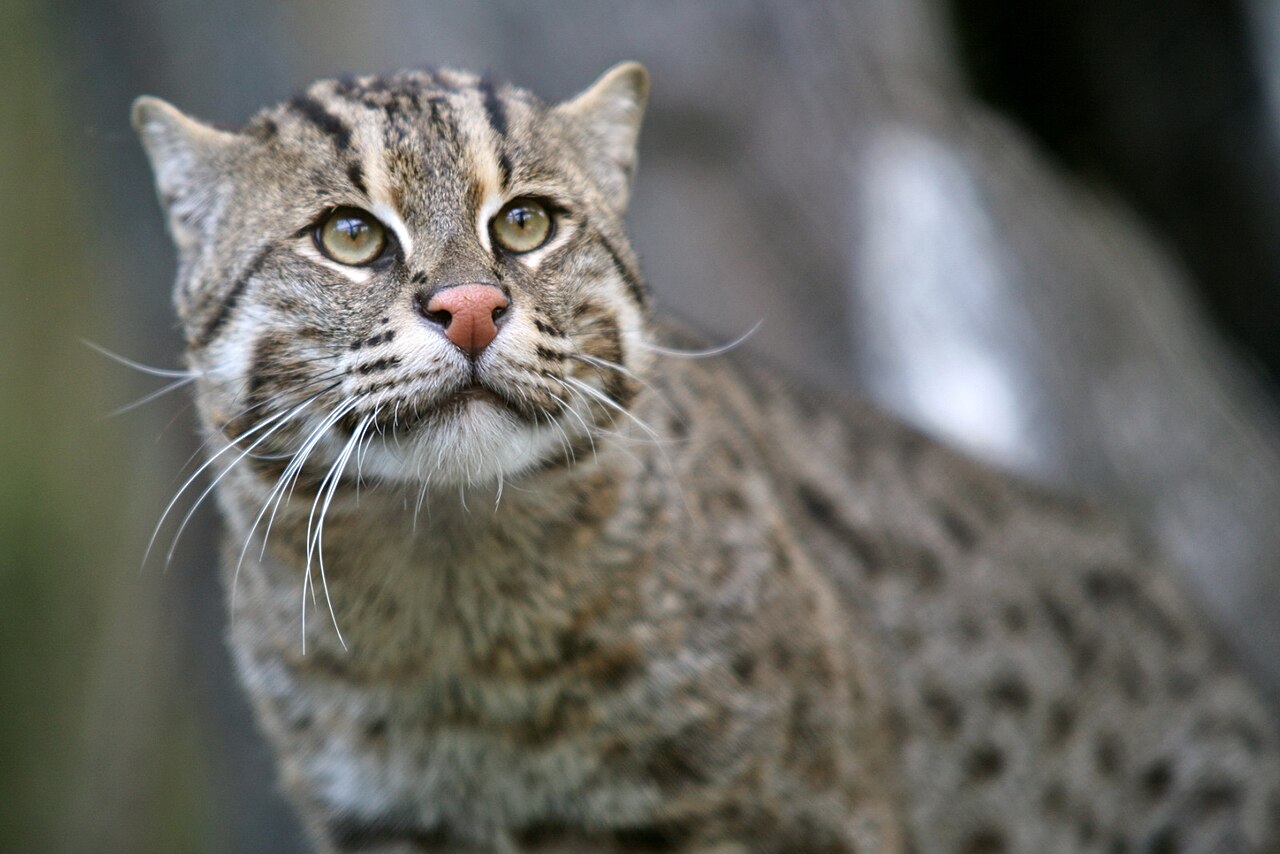
Fishing cats have some webbing between their toes, but it is often exaggerated in popular descriptions.
The specialist account notes that the webbing is not dramatically developed compared with some other cats. Behavior can be impressive without giving the animal imaginary equipment.
A cat's future follows the water
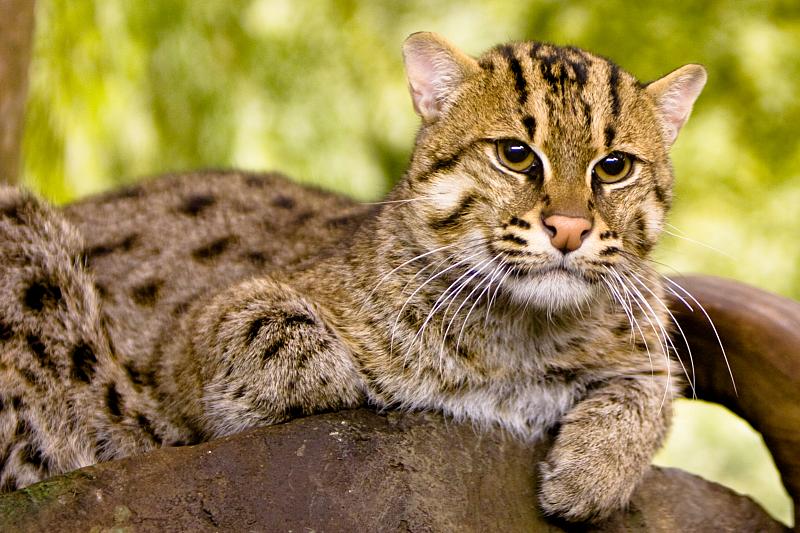
Wetland drainage, habitat degradation, and conflict with people threaten fishing cats.
A patch of marsh is more than unused land. It supports prey and shelter for a predator whose life connects the bank with the water.
Protecting wetlands can therefore protect a cat at the same time.
The fishing cat broadens our picture of feline life. Watch the reeds and shallow edges: the next hunter there may be wearing spots rather than feathers.
Photo credits
Featured image: Fishing Cat (120780371).jpeg — Matthias; CC BY 3.0.

Body image 1: Fishing Cat (Prionailurus viverrinus) 3.jpg — Cliff; CC BY 2.0.

Body image 2: Prionailurus viverrinus 01.jpg — Kelinahandbasket; CC BY 2.0.

Photographs resized for web display where available.