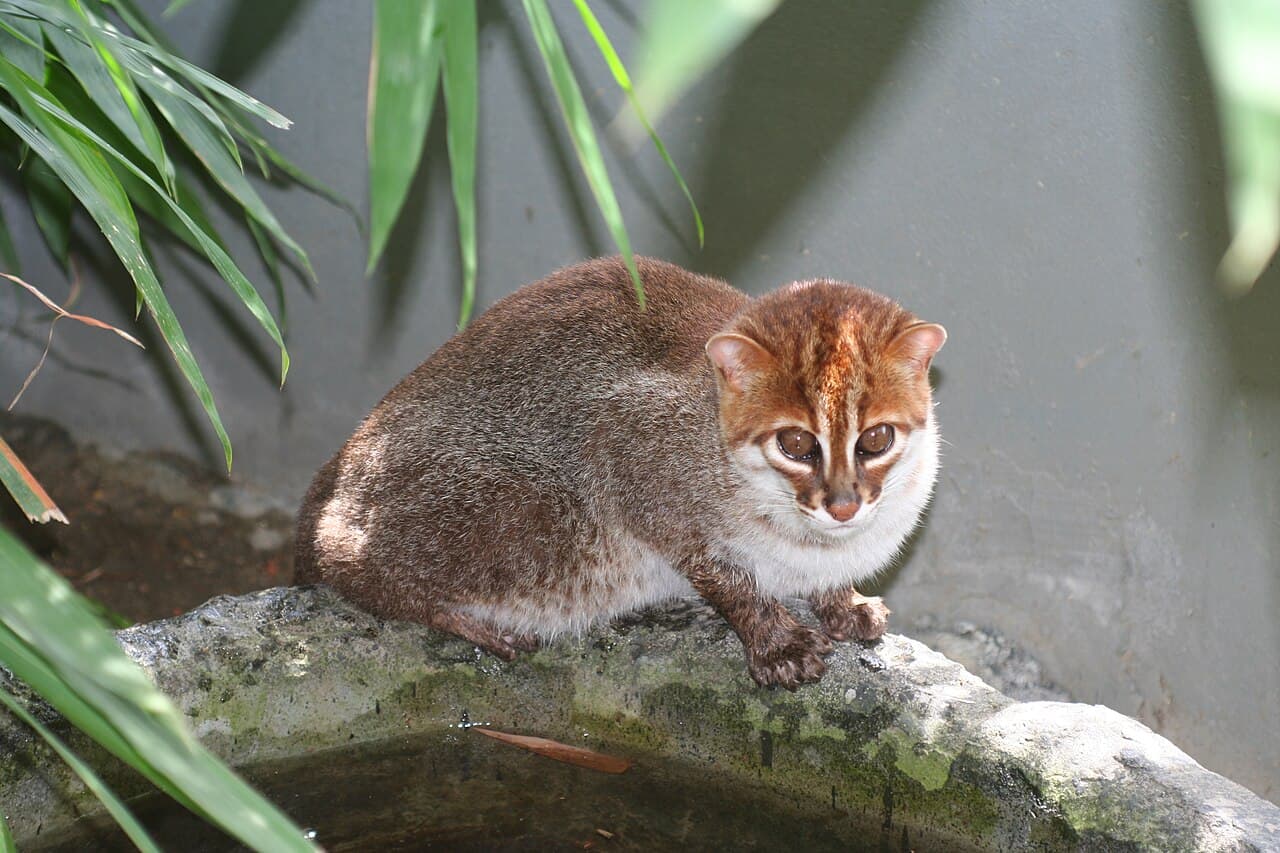
The flat-headed cat has a long, low head and teeth suited to gripping slippery prey. Its unusual profile introduces one of Southeast Asia's least familiar wild cats.
Prionailurus planiceps is small, brownish, and closely associated with water. It belongs to the same genus as the fishing cat, but has a different appearance.
A face shaped for a different meal
The IUCN Cat Specialist Group profile describes sharp teeth and relatively extensive webbing between the toes.
Fish and frogs are thought to be important prey. Captive observations provide some feeding details, but much of the animal's wild behavior is still poorly known.
Its flattened forehead gives the species a name; its relationship with wetlands gives it a way of life.
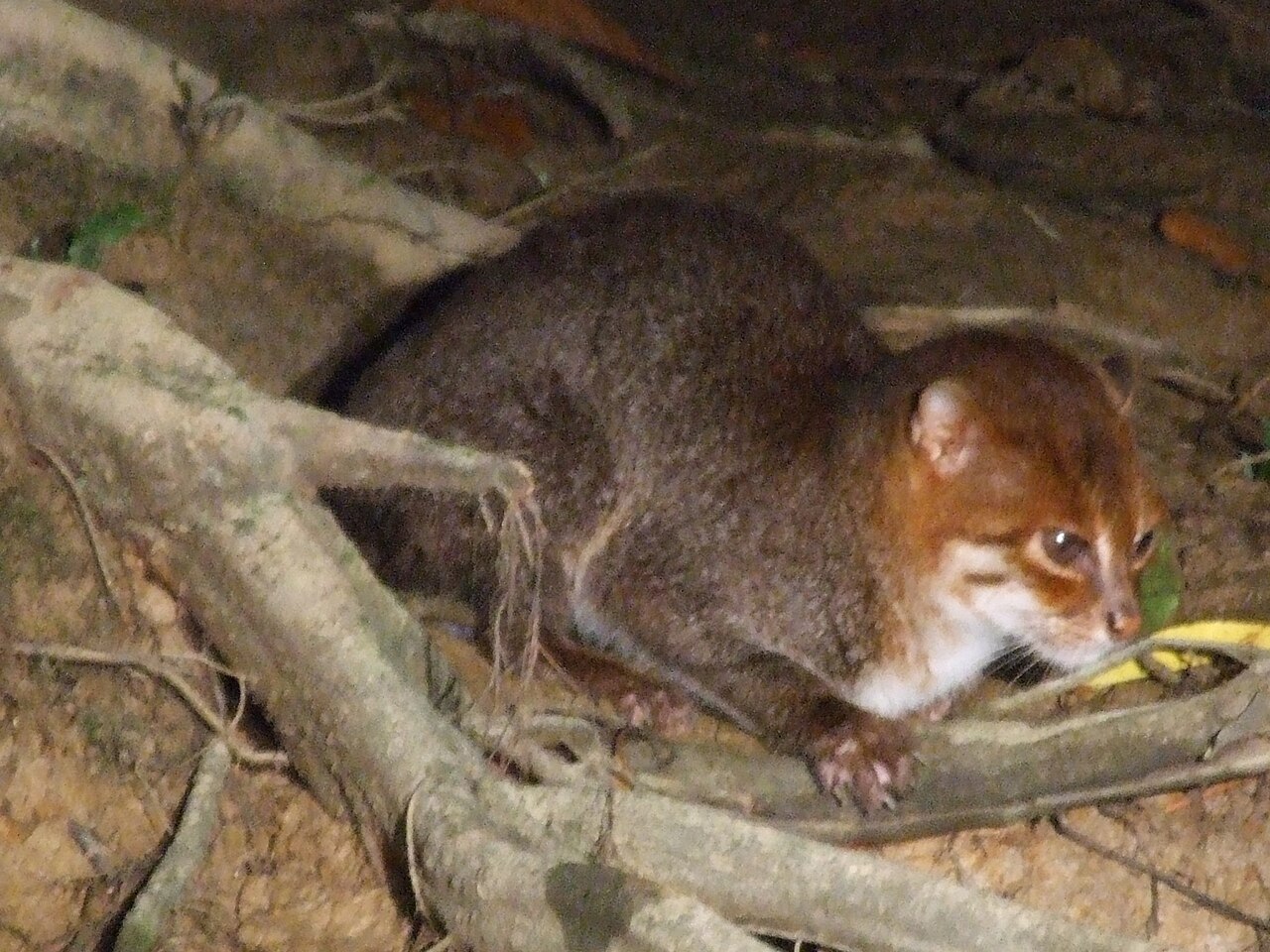
Rivers, swamps, and lowland forest
The species is native to the Sunda region, including Borneo, Sumatra, and the Malay Peninsula.
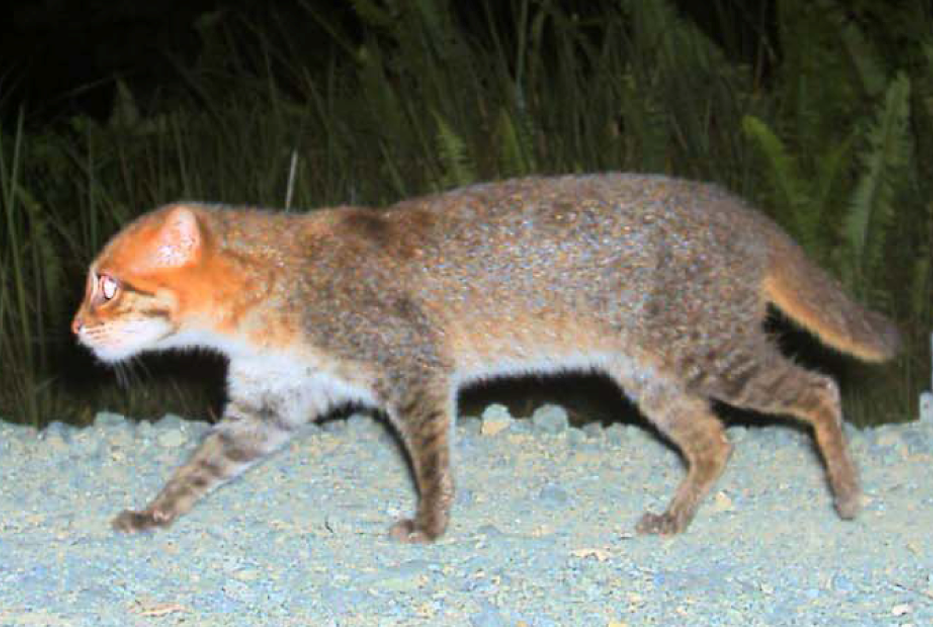
Many records come from low areas near water. Camera traps help reveal an animal that is difficult to watch directly.
A camera-trap image may be less polished than a portrait, yet it can contain valuable evidence of a living cat in its habitat.
Protect the setting, not only the silhouette
The specialist group lists the species as endangered. Loss and degradation of lowland wetland habitat are major concerns.
Keeping river margins, swamp forests, and nearby cover intact preserves more than a rare face.
The flat-headed cat reminds us how incomplete our picture of familiar animal groups can be. Even among cats, a small wetland specialist can hold a world of unanswered questions.
Photo credits
Featured image: Flat-headed cat 1 Jim Sanderson.JPG — Jim Sanderson; CC BY-SA 3.0.

Body image 1: Prionailurus planiceps 121002450.jpg — Thibaud Aronson; CC BY-SA 4.0.

Body image 2: Prionailurus planiceps cropped.png — Prionailurus planiceps.png : Andreas Wilting et al. derivative work: Toter Alter Mann ( talk ); CC BY-SA 2.5.

Photographs resized for web display where available. The camera-trap photograph is a credited crop.