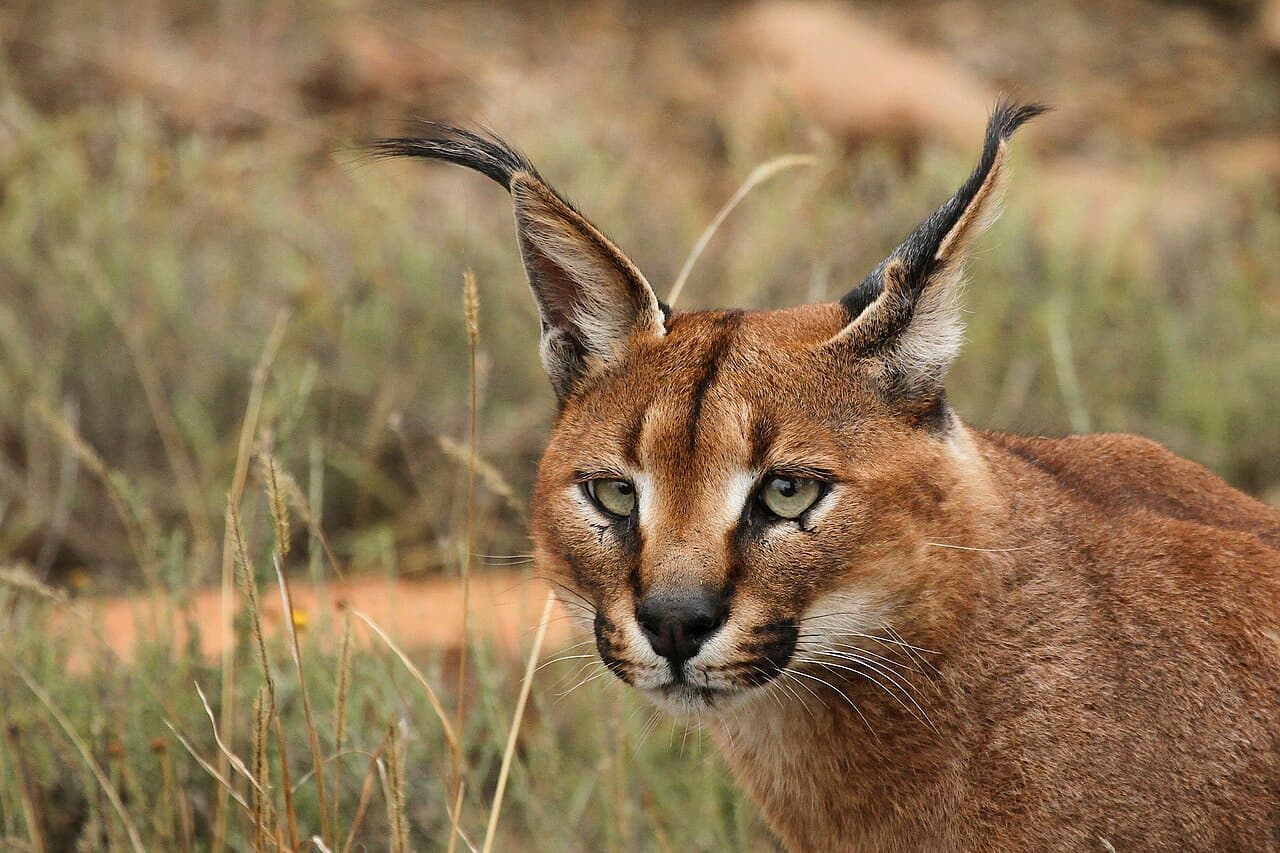
A caracal can launch upward to catch a bird, turning a quiet stalk into a sudden leap. Long black tufts at the tips of its ears make the silhouette instantly recognizable.
Caracal caracal is a wild cat of Africa and parts of Asia. Its plain tawny coat contrasts with those striking ears.
More than decorative ears
The San Diego Zoo caracal guide describes mobile ears that help the animal listen and communicate.
The tufts draw our eyes, but they should not be given one certain purpose simply because they look dramatic.
A cat's pose, gaze, and ear position can change the whole impression of a portrait.
A hunter with several options
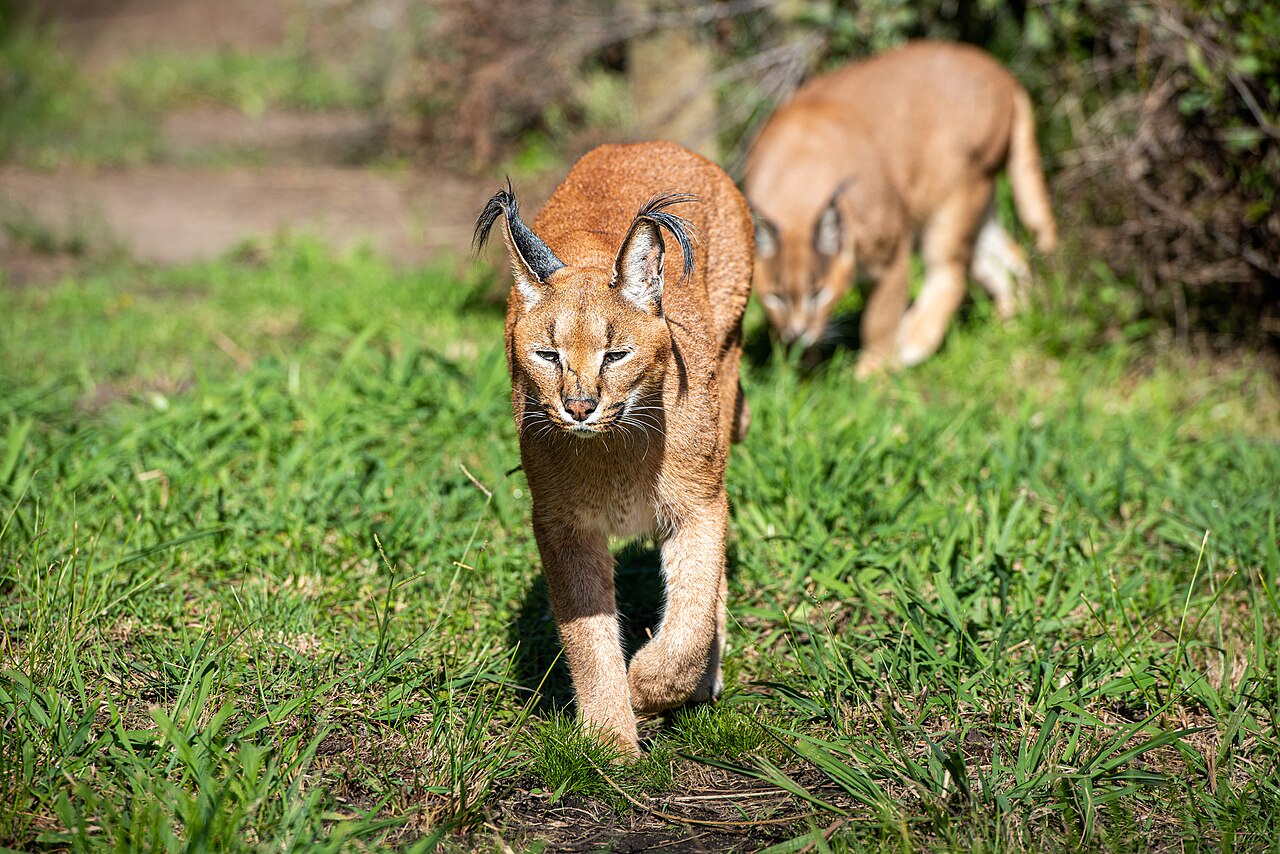
Strong hind legs support powerful jumping. Birds can be caught in the air, while other prey is taken on the ground.
Caracals also hunt mammals. They are skilled carnivores rather than specialists that live only by making spectacular leaps.
Much of successful hunting happens before the jump: listening, approaching, and choosing a moment.
Leave room for a wild feline
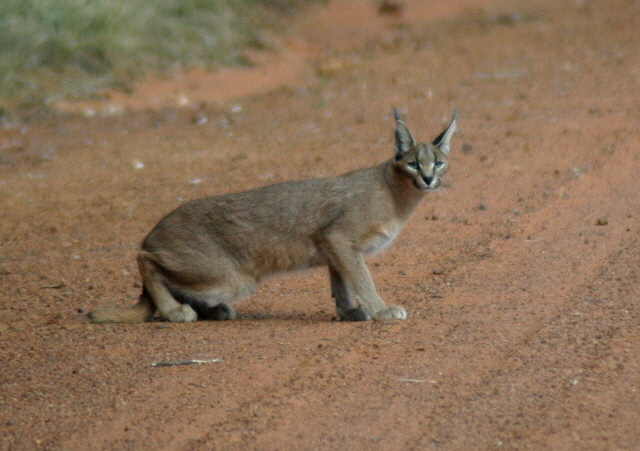
Caracals occupy a variety of habitats. Conflict can arise where predators and livestock share land.
Natural habitat and practical coexistence matter more to a caracal than its popularity in photographs.
A portrait becomes a moving animal
The ear tufts make a memorable still image. Imagine the same cat listening, lowering its body, and springing into the air.
The caracal's beauty is linked to action: a precise combination of patience, strength, and a body built to respond.
Photo credits
Featured image: Caracal Caracal-001.jpg — Leo za1; CC BY-SA 3.0.

Body image 1: Caracal caracal 289309438.jpg — Dirk Froebel; CC BY 4.0.

Body image 2: Caracal caracal 175387938.jpg — Kelly Abram; CC BY 4.0.

Photographs resized for web display where available.