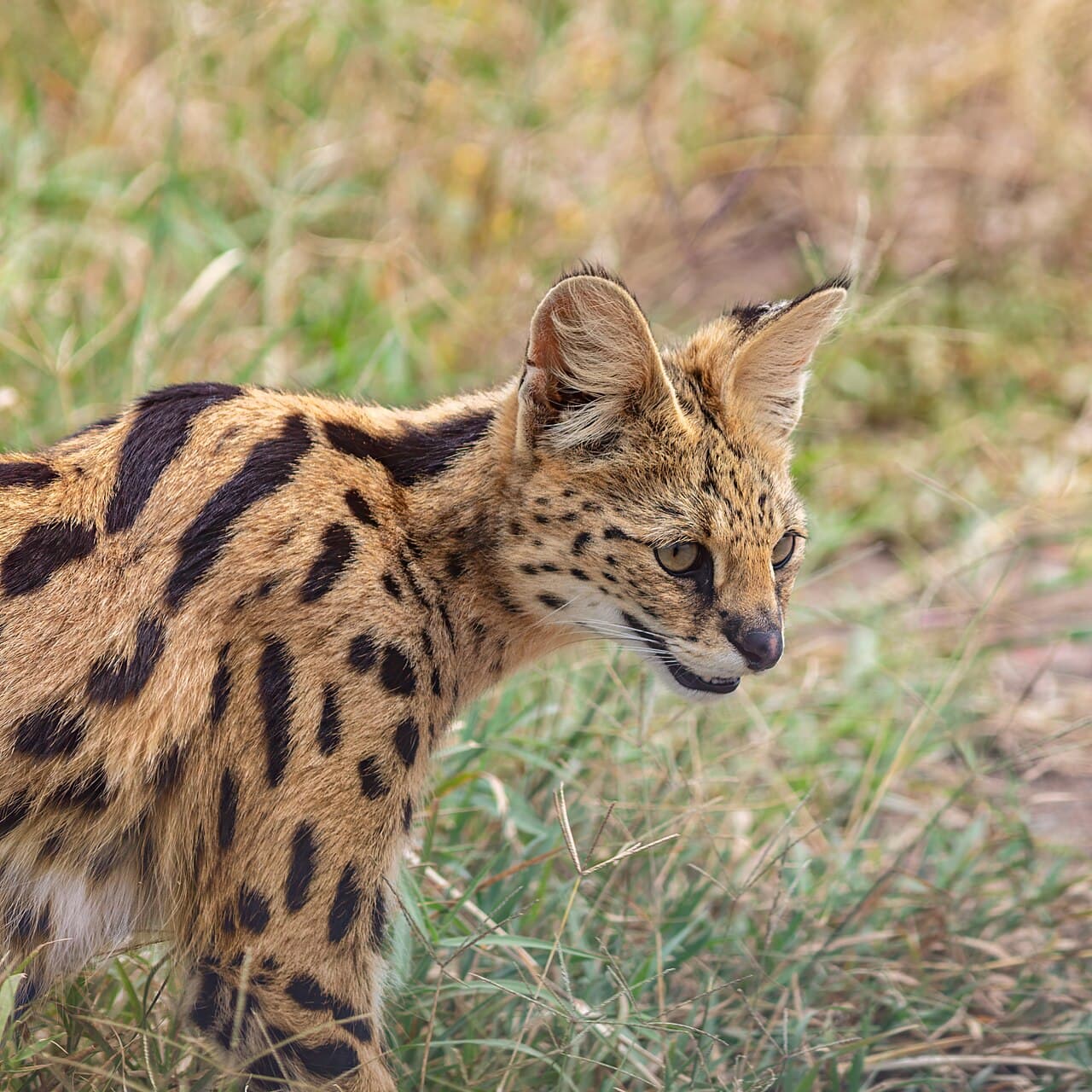
A serval may pause above tall grass, listen, and then pounce onto prey it could not easily see. Its oversized ears and long legs are part of the same hunting story.
Leptailurus serval is an African wild cat with spots, stripes, a small head, and a short tail.
Built to look over grass
The San Diego Zoo serval account explains how its proportions suit a life searching for small animals in vegetation.
The long legs lift its body above low cover. The large ears help detect movement hidden below.
A portrait can make the ears look almost playful. In use, they are serious tools.
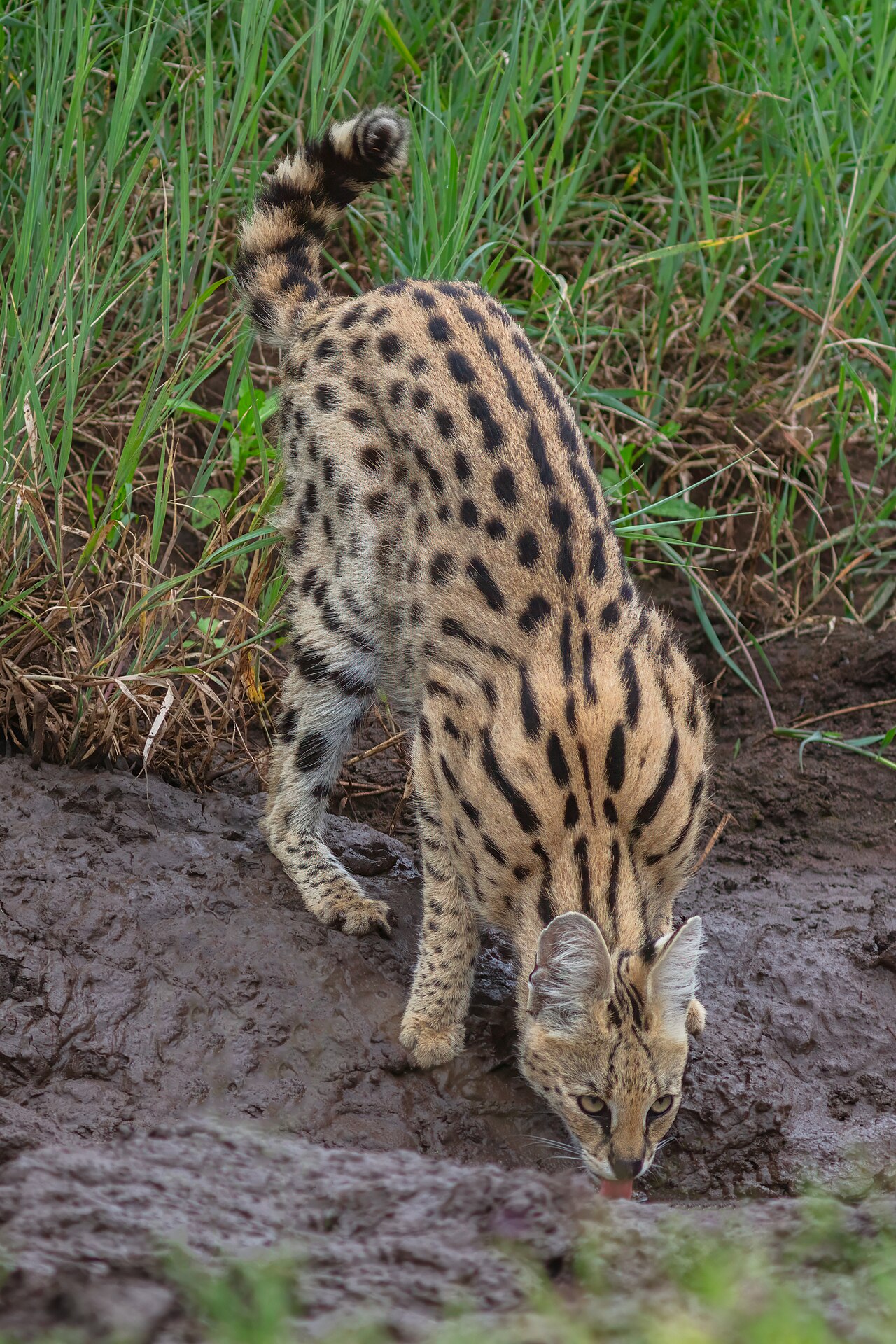
Small prey, careful timing
Rodents are important food. Servals also take other small animals and can catch birds.
A hunting pounce ends a sequence of listening and positioning. The leap matters because it follows good information.
Grassland and wetland vegetation are therefore part of the hunter's equipment, providing both prey and the cover in which prey moves.
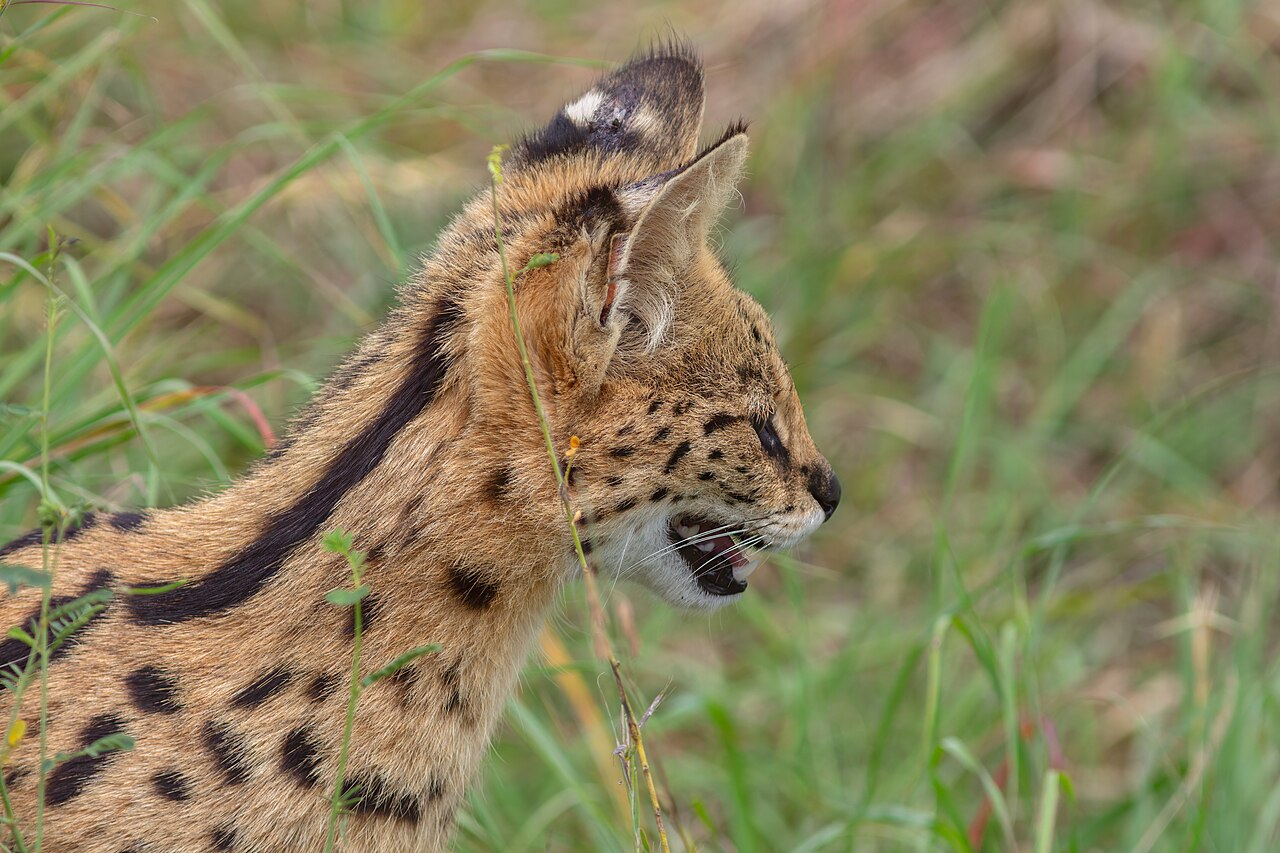
A wild cat needs a wild setting
Habitat loss and hunting put pressure on servals in parts of their range.
Their striking appearance does not make them domestic animals. Appreciating them in suitable habitat keeps attention on how their lives actually work.
The serval gives us a reason to notice the sounds and movements of grass. What appears to be an empty patch may contain a meal—and a patient listener waiting above it.
Photo credits
Featured image: Serval (Leptailurus serval), parque nacional de Tarangire, Tanzania, 2024-05-25, DD 54.jpg — Diego Delso; CC BY-SA 4.0.

Body image 1: Serval (Leptailurus serval), parque nacional Serengueti, Tanzania, 2024-05-26, DD 02.jpg — Diego Delso; CC BY-SA 4.0.

Body image 2: Serval (Leptailurus serval), parque nacional de Tarangire, Tanzania, 2024-05-25, DD 53.jpg — Diego Delso; CC BY-SA 4.0.

Photographs resized for web display where available.