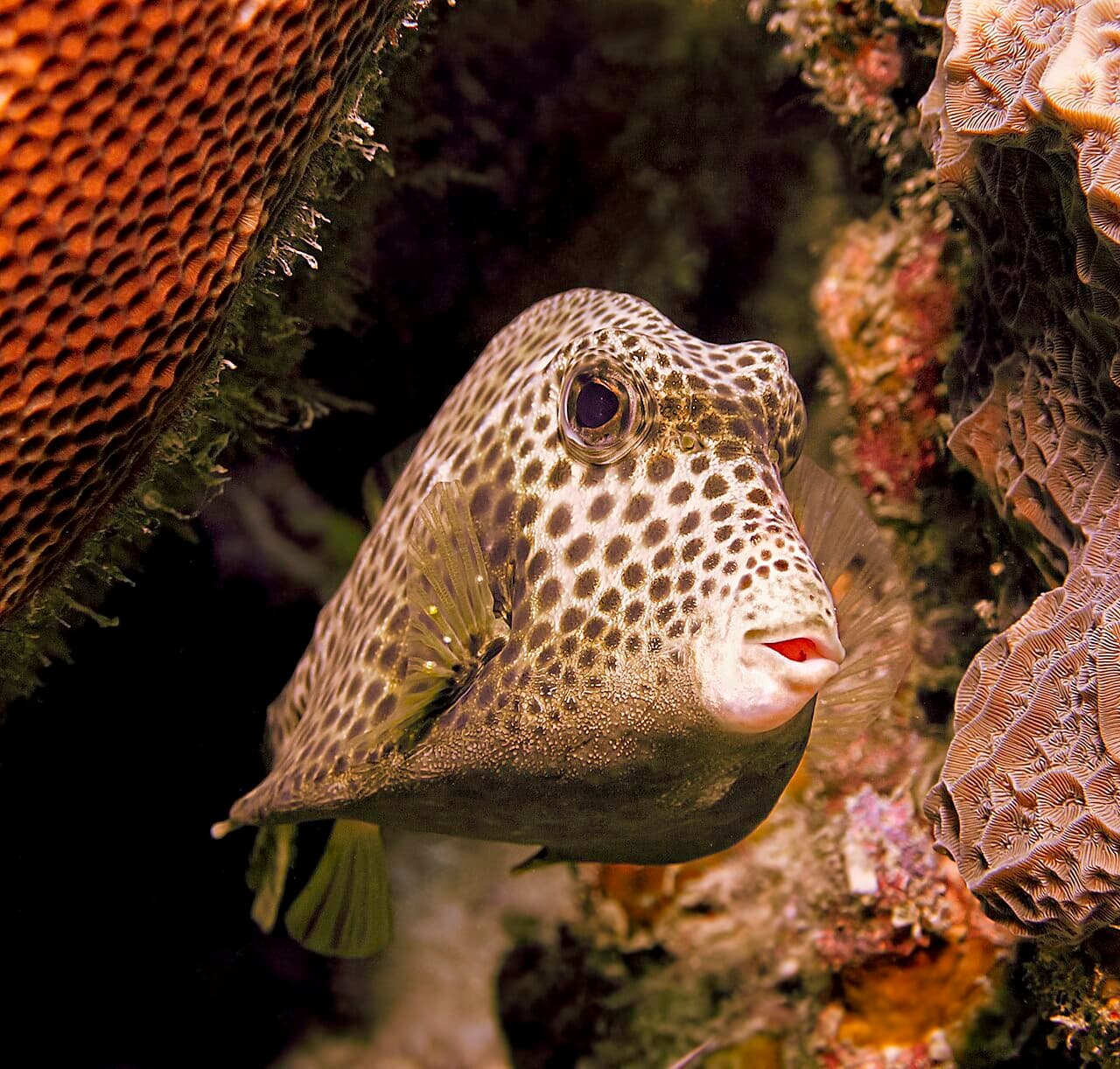
The spotted trunkfish swims inside a box built from its own scales. Enlarged plates join into a rigid shell, leaving openings for the parts that still need to move.
Its spots catch the eye, but the architecture beneath them is the real surprise.
Armor made from scales
The spotted trunkfish, Lactophrys bicaudalis, has a thick body enclosed in a carapace of joined bony plates. Many of those plates have a roughly six-sided shape.
The Smithsonian Tropical Research Institute's identification account describes the shell, the small mouth, and the fins emerging through it.
Unlike horned cowfish, this species has no projecting spines in front of its eyes.
A pattern worth checking
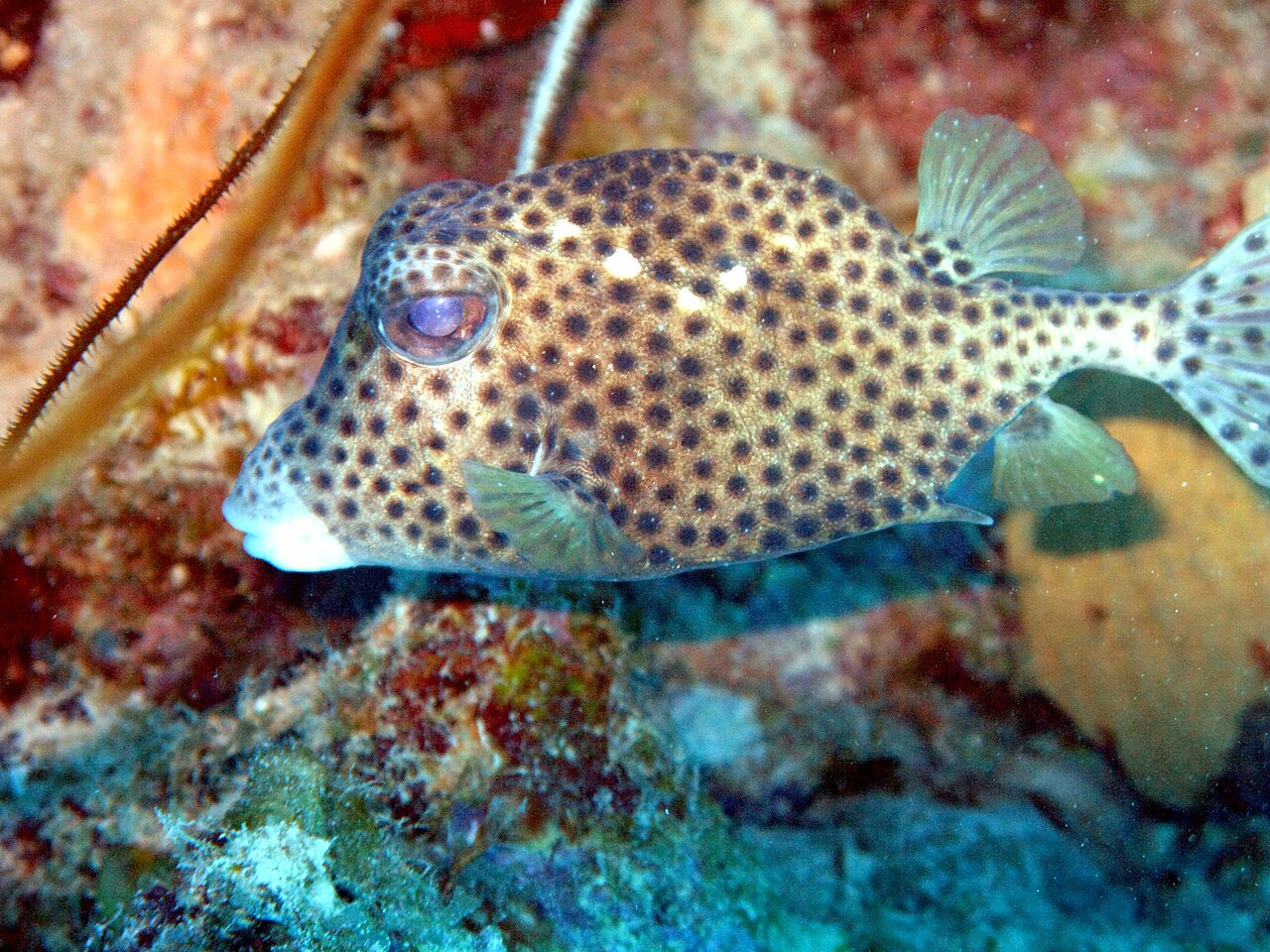
Adults are pale with numerous dark spots. The lips are pale too, while young fish can have a more orange background.
That pattern helps distinguish this species from other Caribbean boxfishes. A familiar-looking silhouette alone is not enough to identify every trunkfish.
The slender tail base remains flexible beyond the shell. Small fins provide movement around the otherwise rigid body.
Seeing the reef from a different angle
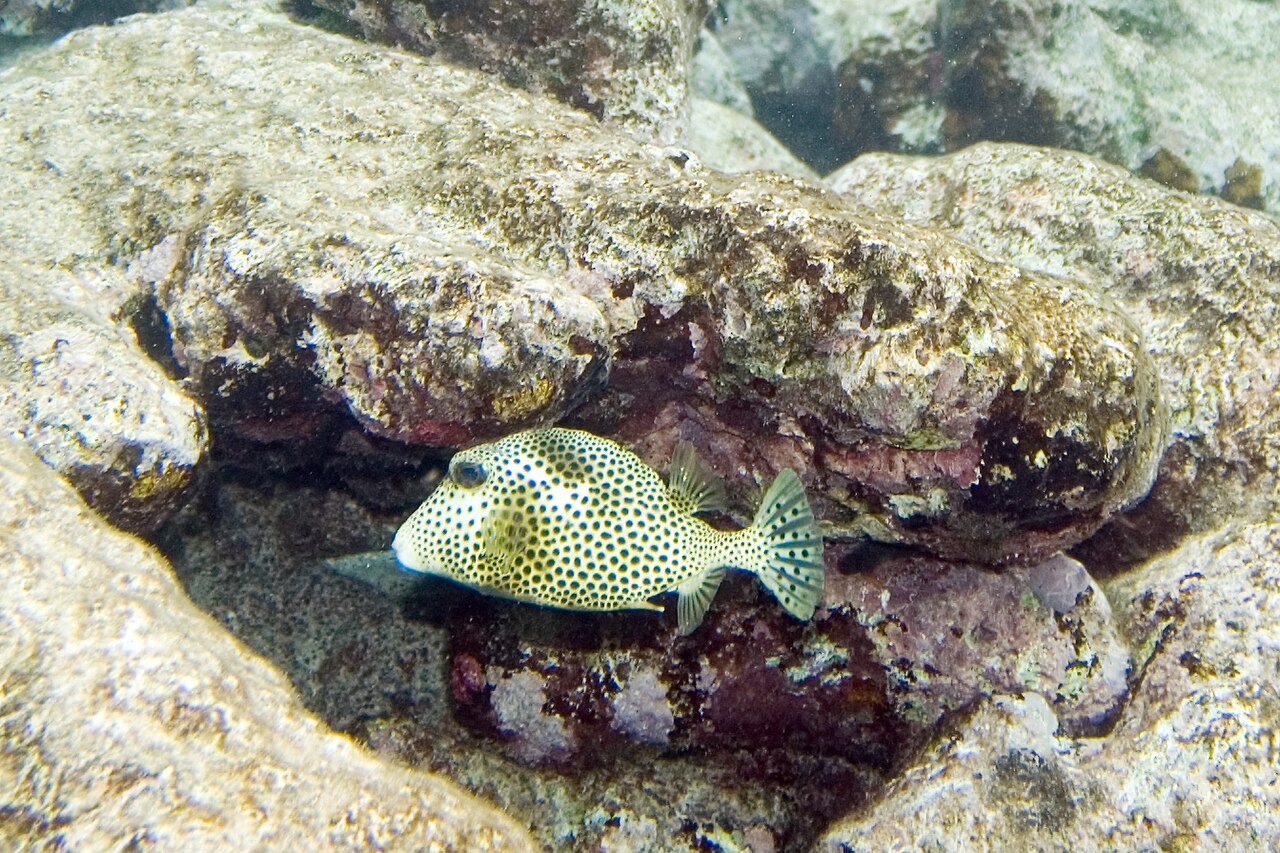
Look at the animal head-on, then from the side. The change in view makes its unusual proportions much easier to appreciate.
The photos show a fish whose body plan differs sharply from that of a streamlined tuna or a slender eel. All are fish, but their shapes solve different problems.
The spotted trunkfish turns a simple idea—a protective box—into a living, spotted presence moving among Caribbean reef shelters.
Photo credits
Featured image: Spotted Trunkfish.jpg — Betty Wills; CC BY-SA 4.0.

Body image 1: Spotted Trunkfish at Curacao.jpg — User:ThC; Public domain.

Body image 2: Spotted trunkfish Lactophrys bicaudalis (4676538391).jpg — Paul Asman and Jill Lenoble; CC BY 2.0.

Photographs resized for web display where available.