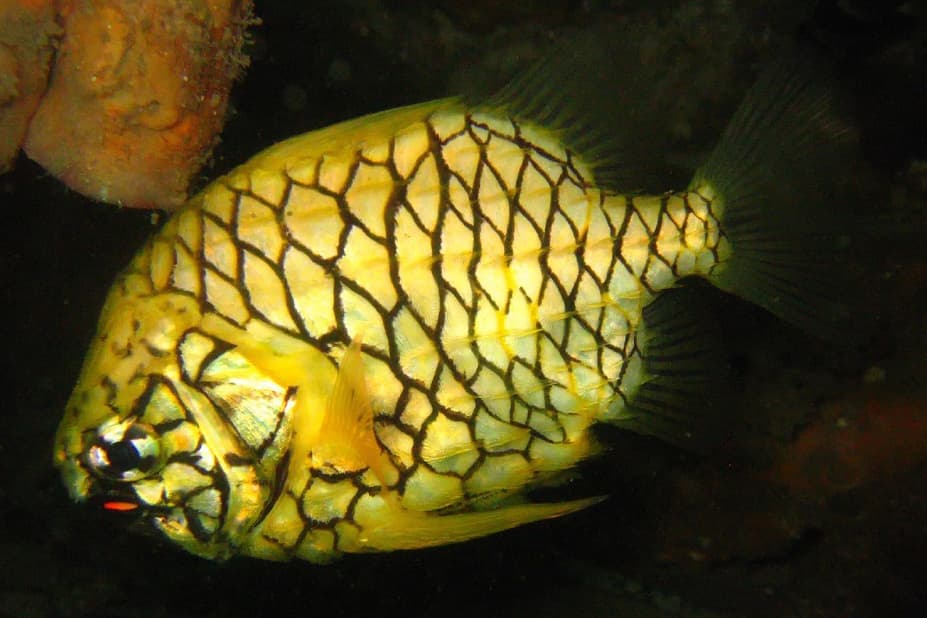
A pineapplefish carries light-producing bacteria in organs beside its lower jaw. Beneath its armored appearance is a partnership that helps illuminate a nighttime world.
Even without the glow, its name makes sense at first glance.
A fish dressed like a pineapple
The Australian pineapplefish, Cleidopus gloriamaris, has large, robust scales with dark borders. Together they create a pattern resembling the surface of a pineapple.
It occurs along parts of Australia's eastern and western coasts, where divers may encounter it around reefs.
The Australian Museum describes its scales, distribution, and light organs.
A partnership that shines
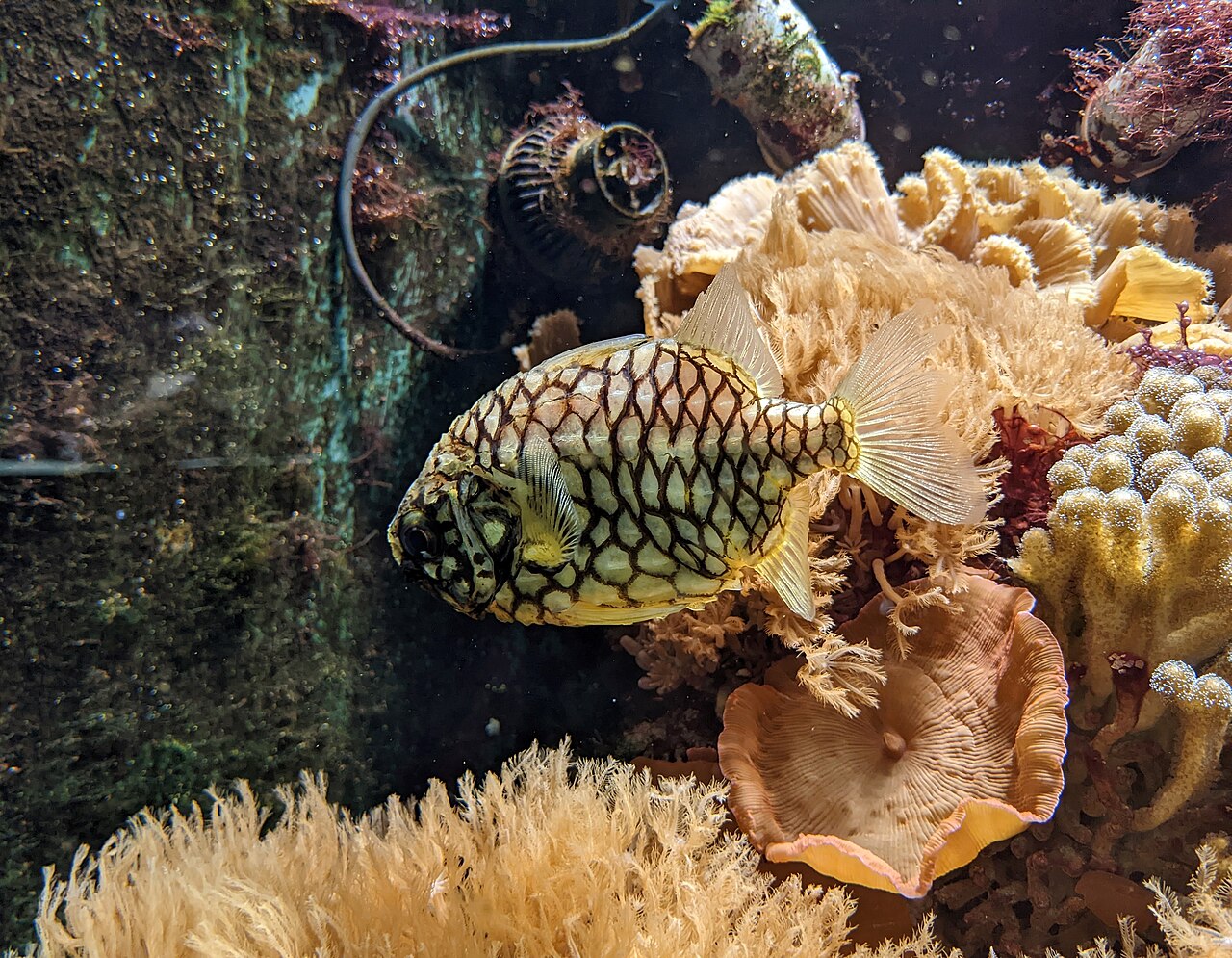
The glowing organs are positioned on the sides of the lower jaw. Inside them, symbiotic bacteria produce light.
The fish feeds at night, and the illumination helps it detect prey. This is bioluminescence: light generated through a biological process.
Ordinary photographs reveal the jaw and armor more readily than the faint glow. A brightly lit aquarium image should not be mistaken for a demonstration of the light organs working in darkness.
Similar names, different fish
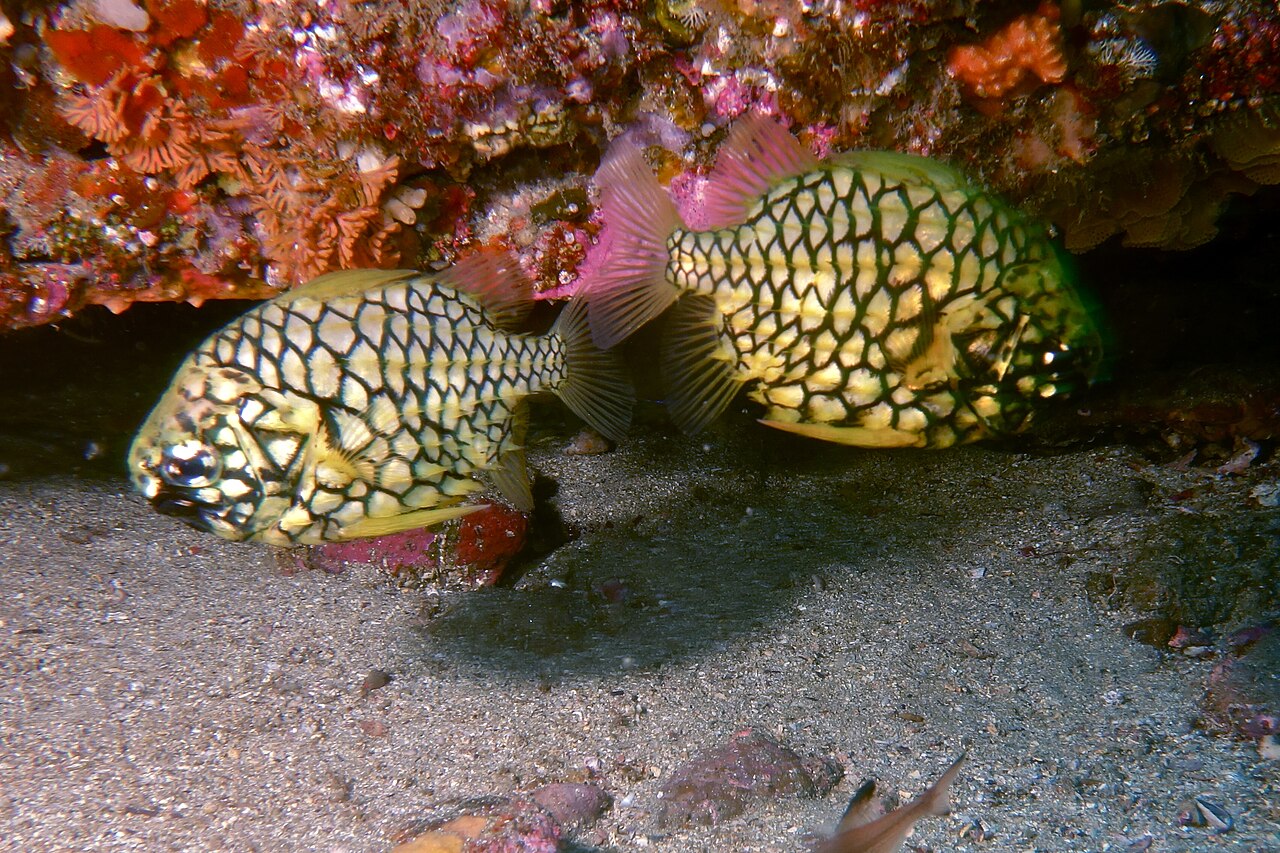
The Japanese pineapplefish is a related but distinct species. The Australian pineapplefish has a different snout shape and light-organ placement, so matching the scientific name helps prevent confusion.
This animal brings two remarkable features together: a protective exterior and a living source of light.
The pineapplefish reminds us that the most interesting part of an animal may be a relationship we cannot see in a daylight portrait—tiny bacteria helping a reef fish explore the night.
Photo credits
Featured image: Cleidopus gloriamaris.jpg — Cleidopus_gloriamaris.jpg : Richard Ling, https://www.flickr.com/people/rling/ derivative work: Mfield ( talk ); CC BY-SA 2.0.

Body image 1: Cleidopus gloriamaris in Ouwehands Dierenpark.jpg — FakirNL; CC BY-SA 4.0.

Body image 2: Pineapplefish-Cleidopus gloriamaris (11258708466).jpg — Sylke Rohrlach from Sydney; CC BY-SA 2.0.

Photographs resized for web display where available.