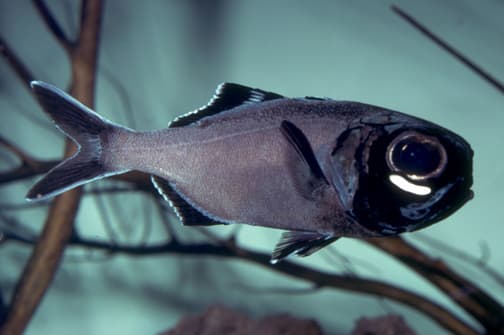
A flashlight fish carries a glowing organ beneath each eye. The light comes from bacteria living inside those organs, creating a tiny partnership that becomes visible in the dark.
The fish can also hide and reveal the glow, producing a blinking effect.
Meet the splitfin flashlightfish
The splitfin flashlightfish, Anomalops katoptron, is one of several fishes commonly called flashlight fish.
Its light organs are separate from the eyes themselves. Rotating the organs changes whether the luminous surface is exposed, so the glow can seem to switch on and off even though the bacteria continue producing light.
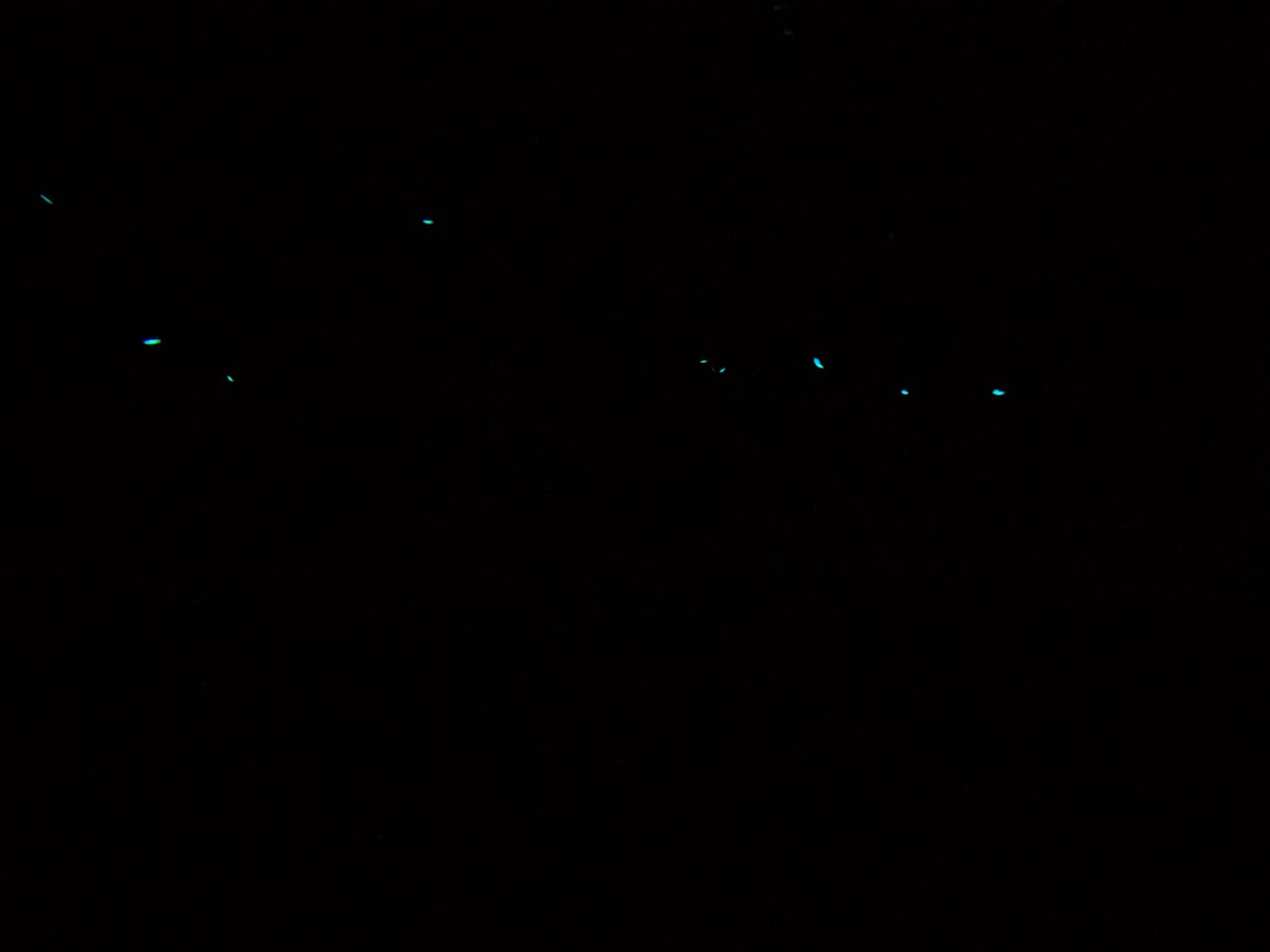
Light helps reveal a meal
A 2017 study in PLOS ONE examined the species in an aquarium setting.
The researchers found that the fish used its bioluminescent illumination to detect planktonic prey. Blink behavior changed with lighting conditions and the presence of food.
The study helps turn a beautiful display into an explanation: the glow has a practical role in feeding, rather than simply decorating the fish.
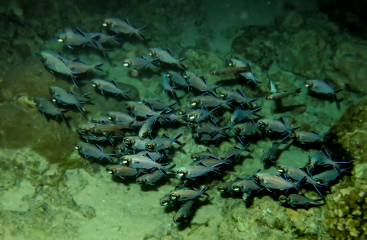
A photograph of darkness
In a dark scene, the light organs may be far easier to see than the bodies around them. A school can appear as scattered points before the fish themselves become clear.
The article's brighter portrait shows the organ's position; the darker images show why its name is so fitting.
The flashlight fish is a reminder that darkness is a habitat with its own ways of finding food. Sometimes the light that makes the difference comes from microscopic companions.
Photo credits
Featured image: Anomalops katoptron (splitfin flashlightfish).jpg — Gubbi0us; CC0.

Body image 1: Burgers' Zoo (20190622152429).jpg — Robin van der Vliet; CC BY-SA 4.0.

Body image 2: School of Anomalops katoptron.png — Gubbi0us; CC0.

Photographs resized for web display where available.