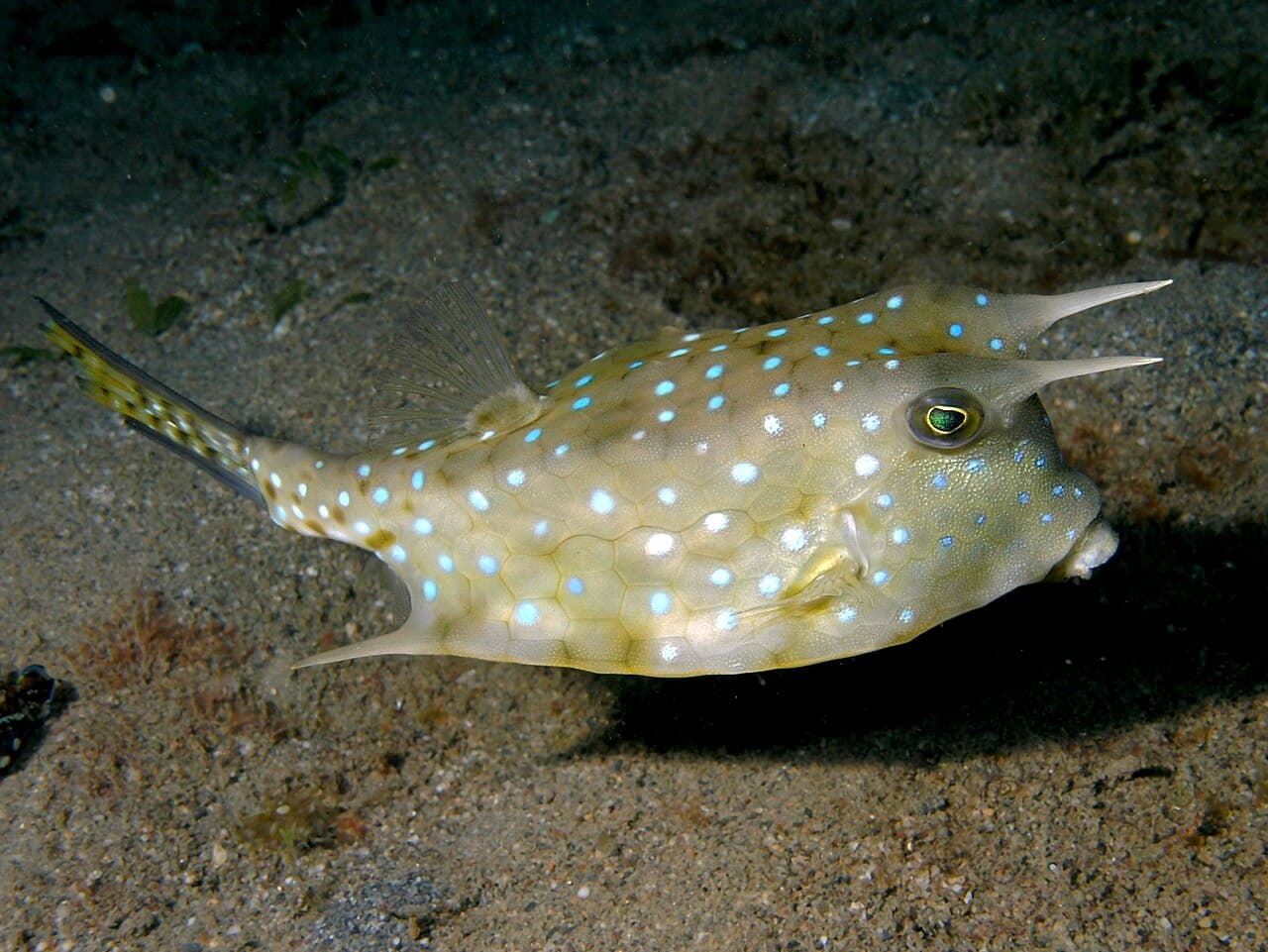
A longhorn cowfish appears to carry a tiny pair of cattle horns through the sea. Its face is instantly recognizable, but the way it searches for food is just as unusual.
It can blow water into the sand to uncover small animals.
A familiar name for an unfamiliar shape
The longhorn cowfish, Lactoria cornuta, belongs to the boxfish family. Its body can be yellow or olive, decorated with pale or bluish spots.
Long projections above the eyes give it the famous horned profile. Another pair extends near the rear of the body.
Georgia Aquarium describes its appearance and Indo-Pacific distribution.
A meal beneath the surface
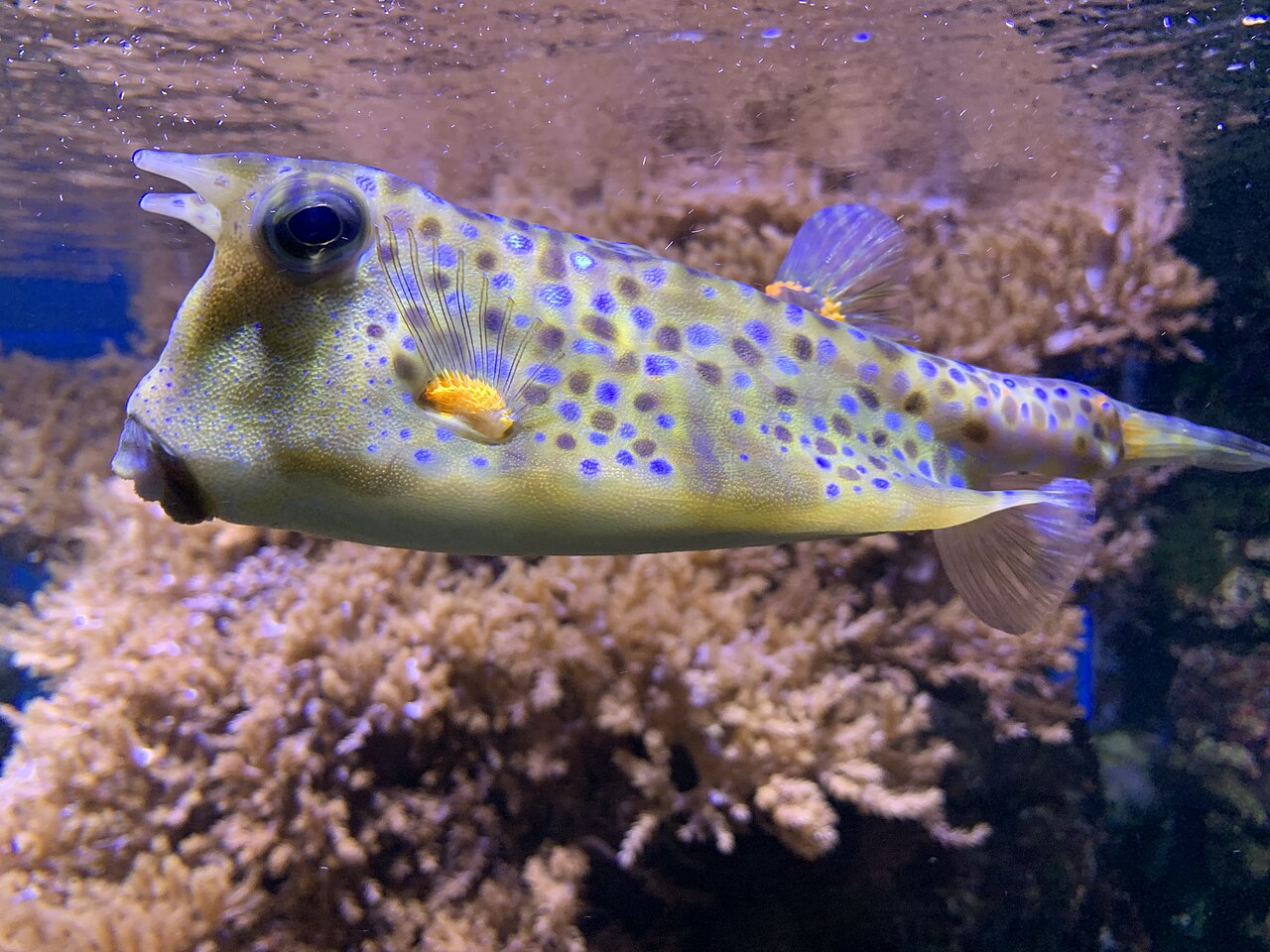
This fish inhabits sheltered coastal settings, including sandy or rubble-covered reef lagoons. Its diet includes algae and small organisms associated with the bottom.
Jets of water help expose hidden invertebrates. The technique turns an apparently plain patch of sand into a place worth investigating.
Its small working fins and steady body can create the impression that it is hovering rather than swimming in the familiar side-to-side fashion.
Let the fish keep its space
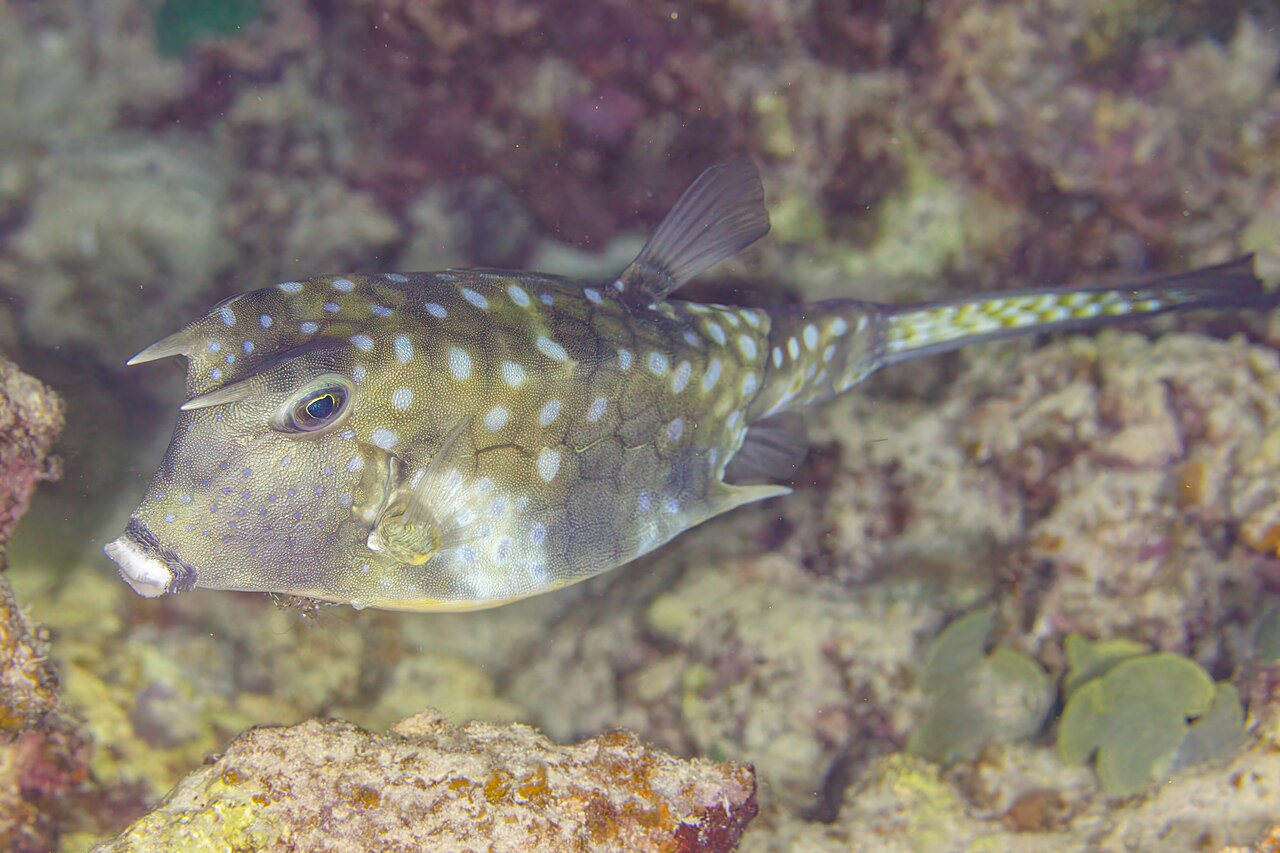
The horns are thought to make the animal more difficult for predators to swallow. They are one part of a defensive design, not an invitation to touch.
Observation without chasing or handling allows its natural movements to continue.
A close look at the longhorn cowfish reveals more than a curious face. Horns, hovering movement, and a careful search through the sand make it a beautifully specialized resident of the reef's quieter corners.
Photo credits
Featured image: Lactoria cornuta (Longhorn cowfish) Timor.jpg — Nick Hobgood; CC BY-SA 3.0.

Body image 1: Lactoria cornuta in Cologne Zoo.jpg — Till Niermann; CC BY 3.0.

Body image 2: Pez cofre cornudo (Lactoria cornuta), Mauricio, 2025-09-23, DD 117.jpg — Diego Delso; CC BY-SA 4.0.

Photographs resized for web display where available.