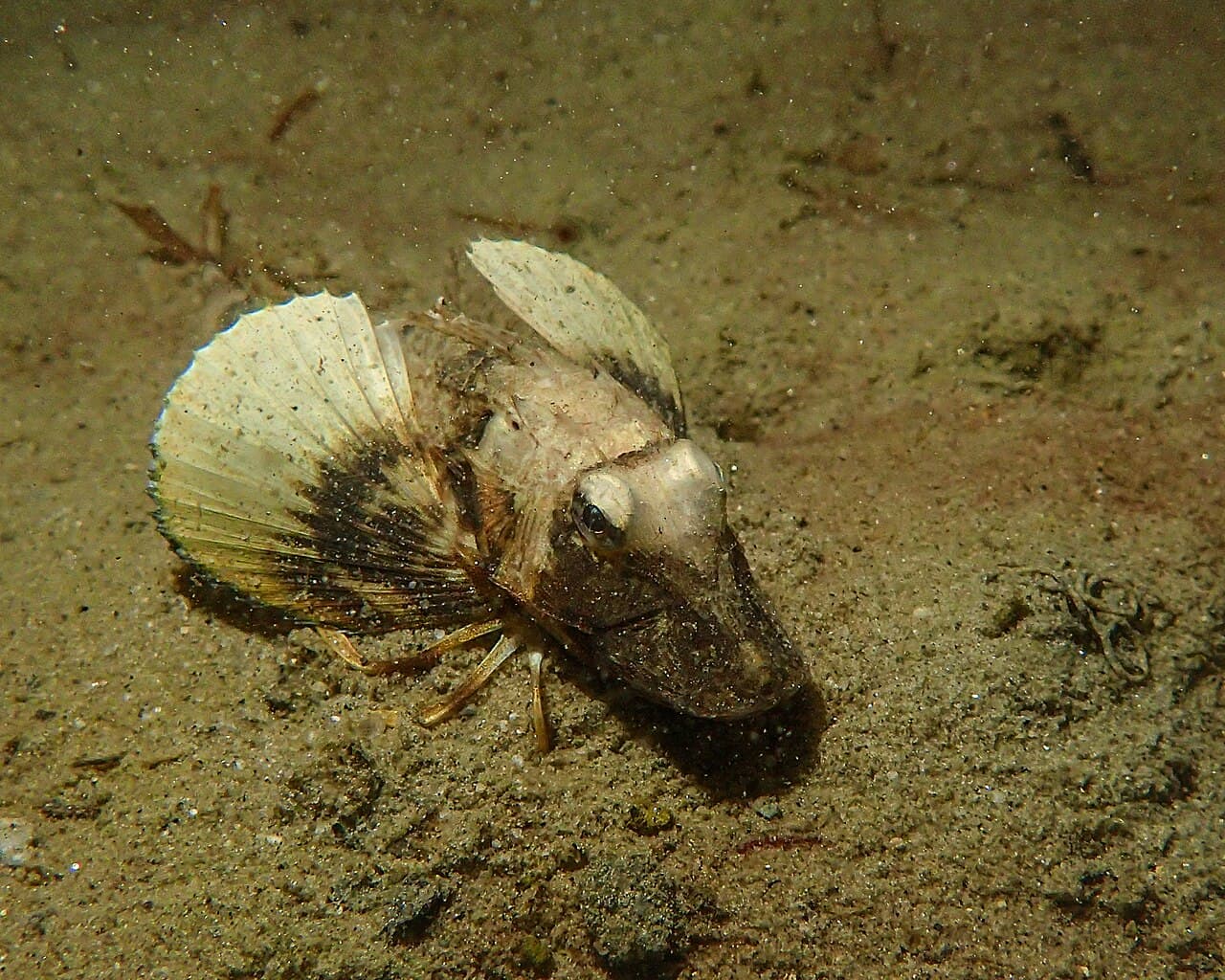
Some sea robins can detect food buried beneath the sand with structures that look like legs. Those legs are actually separated rays from their pectoral fins.
A fish walking along the bottom is surprising enough. A fish using the same structures to sense a hidden meal is even more remarkable.
Wings and walking rays
Sea robins are bottom-dwelling fishes with broad pectoral fins and finger-like rays that move independently below them.
The northern sea robin, Prionotus carolinus, is the species featured here. Its body still has the familiar fins of a fish, but the separated rays provide another way to explore the seabed.
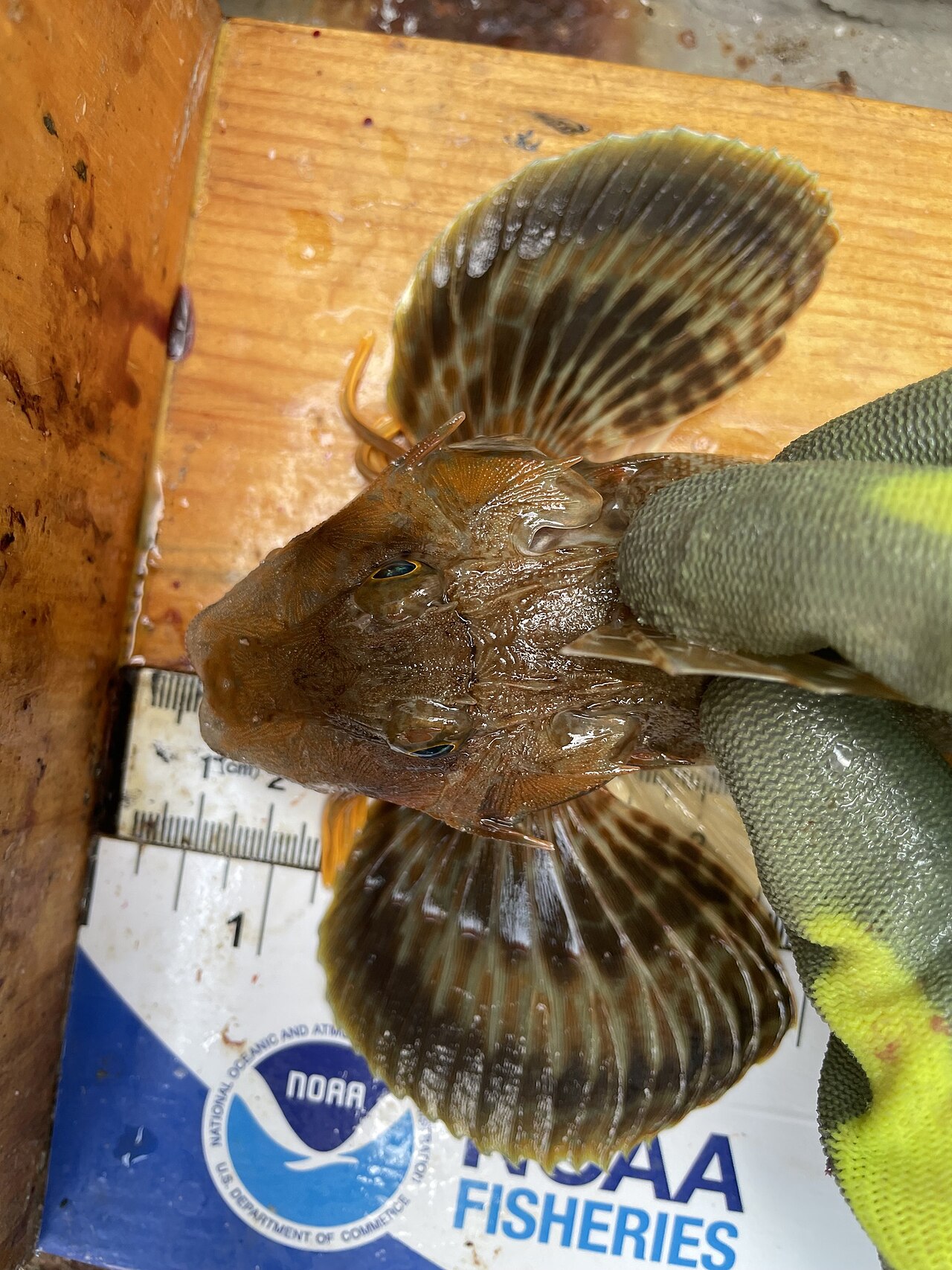
The important difference between species
In research reported by Harvard in 2024, scientists found that northern sea robins used their legs to locate buried prey.
The rays responded to touch and chemical signals. Small surface structures called papillae contributed to this sensory ability.
The researchers also studied Prionotus evolans. That species could use its rays for movement and probing, but lacked the same digging and chemical-sensing specialization. The distinction matters: not every sea robin has the same abilities.
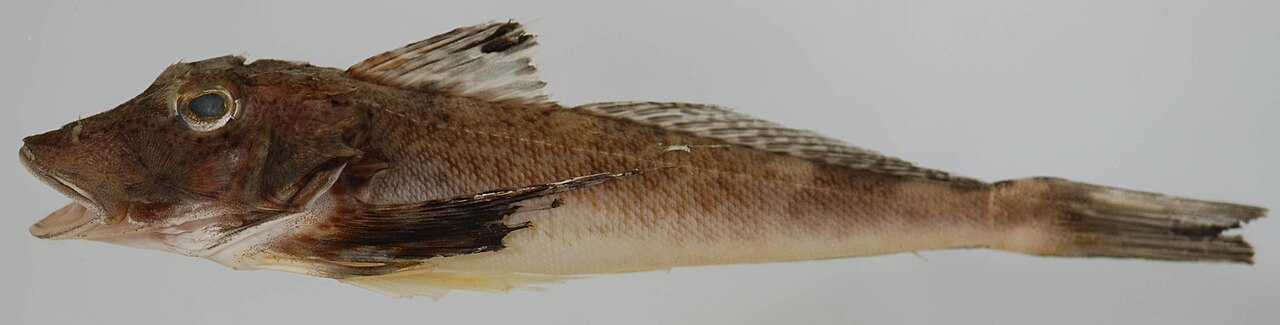
A new way to explore the bottom
To us, sand can hide what lies beneath it. For the northern sea robin, movement and chemical information help reveal a meal.
The photographs include fieldwork and specimen views as well as an underwater animal, allowing the different structures to be seen clearly.
This fish turns the seabed into something it can walk across, investigate, and—in a specialized sense—taste.
Photo credits
Featured image: Prionotus carolinus 735210455.jpg — Corey Leamy; CC BY 4.0.

Body image 1: Prionotus carolinus 312335235.jpg — Bobby McCabe; CC BY 4.0.

Body image 2: Prionotus carolinus (S0971) (12596562634).jpg — Smithsonian Environmental Research Center; CC BY 2.0.

Photographs resized for web display where available.