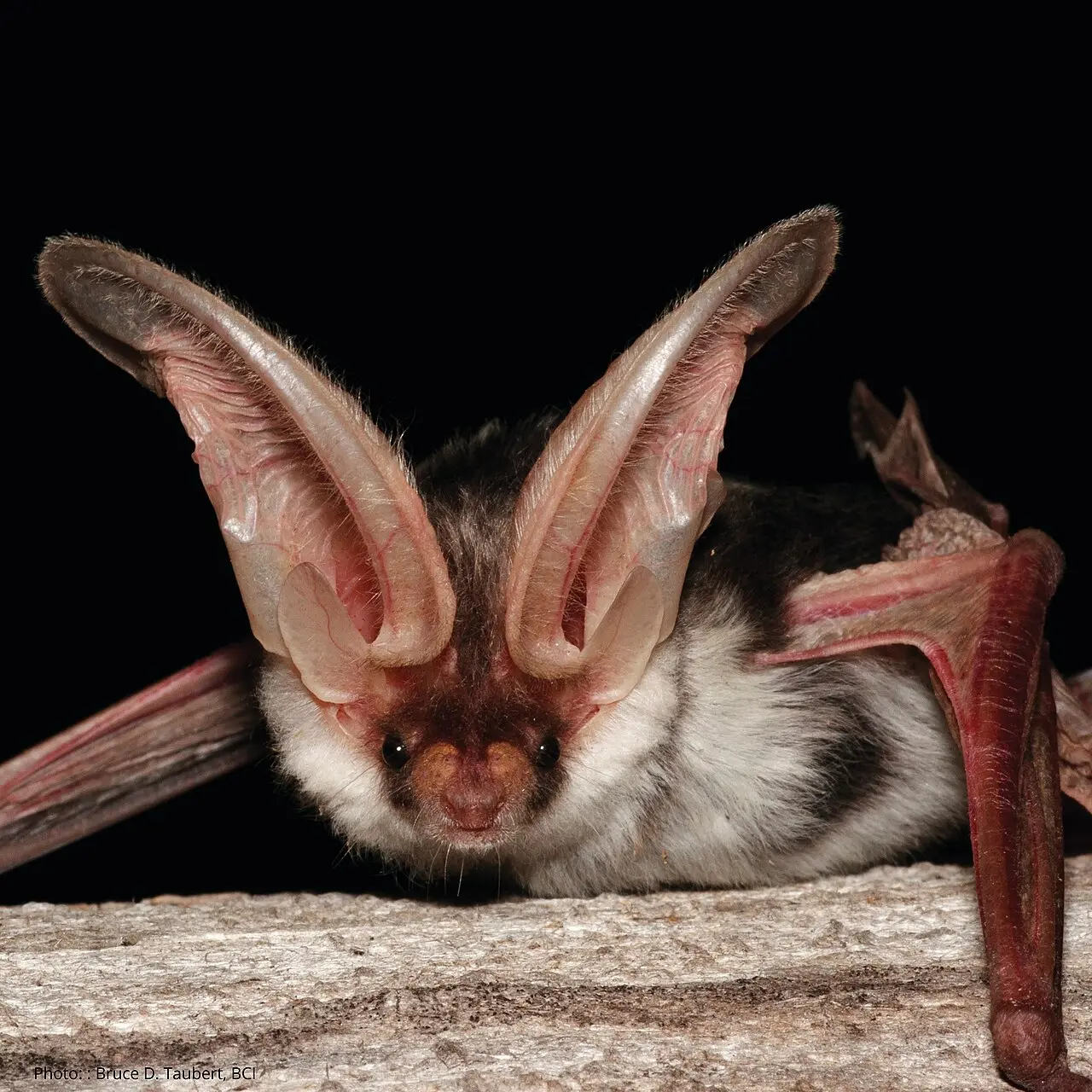
Some bats make hunting calls that people can hear. The spotted bat is one of them—a striking night flyer whose appearance is just as unusual as its voice.
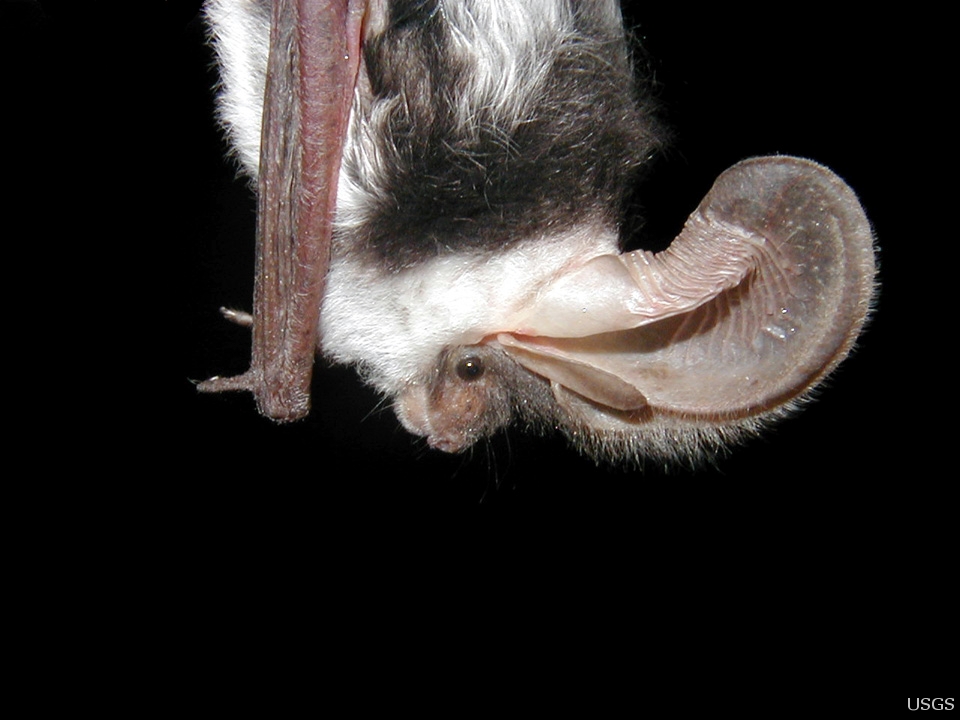
Euderma maculatum has dark upper fur marked by large white spots. Its enormous pink ears can seem almost too big for its body.
A face built to stand out
Bat Conservation International describes translucent ears nearly as long as the body, along with a pale underside and contrasting back markings.
The ears and spots make a memorable combination. Even among bats, this animal has a remarkably distinctive outline.
A hidden life along cliffs
Spotted bats occupy western North America, from southern British Columbia to northern Mexico. High cliff crevices provide secluded resting places.
They hunt moths in flight. Their echolocation includes frequencies low enough for human ears, unlike the entirely ultrasonic calls many people associate with bats.
These clues help researchers study an animal that can be difficult to watch. A bat seldom seen is not automatically a bat that is extremely rare.
Listening to the night more closely
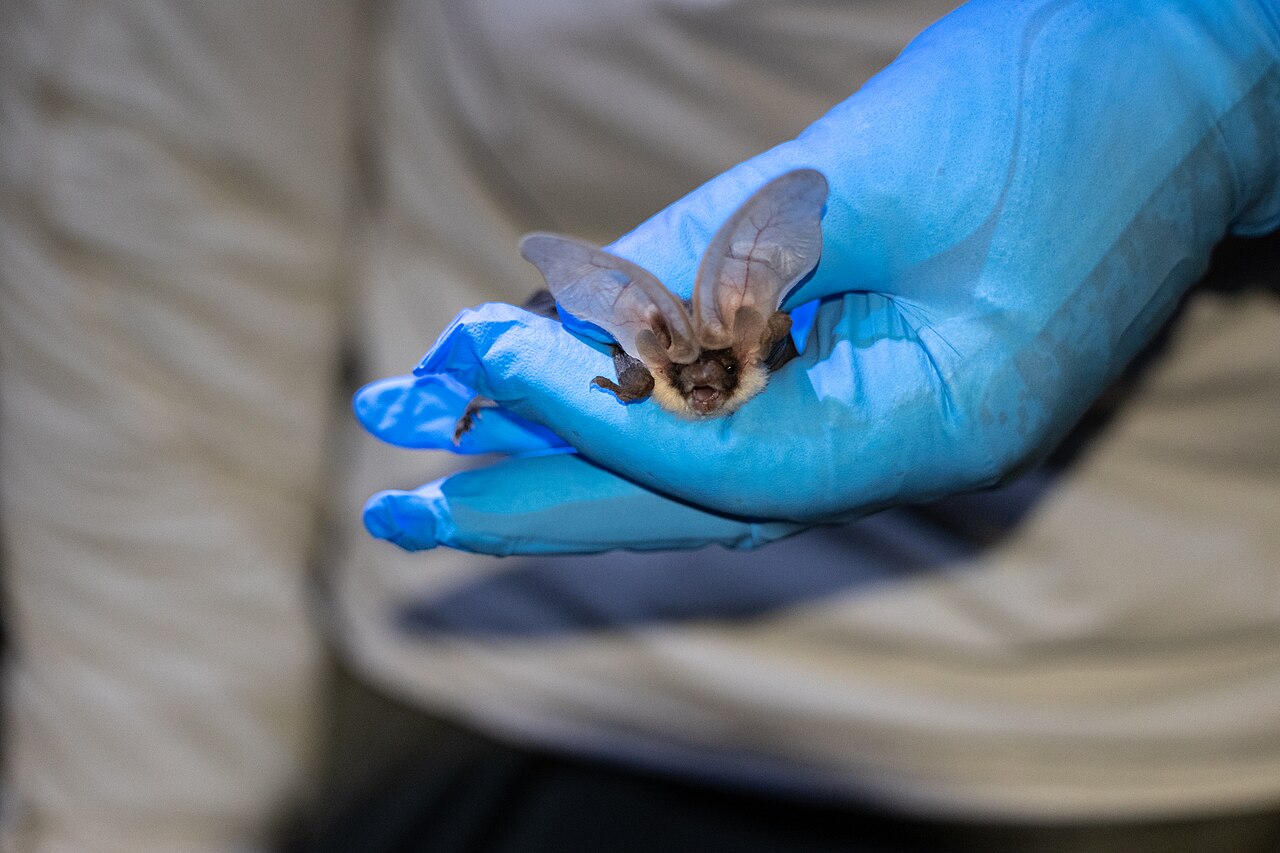
The National Park Service records the species in Canyonlands National Park. Such records help turn scattered encounters into a clearer picture of its life.
Cliffs, darkness, and insect-rich feeding areas all deserve attention when thinking about bat habitat. The spotted bat invites us to notice a wider night world—one that can sometimes announce itself with an audible call.
Photo credits
Featured image: Spotted Bat (45195156995).jpg — mypubliclands; Public domain.

Body image 1: Side view of spotted bat -Euderma maculatum- by Paul Cryan.jpg — Paul Cryan , U.S. Geological Survey; Public domain.

Body image 2: Bat Monitoring 2023 - 53119437835.jpg — Grand Canyon Conservancy; Public domain.

Photographs resized for web display where available. Infrared and captive photographs are identified in their captions.