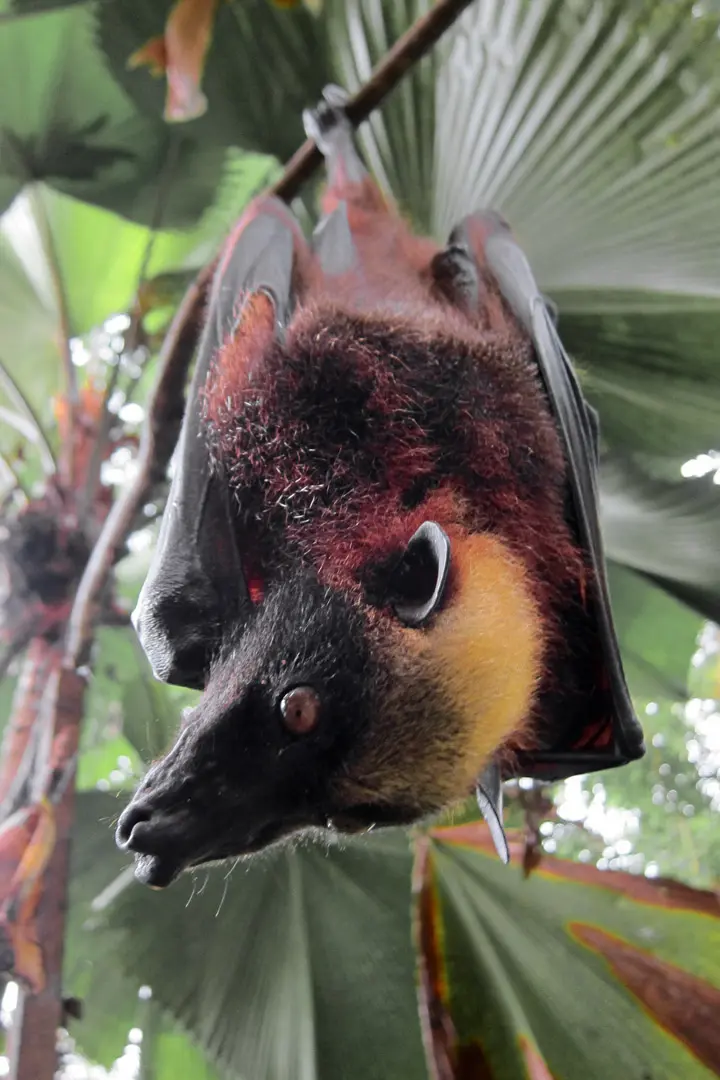
A bat can spread wings more than five feet across and still be looking for figs. The giant golden-crowned flying fox is one of the world’s largest bats, yet fruit is the focus of its meals.
Acerodon jubatus lives only in the Philippines. Golden fur on its head gives this remarkable mammal its name.
Giant wings, a much smaller body
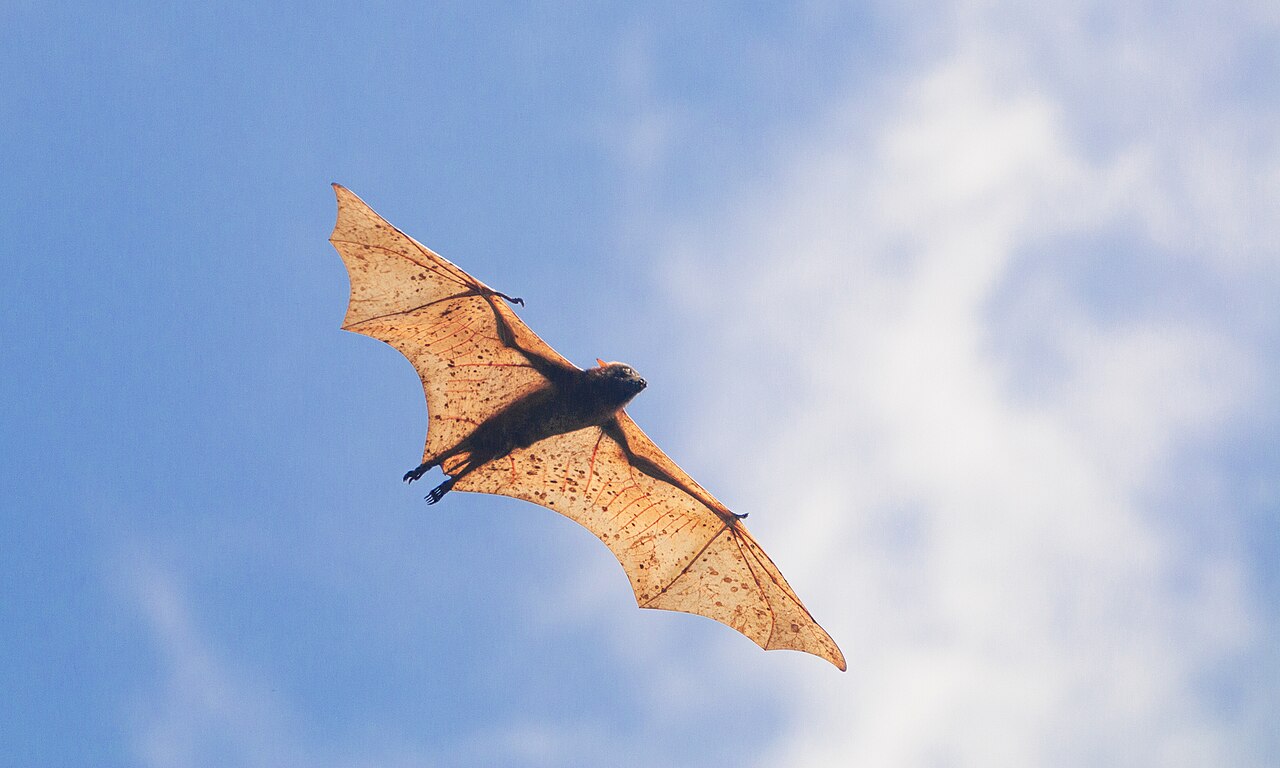
Its wingspan can make photographs startling, especially when perspective makes a nearby bat look enormous. Wingspan measures the distance between extended wing tips—not the height of the animal’s body.
Bat Conservation International describes this flying fox as a fig specialist. Its size is no reason to mistake it for a predator of people.
A day among the branches
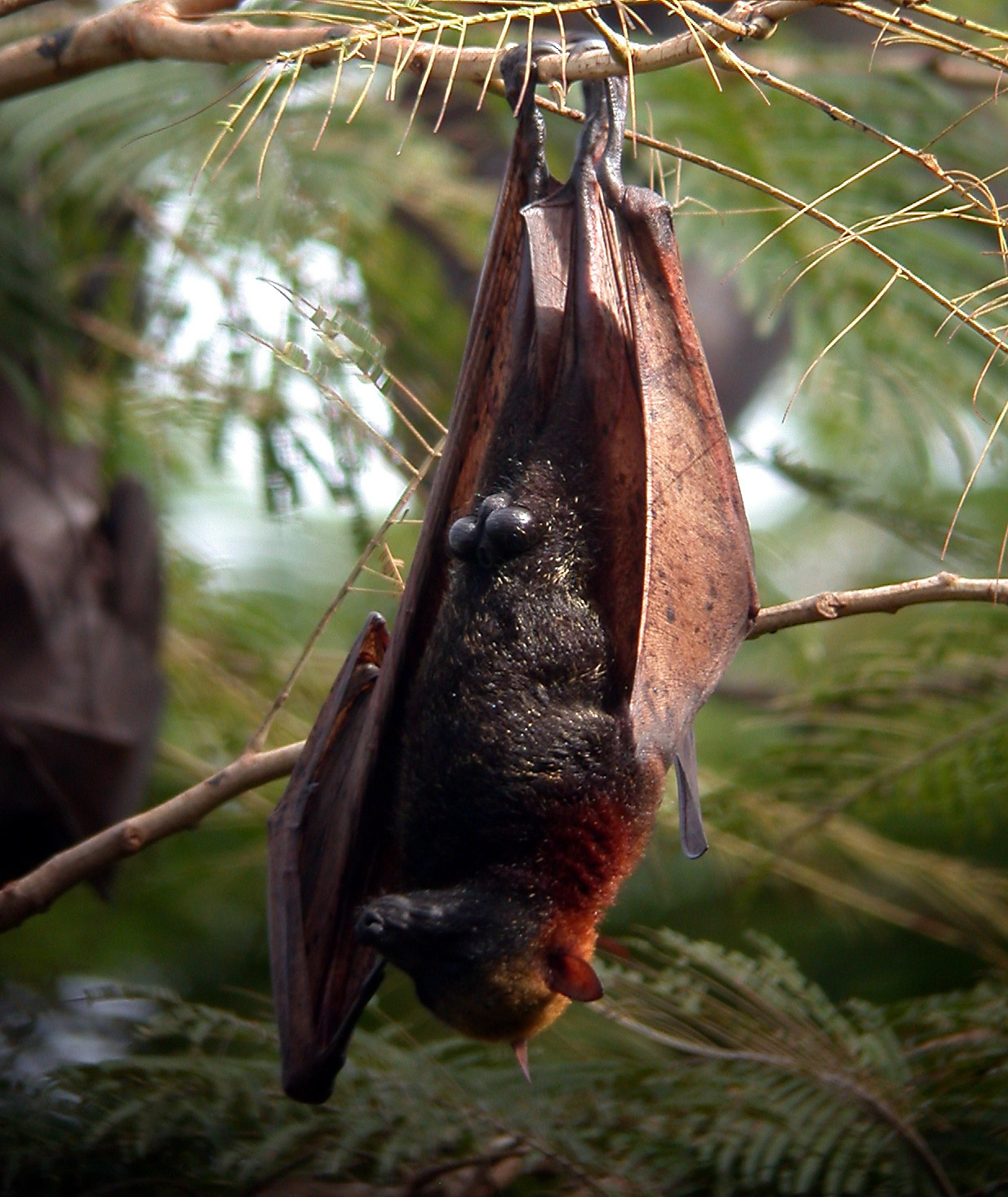
These bats rest in trees and may share roosts with other flying fox species. That makes careful identification important: a large colony is not necessarily made up entirely of golden-crowned flying foxes.
Mature forests provide important feeding grounds. Animal Diversity Web describes a preference for primary forest and good-quality secondary forest when foraging.
A giant that needs protection
Hunting, severe forest loss, and disturbance at roosts threaten the species. Quiet, protected resting places matter alongside the forests where it feeds.
The most impressive part of this bat is more than its silhouette. It is the connection between a huge pair of wings, a meal of fruit, and the future of Philippine forests.
Photo credits
Featured image: Acerodon jubatus by Gregg Yan.jpg — Gregg Yan; CC BY-SA 3.0.

Body image 1: A Giant Golden-Crowned Flying Fox (Acerodon jubatus) spreading its wings in the Philippines.jpg — Luke Marcos Imbong; CC BY-SA 4.0.

Body image 2: Golden-crowned Flying Fox Acerodon jubatus (15901777584).jpg — Len Worthington; CC BY-SA 2.0.

Photographs resized for web display where available. Infrared and captive photographs are identified in their captions.