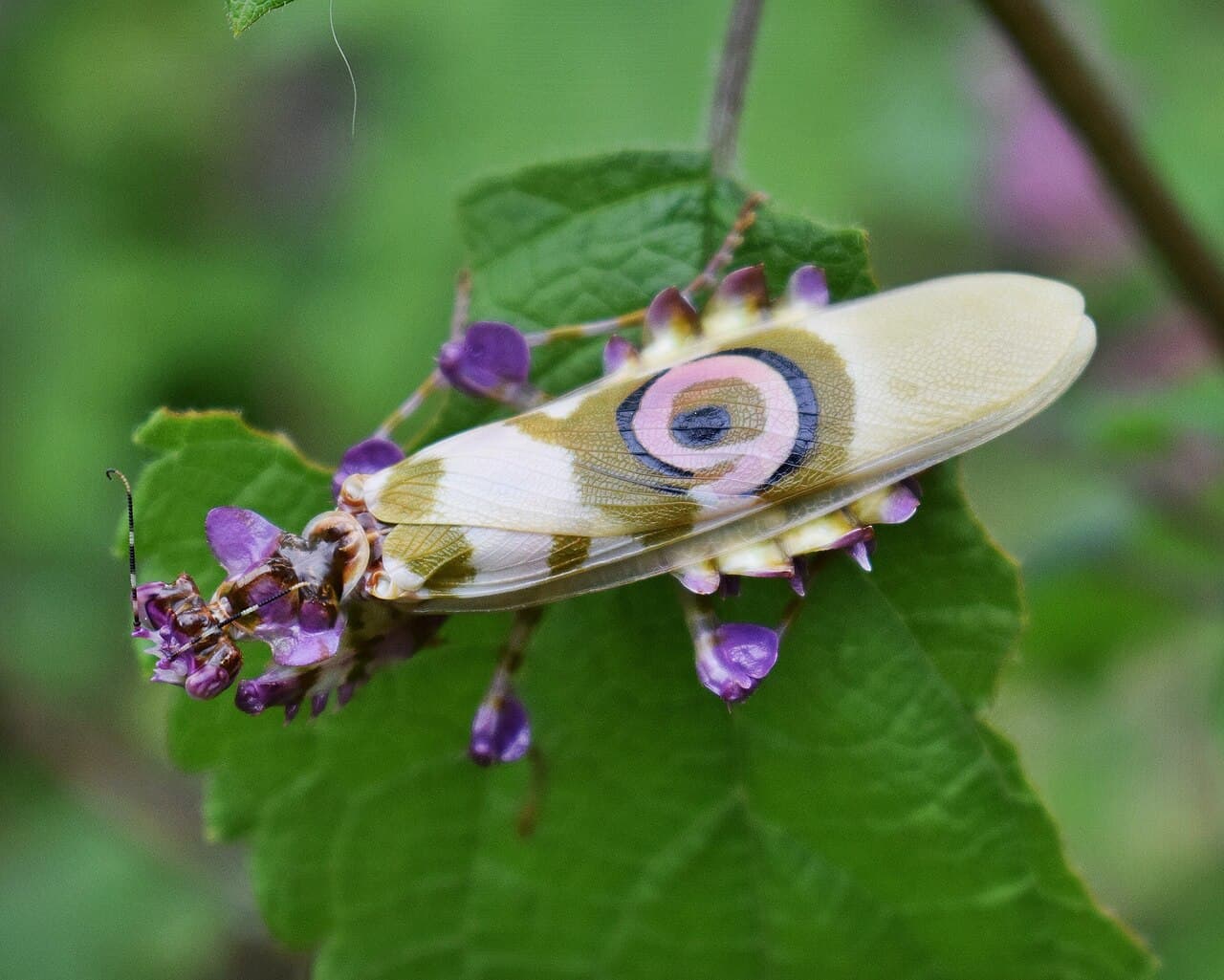
A spiny flower mantis can reveal two bold wing markings shaped rather like the number nine. These eyespots are part of a sudden display that makes a small insect look much more imposing.
At rest, the same animal presents a very different picture.
A flower-like hunting disguise
The spiny flower mantis, Pseudocreobotra wahlbergi, is native to eastern and southern Africa. Pale and green areas, flanges, and spines interrupt the shape of its body.
Those details help it blend with its surroundings while waiting for prey. HHMI's Beautiful Biology explains the relationship between its camouflage and defensive appearance.
Like other mantises, it catches passing prey with its grasping forelegs.
When the wings open
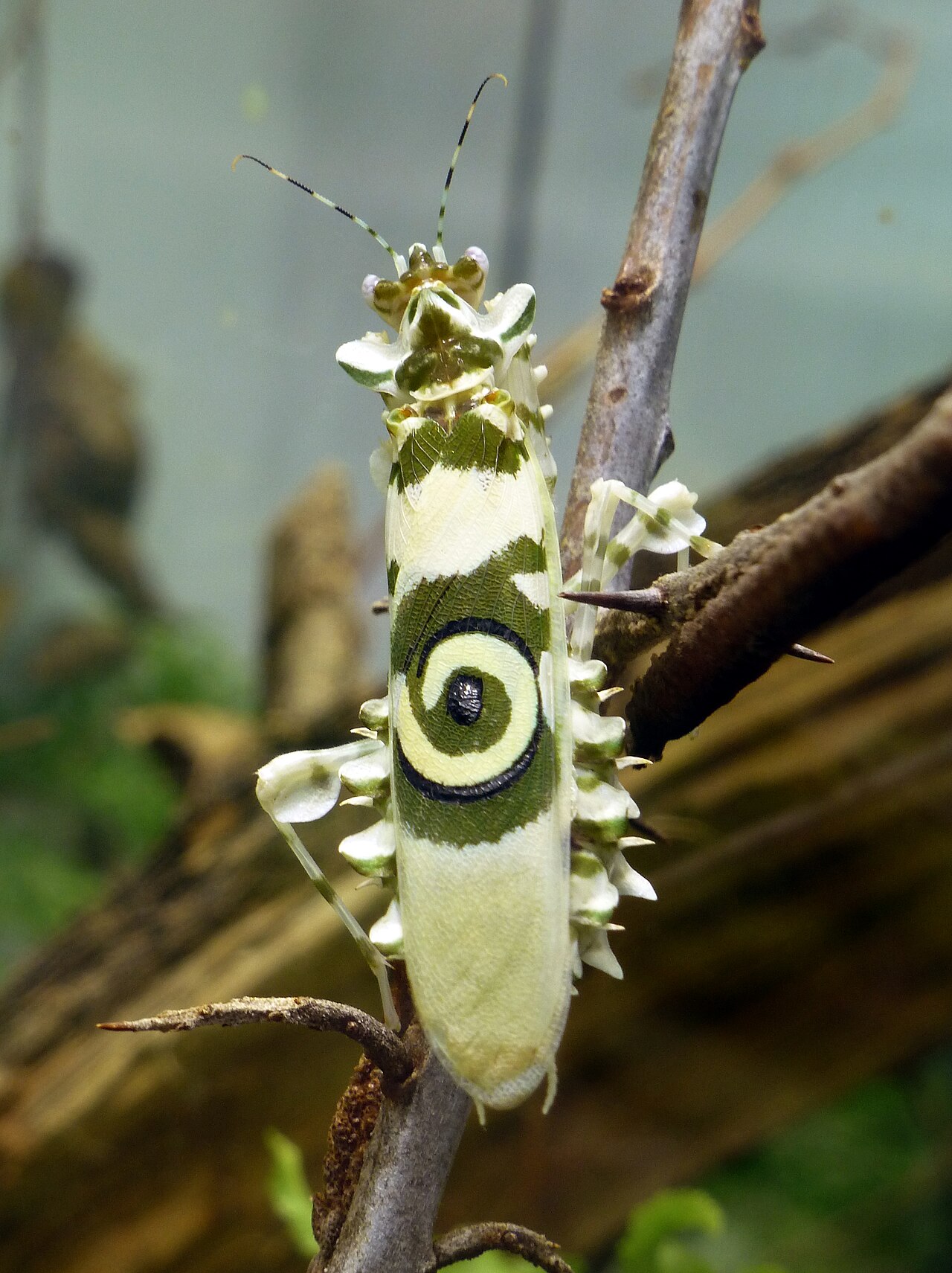
If threatened, an adult can spread its legs and wings, exposing the large eyespots on its forewings.
The Natural History Museum includes this mantis as an example of eyespots used to intimidate predators.
They are markings, not extra organs for seeing. Their position and sudden exposure make them part of a visual warning.
Two appearances, one animal
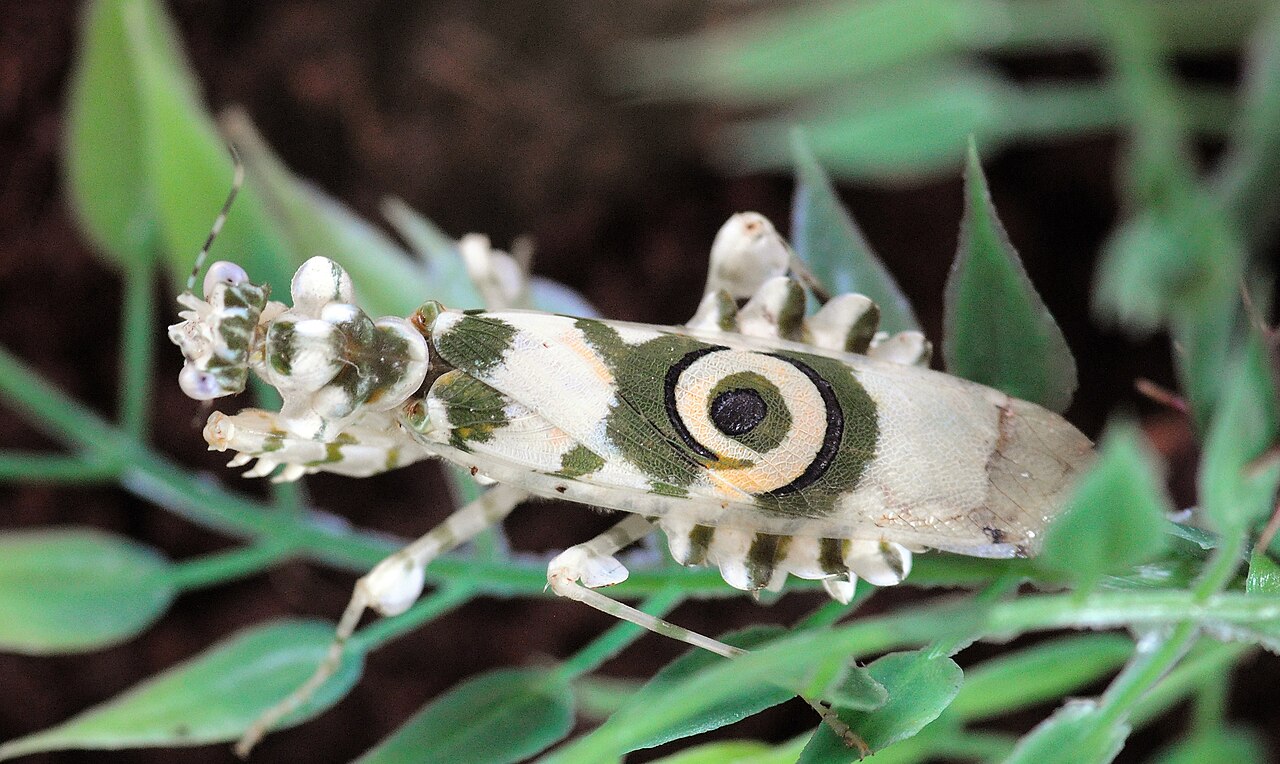
A folded mantis and a displaying mantis can look surprisingly different in photographs. That difference helps explain why an insect's posture matters as much as its color.
Its spines soften the outline when it hides; its opened wings enlarge the impression when hiding fails.
The spiny flower mantis brings concealment and spectacle together. A small creature among flowers can hold a much bigger visual surprise in reserve.
Photo credits
Featured image: Pseudocreobotra wahlbergi 25240631.jpg — suncana; CC BY 4.0.

Body image 1: Pseudocreobotra wahlbergii 0068.jpg — Amada44; CC BY-SA 4.0.

Body image 2: Pseudocreobotra wahlbergii 03.jpg — Amada44; CC BY 3.0.

Photographs resized for web display where available. Existing crops are identified in the linked source files.