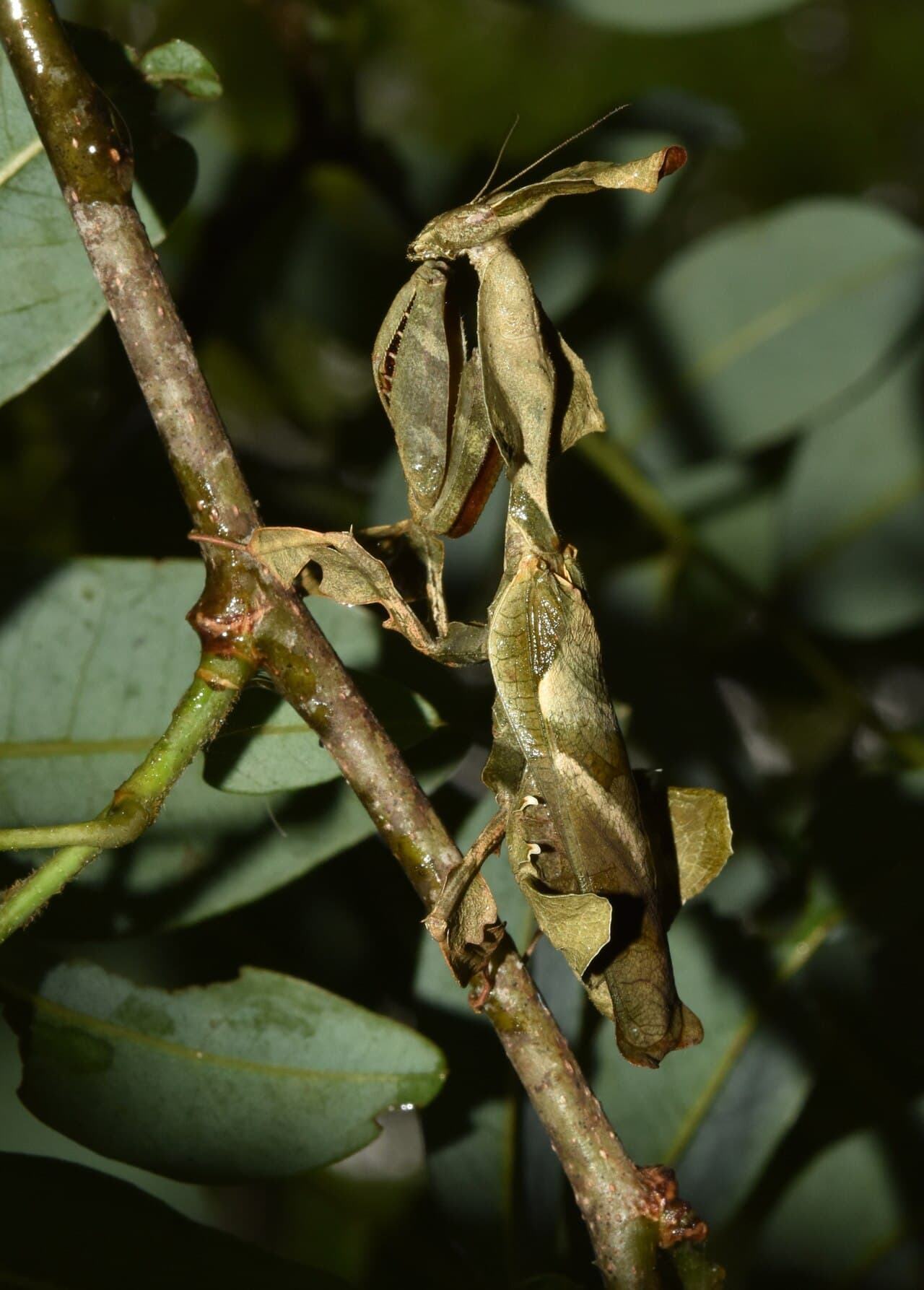
A curled brown leaf suddenly turns its head. The ghost mantis can create exactly that impression, with an uneven crest and ragged outline that make its body difficult to follow.
Its disguise belongs to a small predator waiting for another insect to pass.
A leaf-shaped outline
The ghost mantis, Phyllocrania paradoxa, occurs in sub-Saharan Africa and Madagascar. Shrubs and bushes provide places to hide and hunt.
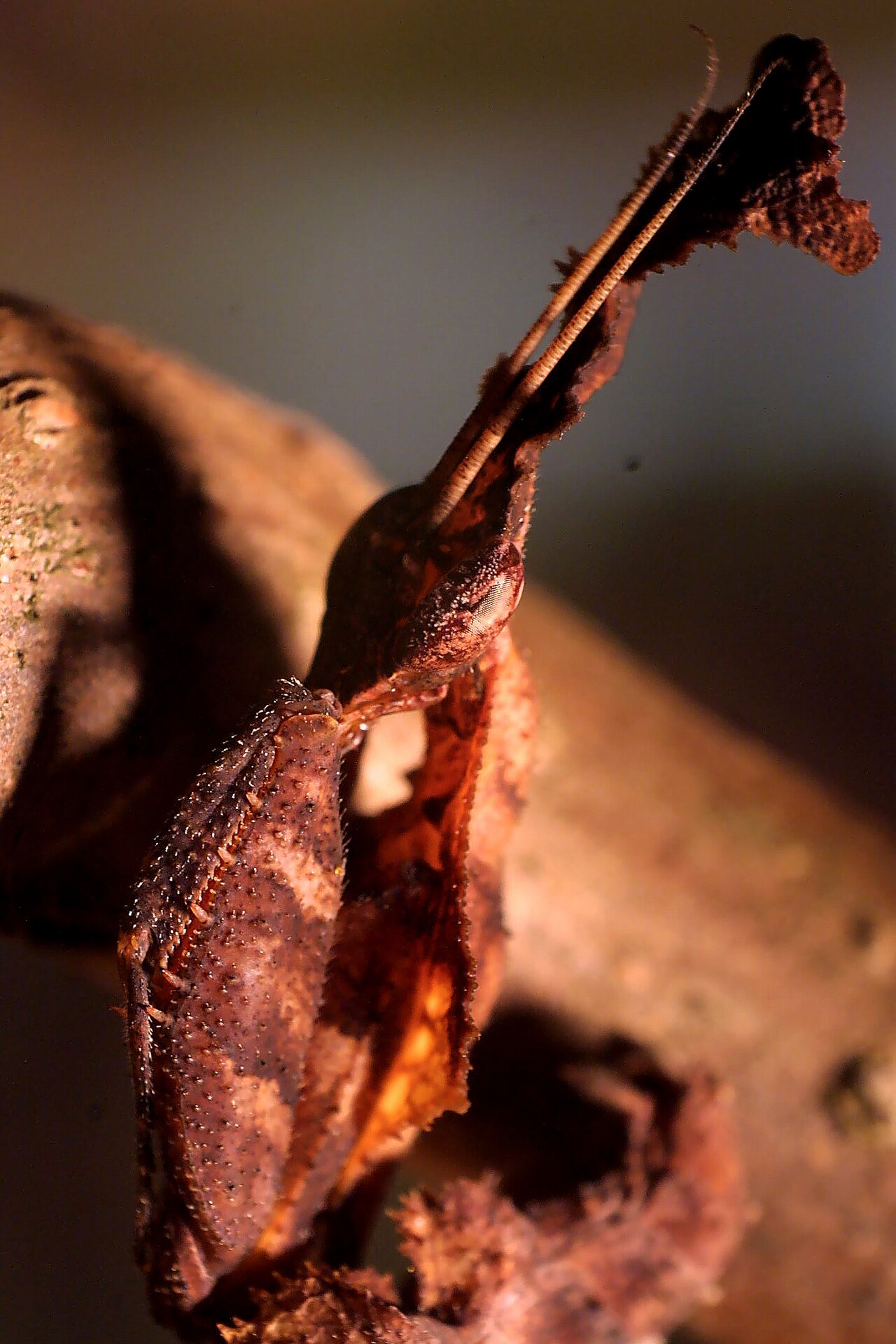
The head carries a distinctive, uneven crest. Along with flattened, irregular body parts, it helps break up the smooth outline we might expect from an animal.
Jonathan's Jungle Roadshow describes these features through observations of captive ghost mantises and their natural history.
Waiting inside the disguise
A ghost mantis can remain still until prey comes close. Its folded front legs carry spines and open quickly to seize an insect.
Brown is a familiar color, but individuals can also be very dark, pale, or green. The species' identity rests on more than a single shade.
A head close-up reveals details that disappear when the whole insect is seen against a busy background.
Learning to read a hidden shape
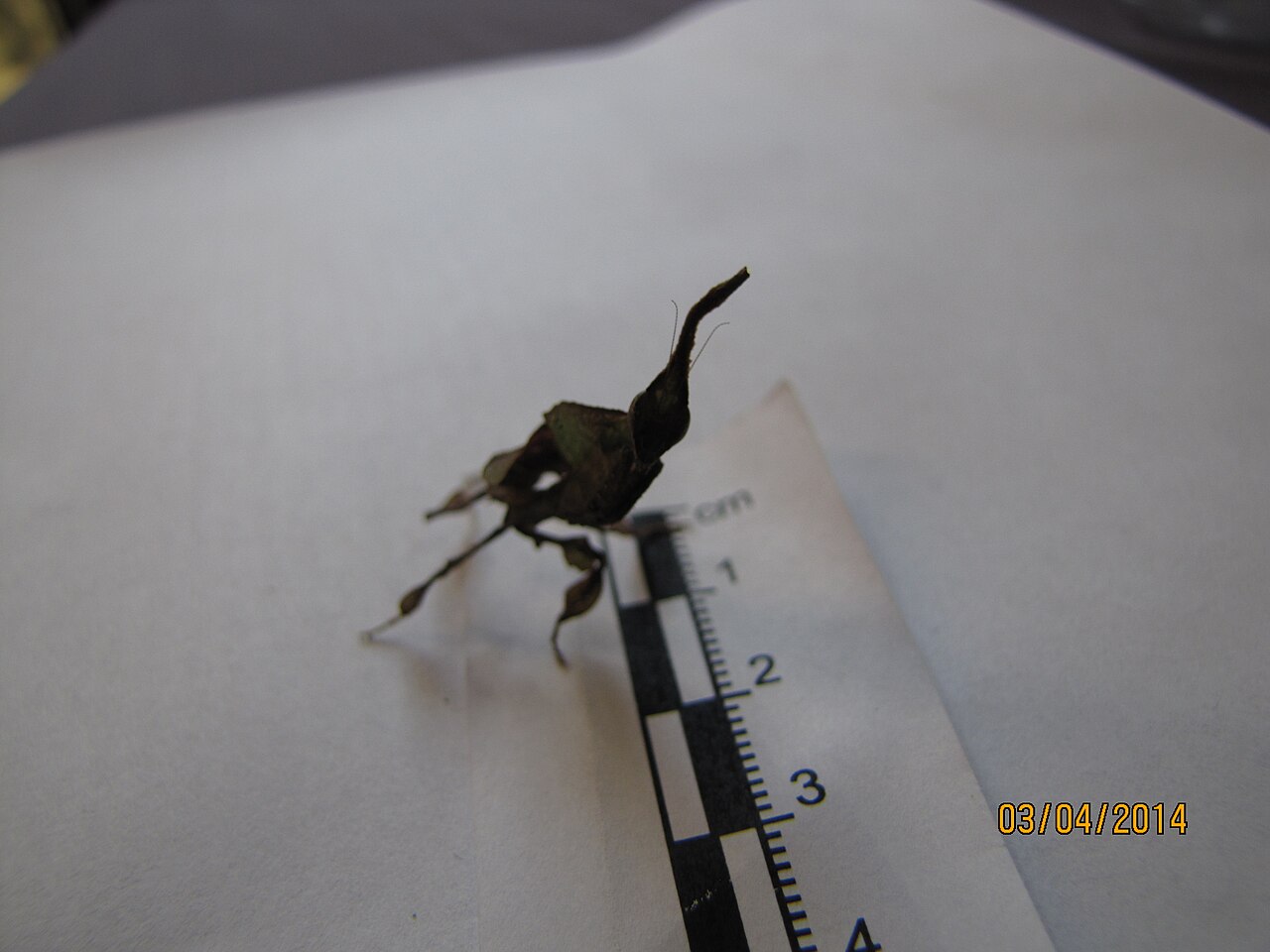
Start with the eye, then trace the head crest and the edges of the legs. What looked like a fragment of plant material gradually becomes a complete animal.
Camouflage is most impressive when we consider the setting in which it works: leaves, twigs, shadows, and broken outlines.
The ghost mantis invites a slower look at ordinary vegetation. A dead leaf may be a leaf—or the first clue to a wonderfully concealed hunter.
Photo credits
Featured image: Phyllocrania paradoxa 337356299 (cropped).jpg — suncana; CC BY 4.0.

Body image 1: Phyllocrania Paradoxa M Kopfdetail.JPG — Mydriatic; CC BY-SA 3.0.

Body image 2: Phylocrania paradoxa female L6 nymph (2).JPG — AdrxO90; CC BY-SA 3.0.

Photographs resized for web display where available. Existing crops are identified in the linked source files.