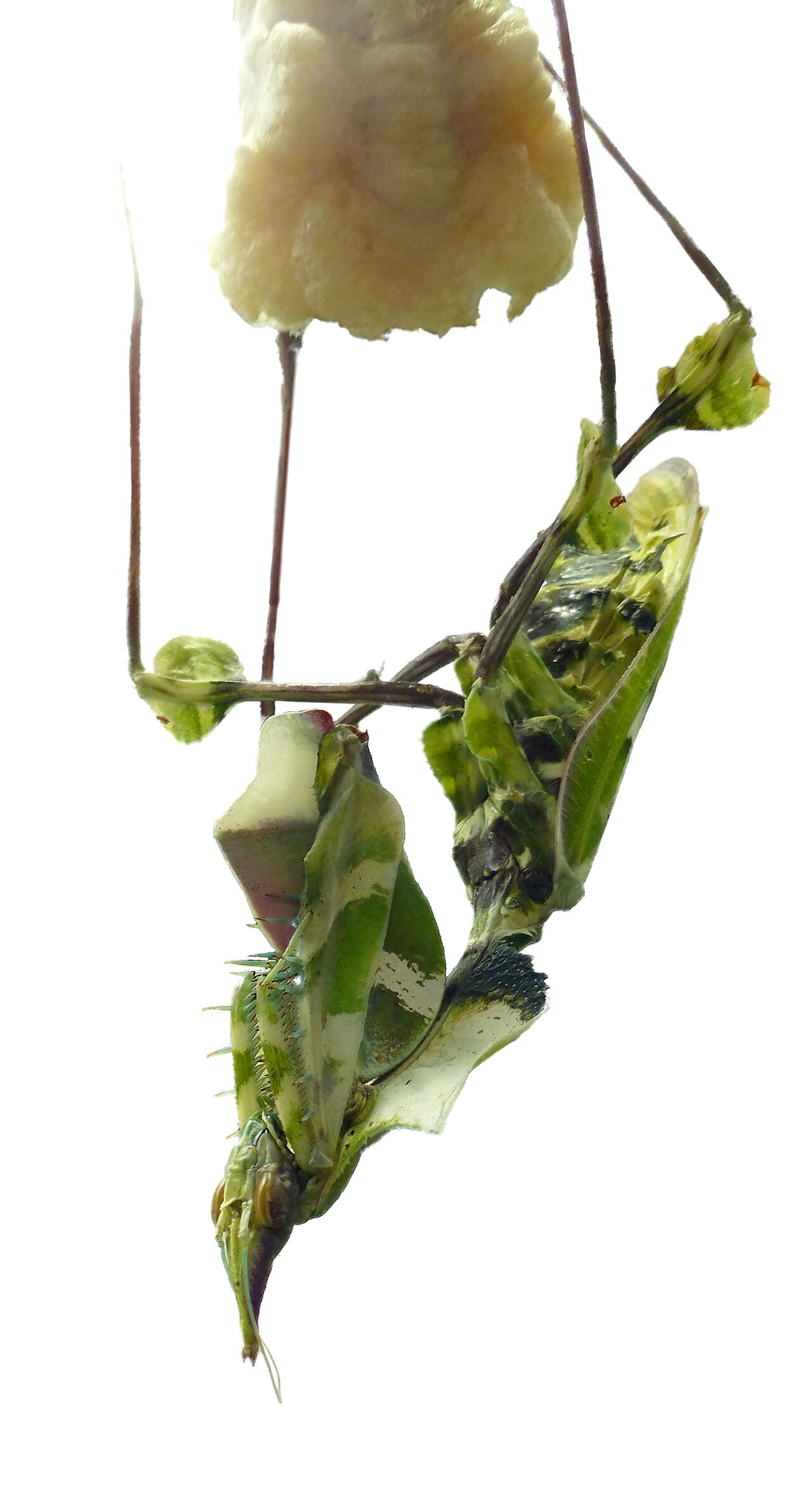
A devil's flower mantis can transform its appearance by raising its forelegs and spreading its wings. Surfaces that were partly hidden become a bold display of contrasting colors.
The change comes from posture and exposed markings, making a quiet-looking insect suddenly seem much larger.
Colors concealed in the folds
The devil's flower mantis, Idolomantis diabolica, has broad structures on its grasping forelegs and an elongated first body segment behind the head.
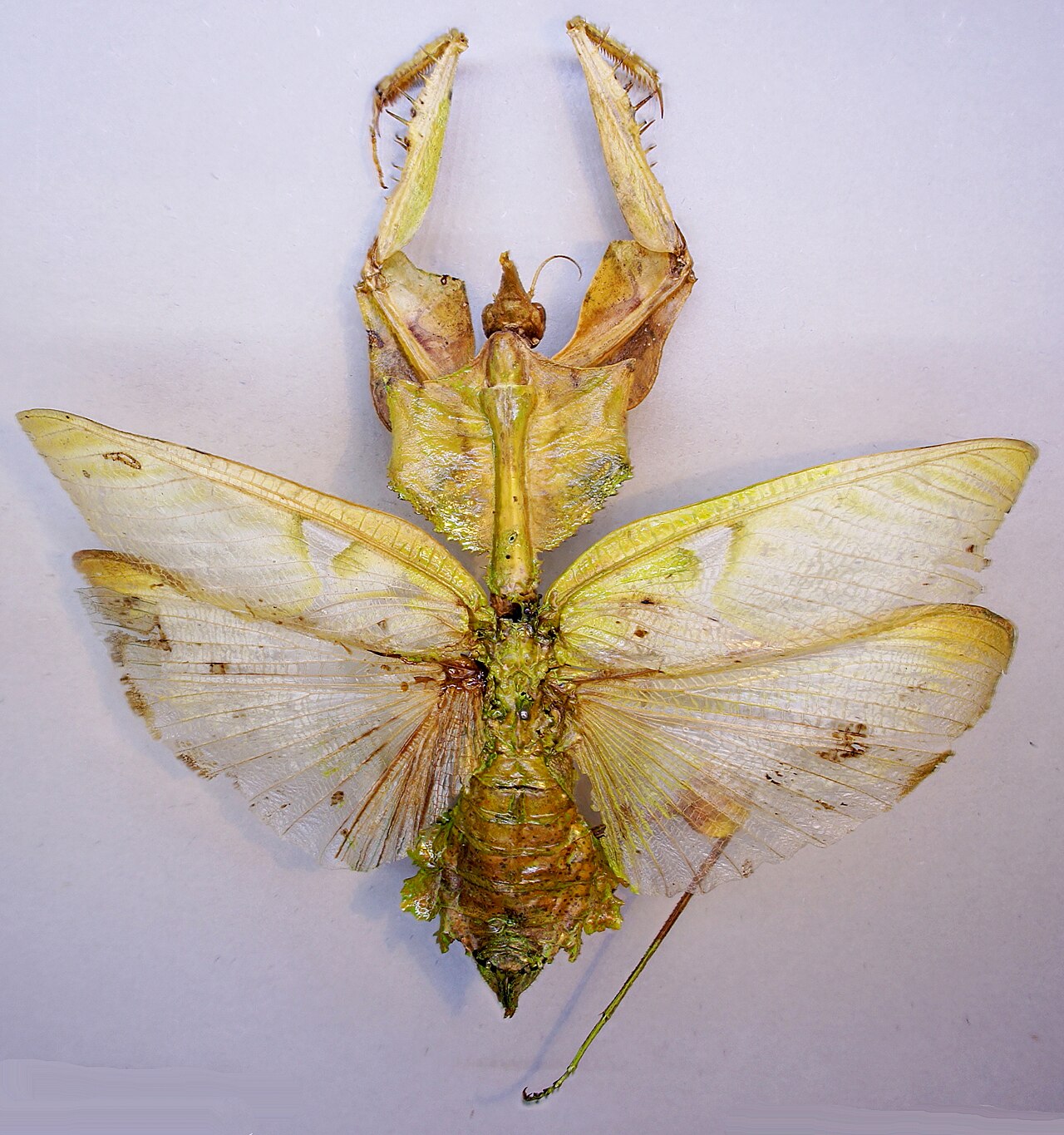
When threatened, it exposes the colorful undersides while opening its wings. HHMI's Beautiful Biology describes this startle display and provides close views of the structures involved.
A brief hesitation from a potential predator may give the mantis time to escape. The prepared specimen below shows the wings spread for study.
A different look at every stage
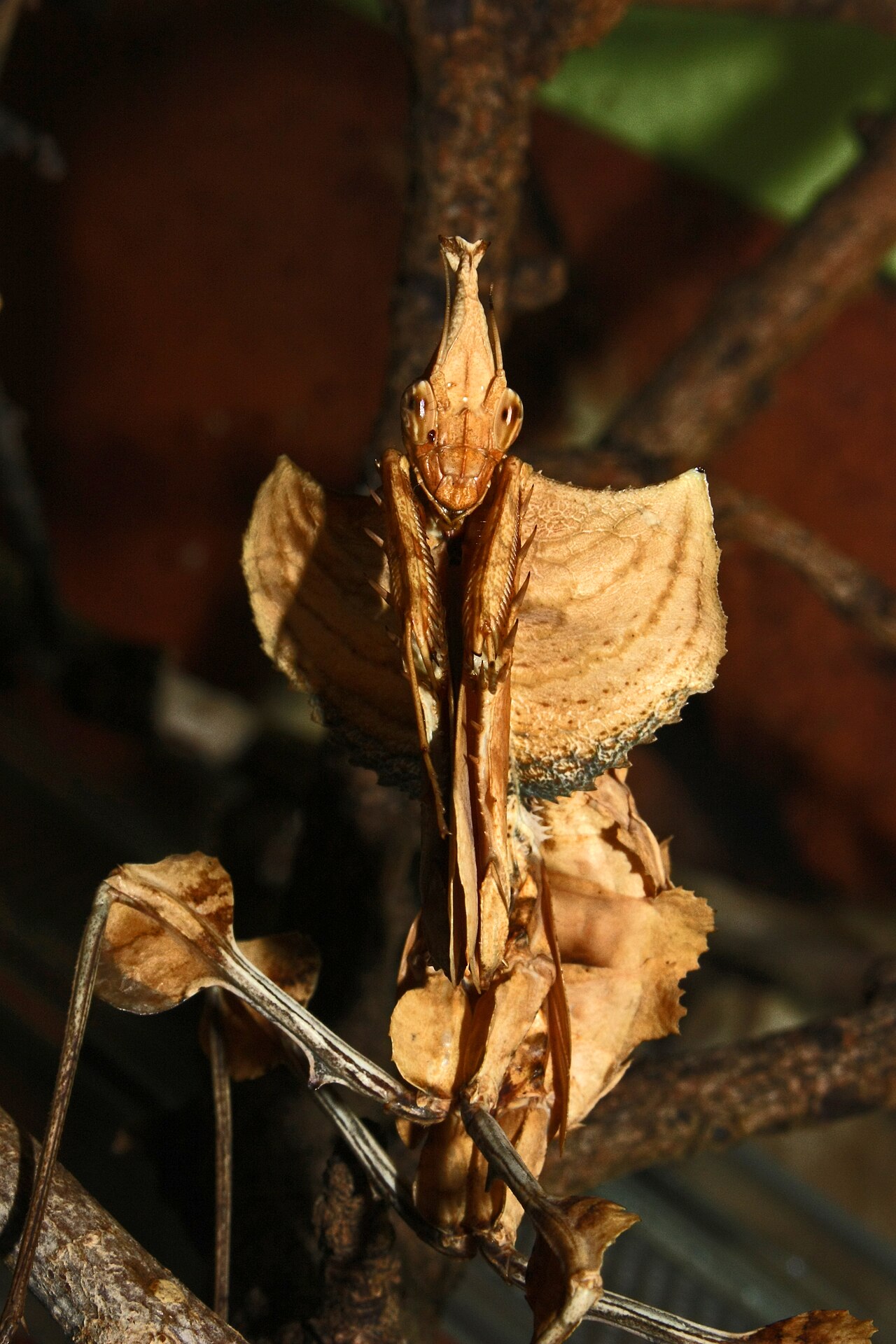
Young mantises do not always resemble the adult in photographs. As this species grows, it sheds its outer skeleton repeatedly, passing through stages with different colors and proportions.
Some stages have a drab, leaf-like appearance. The adult's brighter markings develop around the final transition.
Females can reach roughly 13 centimeters in length, making this a particularly impressive mantis.
A hunter with more than one defense
Large eyes help mantises judge the position of prey, while folded, spiny forelegs become fast grasping tools.
Camouflage, vision, and a sudden display all contribute to the same animal's life. A colorful portrait captures only one part of that story.
The devil's flower mantis shows how much an insect can change without leaving its perch: a shift in posture reveals an entirely different face of nature.
Photo credits
Featured image: Idolomantis diabolica - 0063.jpg — Amada44; CC BY-SA 3.0.

Body image 1: Idolomantos diabolica TPopp.jpg — Tanja Popp; CC BY-SA 4.0.

Body image 2: Idolomantis diabolica-subadult female.JPG — Drägüs; CC BY-SA 3.0.

Photographs resized for web display where available. Existing crops are identified in the linked source files.