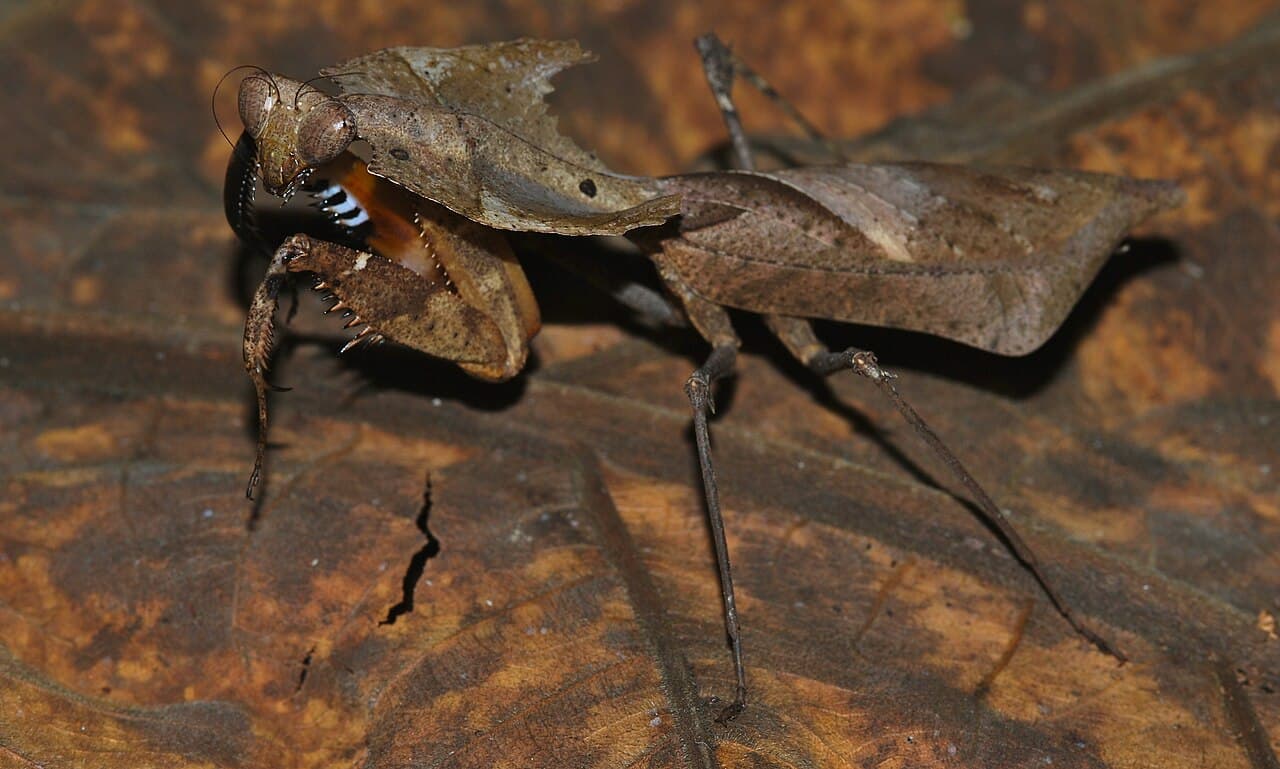
The Malaysian dead leaf mantis has a broad, brown body that can resemble a dried leaf. Light and dark markings deepen the illusion, turning an insect into something a passing animal might overlook.
But a hidden mantis is still a hunter—and its defenses do not end with camouflage.
The shield behind the head
This species, Deroplatys desiccata, is associated with Malaysia and nearby Southeast Asian forests.
An expanded shield on the first segment behind the head is a central part of its leaf-like shape. Females are especially broad, while males have a slimmer outline.
Keeping Insects describes the appearance and behavior from direct husbandry experience.
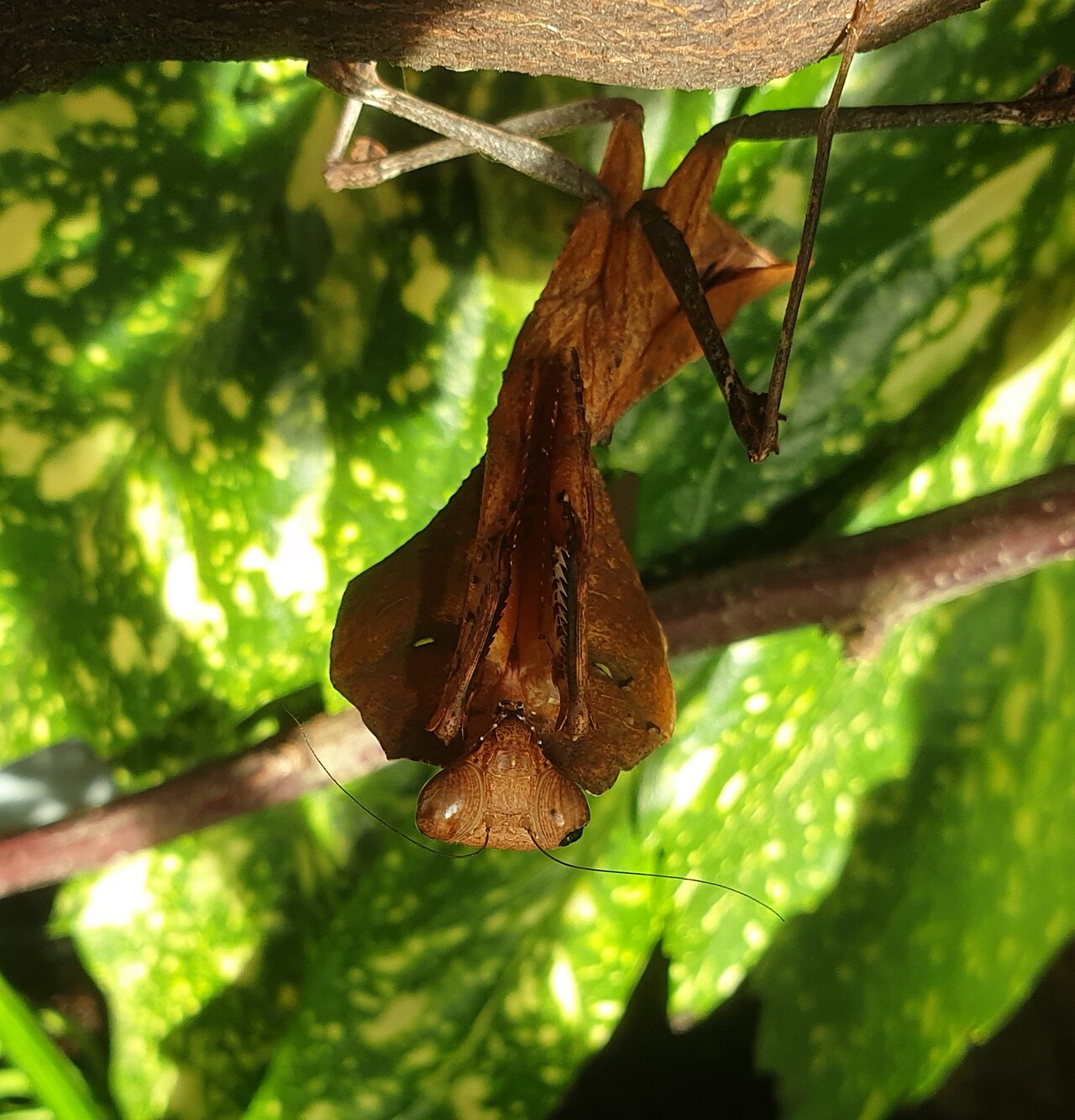
A disguise with a second act
When disturbed, this mantis may stay motionless in a death-feigning posture. Adults can also raise their wings and forelegs in a defensive display.
That movement reveals stronger markings normally concealed when the wings are folded. A sudden change in shape and contrast can make the animal more conspicuous at the very moment concealment has failed.
The photos here show resting animals, allowing the leaf-like body to be studied without provoking a display.
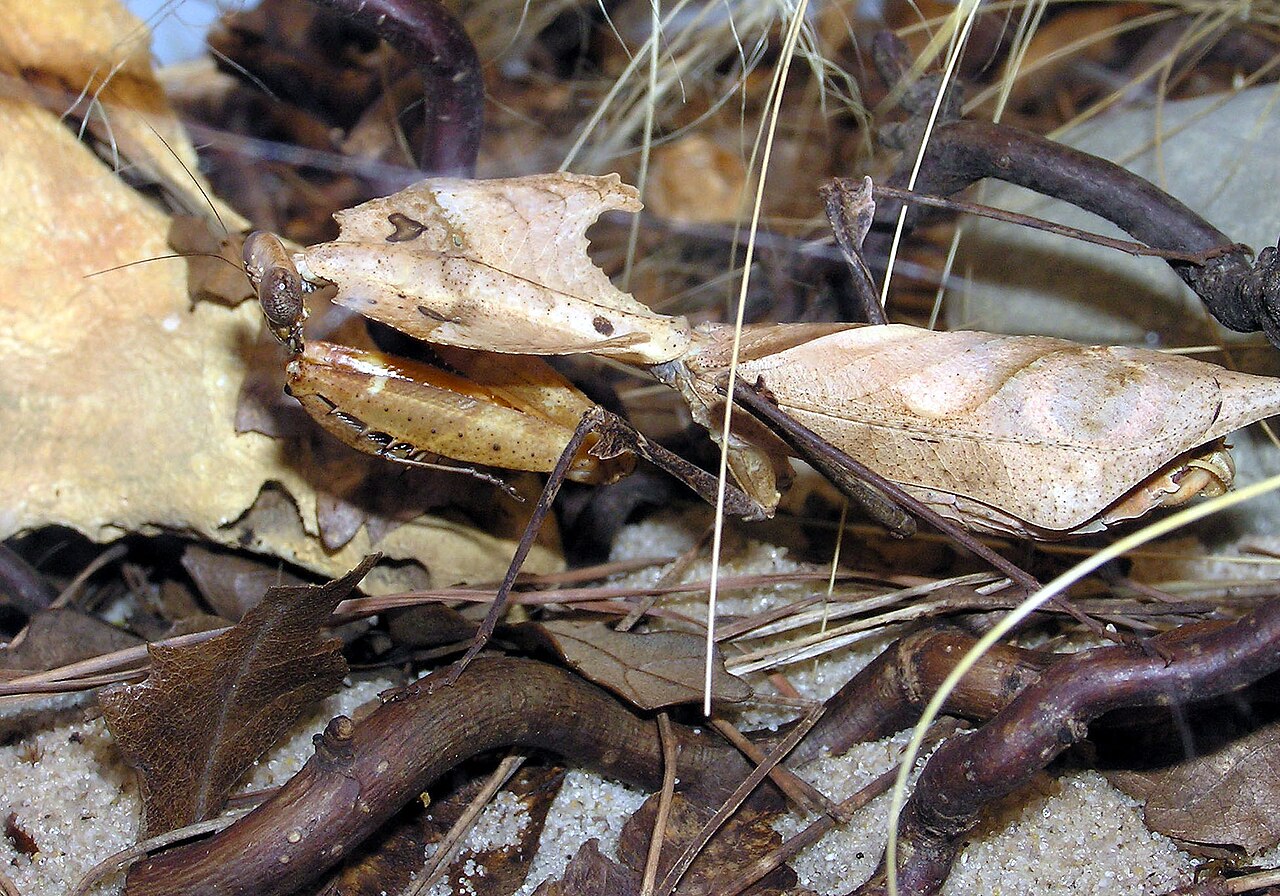
Finding the insect within the leaf
Look for the triangular head and folded grasping legs. Once those details become clear, the rest of the animal is easier to trace.
The camouflage is not a simple coat of brown paint. Shape, texture, markings, and stillness work together.
The Malaysian dead leaf mantis turns a familiar forest object into a lesson in looking carefully: sometimes a leaf-like shape is watching the world around it.
Photo credits
Featured image: Dead Leaf Mantis (Deroplatys desiccata) (8727839353).jpg — Bernard DUPONT from FRANCE; CC BY-SA 2.0.

Body image 1: Adult female Deroplatys desiccata.jpg — Bort07; CC0.

Body image 2: Bristol.zoo.dead.leaf.mantis.arp.jpg — Adrian Pingstone; Public domain.

Photographs resized for web display where available. Existing crops are identified in the linked source files.