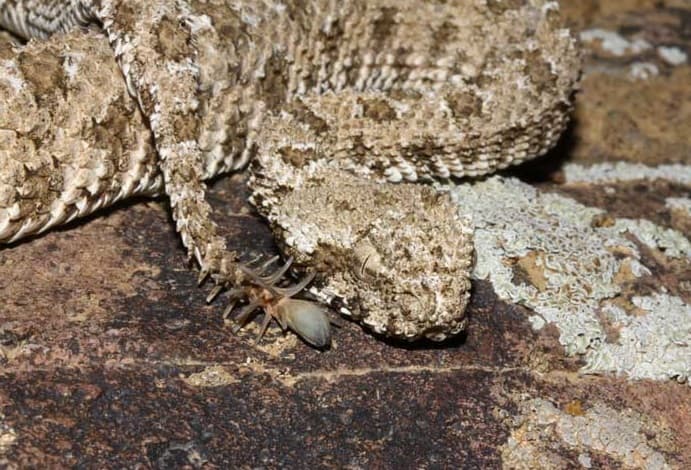
What looks like a spider moving across a rock may actually be the end of a snake. The spider-tailed horned viper has a tail tip so unusual that it can draw the attention of a hungry bird.
The rest of the snake stays remarkably difficult to spot.
A convincing little decoy
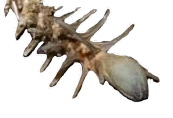
This viper, Pseudocerastes urarachnoides, comes from western Iran. A swollen tail tip and elongated surrounding scales create a spider-like shape.
When the snake moves the tip, the resemblance becomes more persuasive. The motion is a form of caudal luring: using the tail to attract prey.
The Field Museum explains research into this extraordinary lure.
Two tricks working together
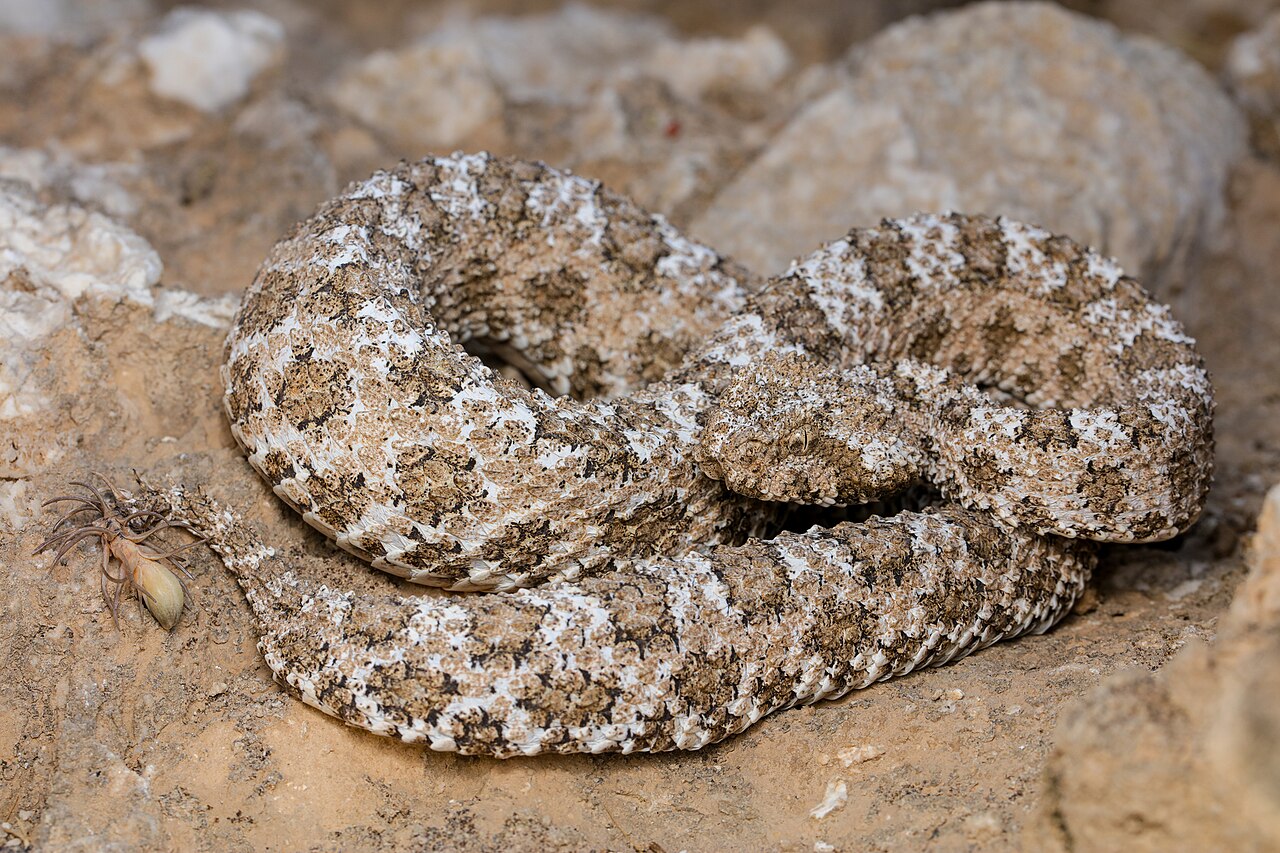
A moving lure would be less effective if the predator behind it were obvious. The viper's rough, mottled appearance helps it blend with rocky surroundings.
Birds drawn toward the spider-like movement may come close enough for the waiting snake to strike. Researchers have documented the behavior, showing that the resemblance is part of a real hunting strategy.
This is a venomous animal. Its fascinating camouflage is a reason to observe carefully from a distance and leave it undisturbed.
Seeing the whole picture
The tail attracts attention while the body avoids it. Together, those two effects turn a small patch of rocky ground into a remarkable natural scene.
For Amazing Nature readers, the lesson is simple: the most obvious moving object may be only one small part of a much bigger story.
Photo credits
Featured image: Pseudocerastes urarachnoides.jpeg — Omid Mozaffari; CC0.

Body image 1: Pseudocerastes urarachnoides tail png.png — The Nature Box; CC0.

Body image 2: Spider-tailed Horned Viper (Pseudocerastes urarachnoides) in Iran.jpg — Kian kaftarbaz; CC BY 4.0.

Photographs resized for web display where available.