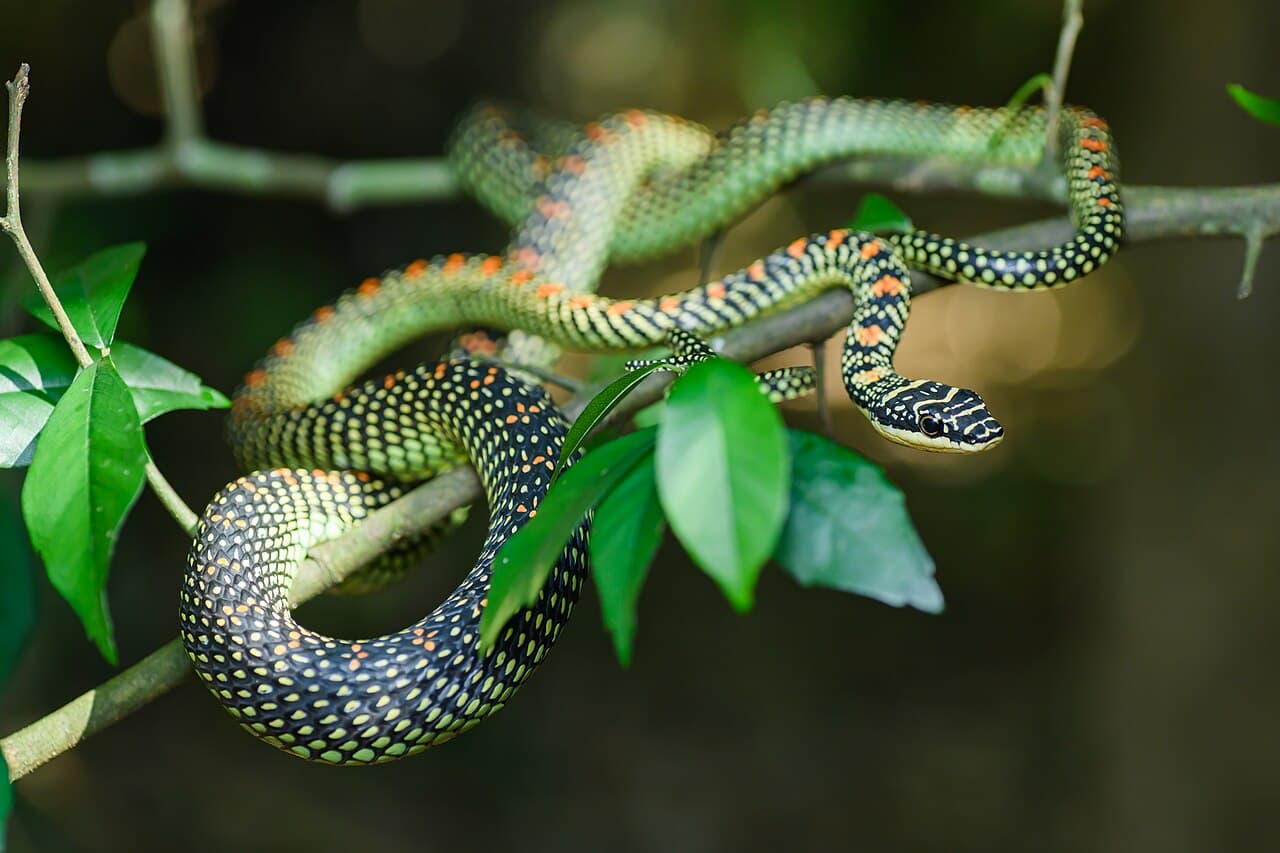
A snake launches from a branch, spreads its body, and glides through the air. The paradise flying snake manages this extraordinary journey without wings.
Its secret lies in changing shape and continuing to move after leaving its perch.
Turning a body into a lifting surface
The paradise flying snake, Chrysopelea paradisi, is a slender tree-dwelling snake of Southeast Asia. Before and during a glide, it flattens its body, making it much wider than its usual rounded form.
The expanded shape helps generate aerodynamic forces as air moves around it. The snake is gliding downward, rather than powering itself upward like a flapping bird.
Why it keeps wriggling
The animal also moves in waves while airborne. Research associated with Virginia Tech's flying-snake studies examines the relationship between its body motion and gliding.
These movements are part of a controlled journey through the air. A snake that looks awkwardly out of place to us is using its long body in a highly specialized way.
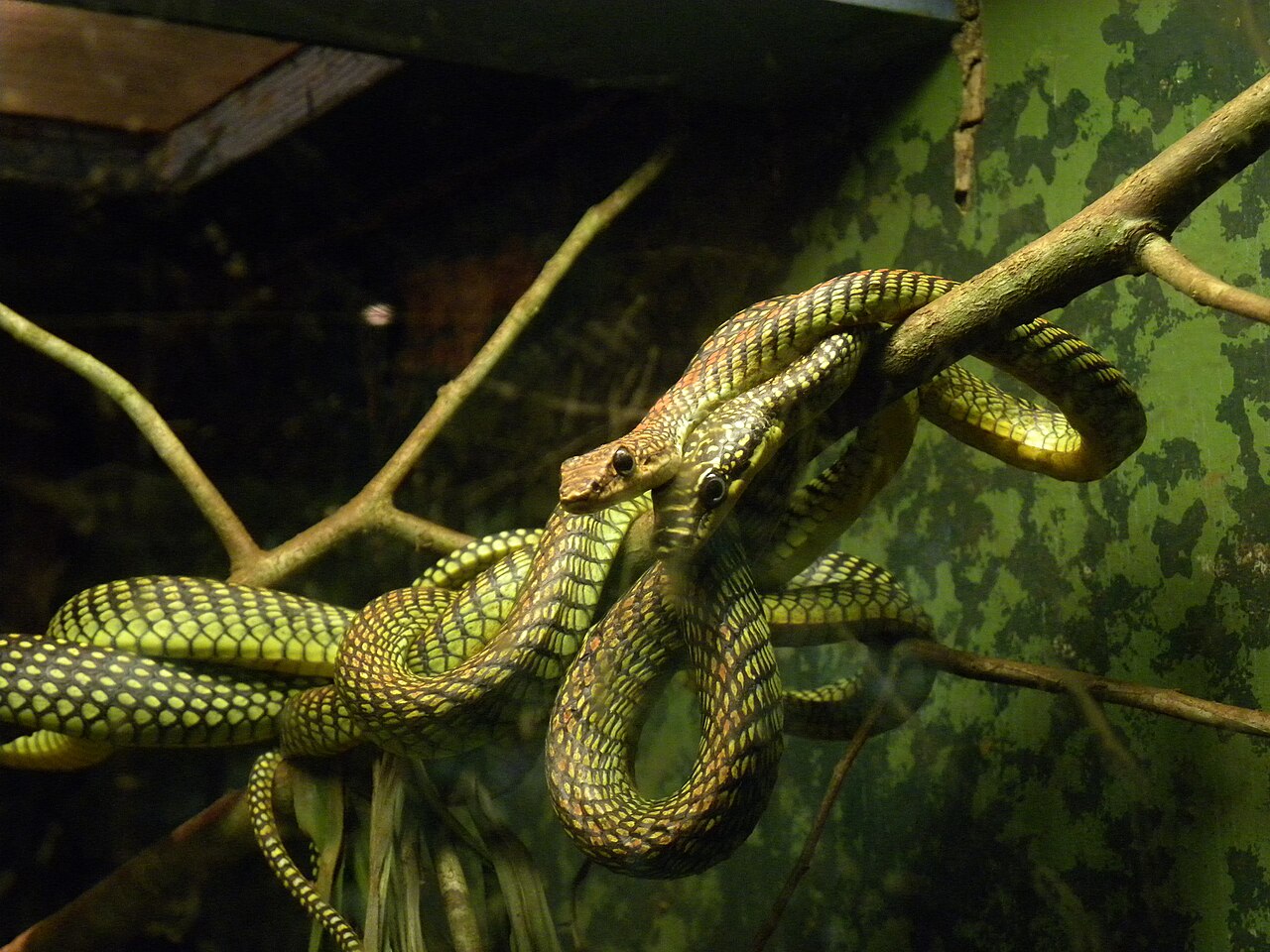
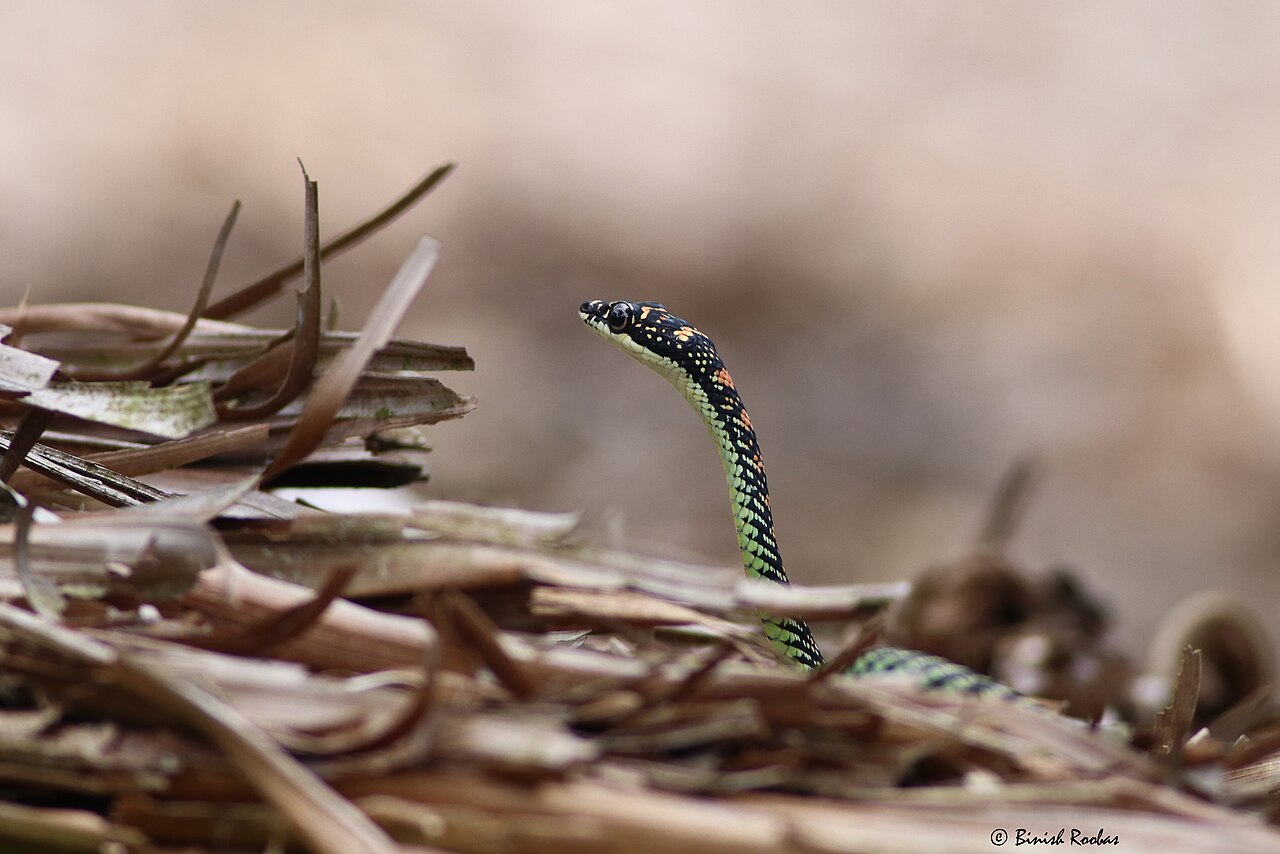
The photographs here show paradise flying snakes at rest; they do not depict an airborne glide.
A forest with more than one route
Branches are more than resting places for this animal. They can also serve as launch points.
For Amazing Nature readers, the paradise flying snake changes how we imagine a forest. The gaps between trees are part of the habitat too, and an animal without legs or wings has found an astonishing way to cross them.
Photo credits
Featured image: Chrysopelea paradisi, Paradise tree snake - Kaeng Krachan National Park (40913315223).jpg — Rushen; CC BY-SA 2.0.

Body image 1: Chrysopelea paradisi (6032067972).jpg — Alan Couch from Australia; CC BY 2.0.

Body image 2: Paradise flying snake (Chrysopelea paradisi).jpg — Broobas; CC BY-SA 4.0.

Photographs resized for web display where available.