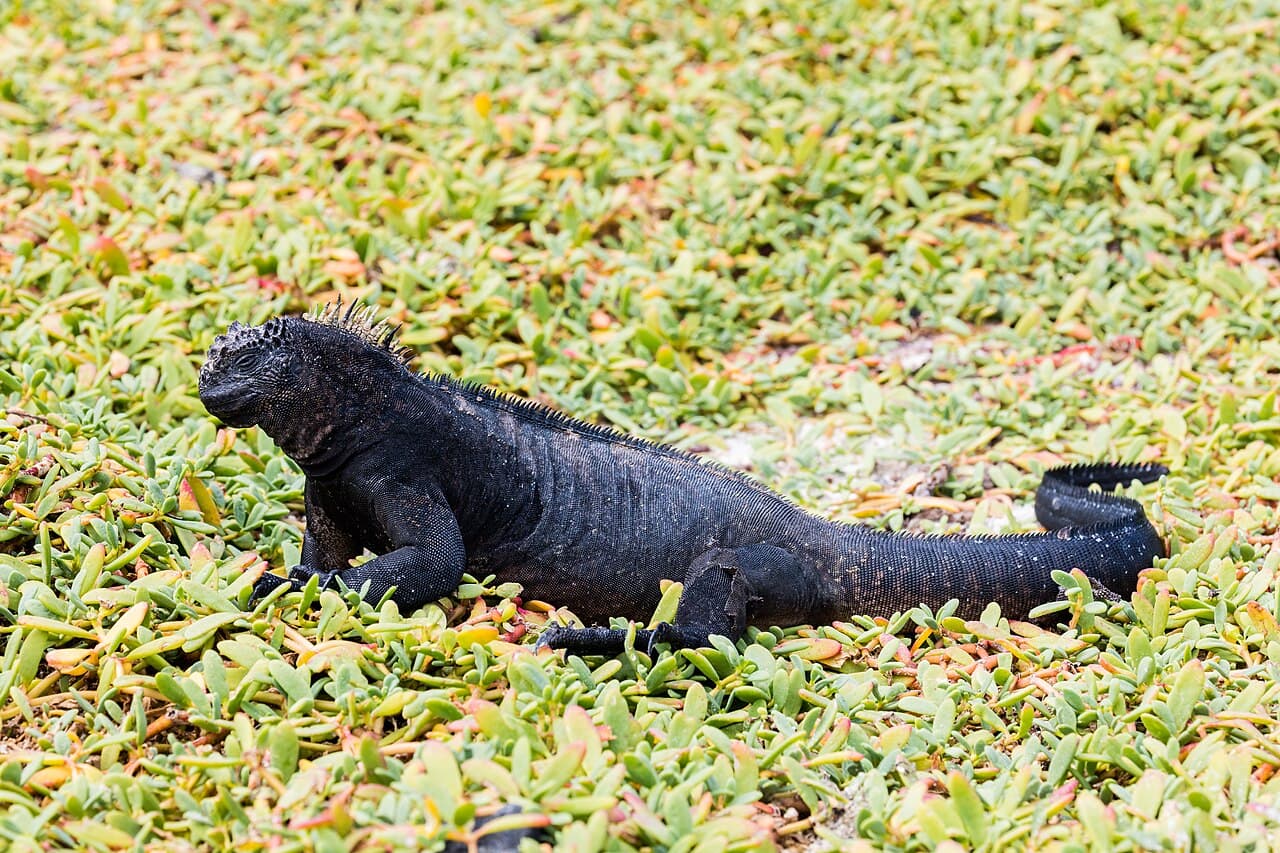
A lizard slips into the Pacific to graze on algae, then returns to warm itself on volcanic rock. The marine iguana has a lifestyle unlike that of any other living lizard.
Found naturally only in the Galápagos, it links the islands' rocky shores with the food growing beneath the waves.
A reptile with a marine menu
Marine iguanas, Amblyrhynchus cristatus, feed on marine algae. Some graze in shallow coastal areas, while larger animals can dive to feed underwater.
Their strong claws help them hold onto rocks. A flattened tail helps with swimming. The Galápagos Conservation Trust explains the adaptations behind this unusual way of life.
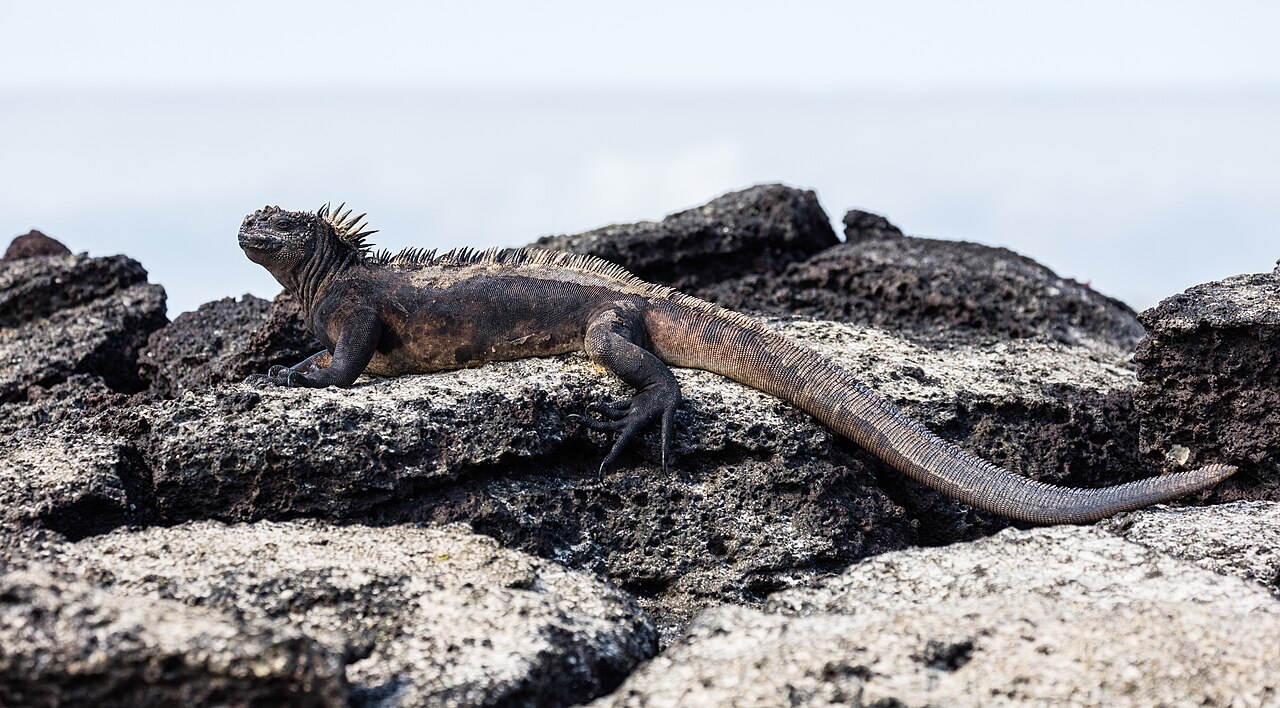
Returning to the warmth
Cold seawater cools an iguana's body. After feeding, basking on land helps it warm up again.
An iguana resting on dark rock may look inactive, but that pause is part of the rhythm of its day. Feeding and warming are connected.
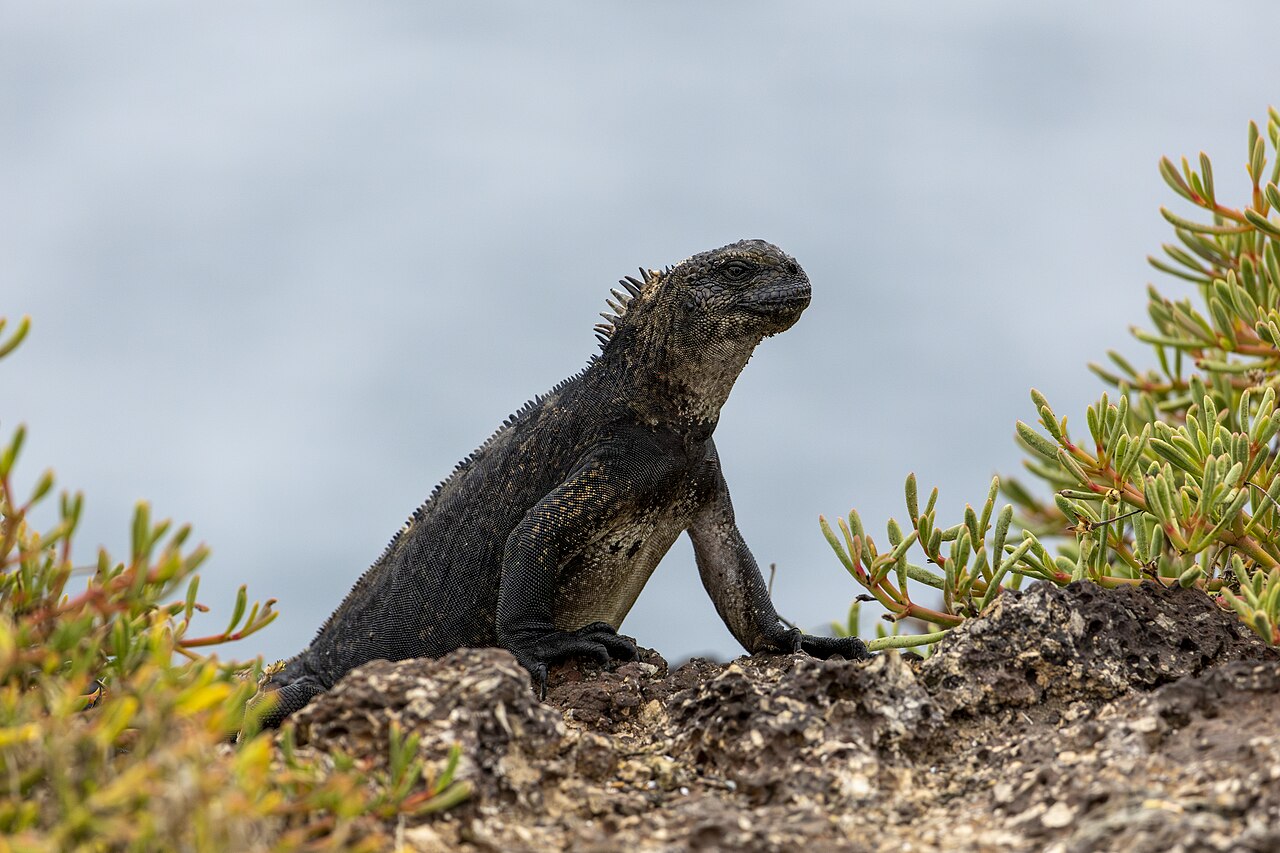
Why the shoreline matters
Marine iguanas depend on the condition of the sea as well as the land. El Niño events can reduce their algal food supply, while introduced animals and human disturbance create further pressures.
Visitors can help by keeping their distance and following local wildlife guidance.
The marine iguana is an unforgettable example of island adaptation. For Amazing Nature readers, its daily journey offers a fresh way to see a coastline: a place where sun-warmed stone and cold ocean water support the same remarkable animal.
Photo credits
Featured image: Iguana marina (Amblyrhynchus cristatus), Bahía Tortuga, isla Santa Cruz, islas Galápagos, Ecuador, 2015-07-26, DD 30.JPG — Diego Delso; CC BY-SA 4.0.

Body image 1: Iguana marina (Amblyrhynchus cristatus), Las Bachas, isla Santa Cruz, islas Galápagos, Ecuador, 2015-07-23, DD 23.jpg — Diego Delso; CC BY-SA 4.0.

Body image 2: Marine iguana, Plaza island, July 13, 2025.jpg — E bailey; CC BY-SA 4.0.

Photographs resized for web display where available.