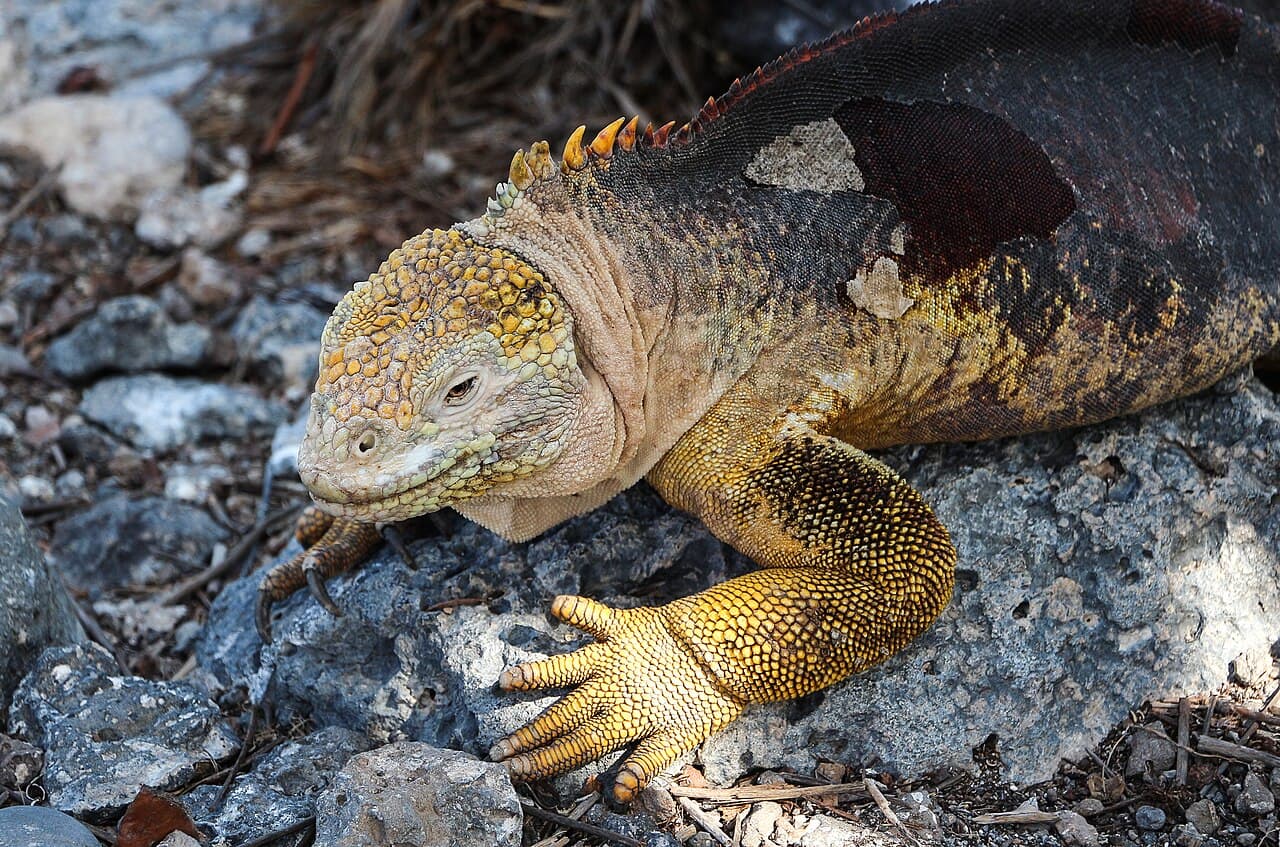
A golden-yellow iguana beside a cactus might look like a creature from another age. On the Galápagos Islands, it is a living part of a very modern conservation story.
The Galápagos land iguana makes its home on land, with a diet that includes one of the islands' most distinctive plants.
Which land iguana is this?
The Galápagos land iguana, Conolophus subcristatus, is one of three land iguana species native to the archipelago. It is distinct from the Santa Fe land iguana and the pink land iguana.
Its sturdy body and yellow-brown coloring suit the dry island scenery. The Galápagos Conservation Trust describes its biology and conservation.
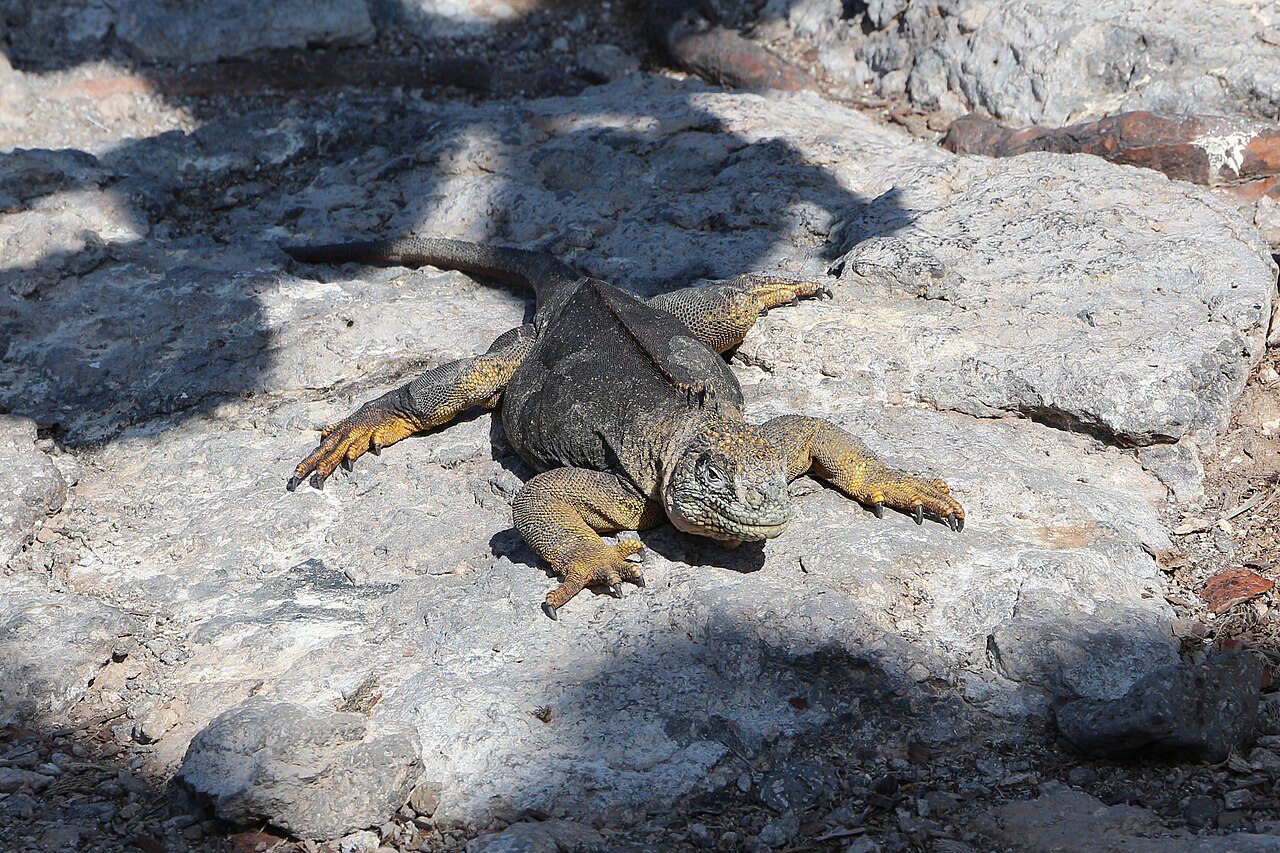
A taste for cactus
These iguanas are mainly plant eaters. Prickly pear cactus provides food, including pads and fruit.
That connection makes a cactus more than a dramatic shape in a landscape photograph. For an iguana, it can be part of the day's meal.
Females dig nests in the ground, placing the next generation beneath the island soil.
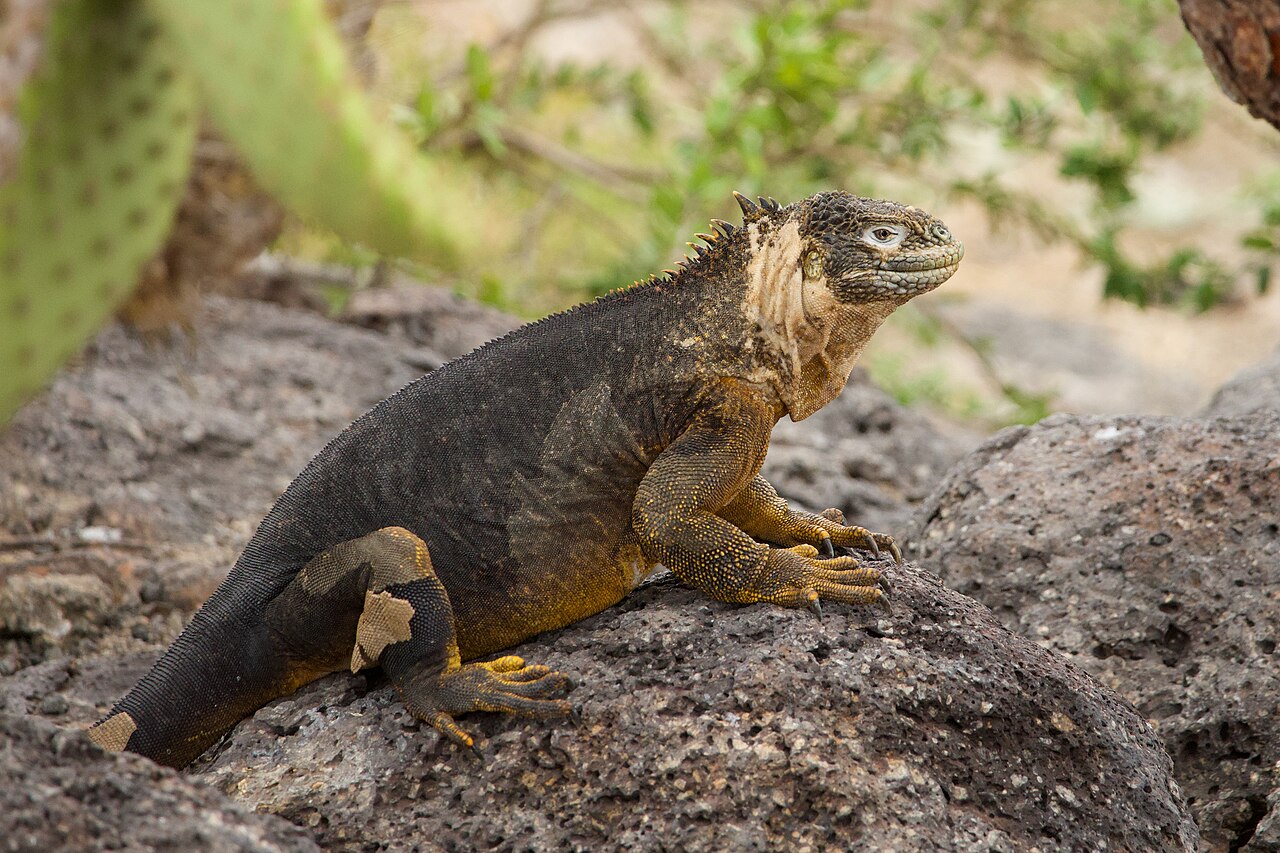
A future shaped by protection
Introduced predators and habitat changes have harmed land iguanas. Conservation work, including reintroduction on Santiago Island, shows how protecting and restoring populations can make a difference.
Their story is a useful reminder that island wildlife needs more than admiration. It needs suitable habitat and careful management of introduced species.
At Amazing Nature, this golden grazer helps us appreciate the connections within a landscape. The cactus, the soil, and the iguana all belong to the same extraordinary island story.
Photo credits
Featured image: Galapagos land iguana 01.jpg — Bernard Gagnon; CC BY-SA 3.0.

Body image 1: Galapagos land iguana 03.jpg — Bernard Gagnon; CC BY-SA 4.0.

Body image 2: Galápagos land iguana (Conolophus subcristatus) July 2025.jpg — E bailey; CC0.

Photographs resized for web display where available.