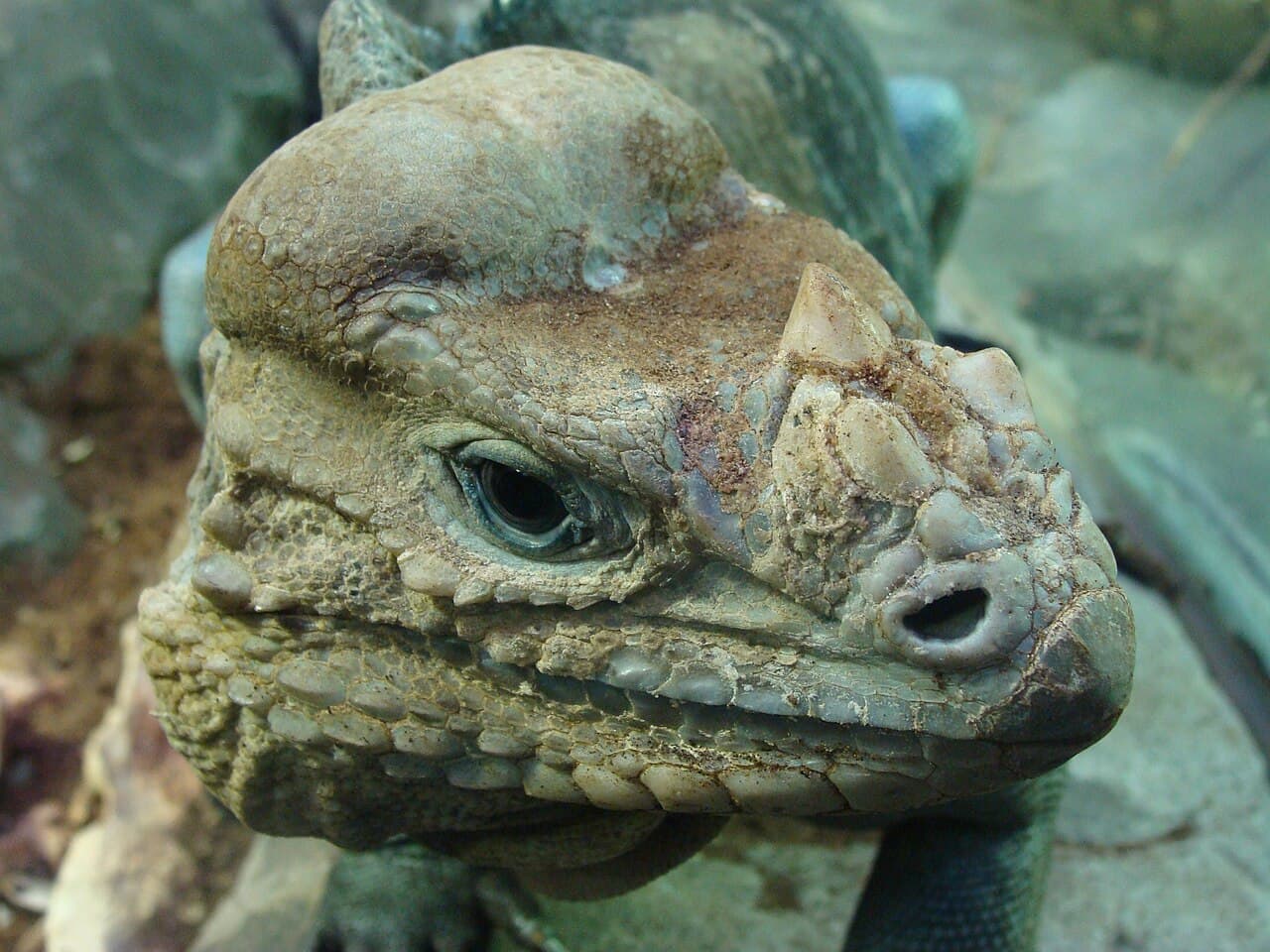
Three raised bumps on a lizard's snout can be enough to suggest a much larger animal. The rhinoceros iguana earns its name from the horn-like projections above its nose.
Its rugged face is striking, but this Caribbean reptile has a largely plant-based menu.
A name written on its face
The rhinoceros iguana, Cyclura cornuta, is native to Hispaniola and nearby islands. Its snout projections give it a recognizable profile, especially alongside its heavy body and strong limbs.
These are features of an iguana's head, rather than miniature versions of a rhinoceros's horn. The Jerusalem Biblical Zoo introduces the species and its island home.
A sturdy plant eater
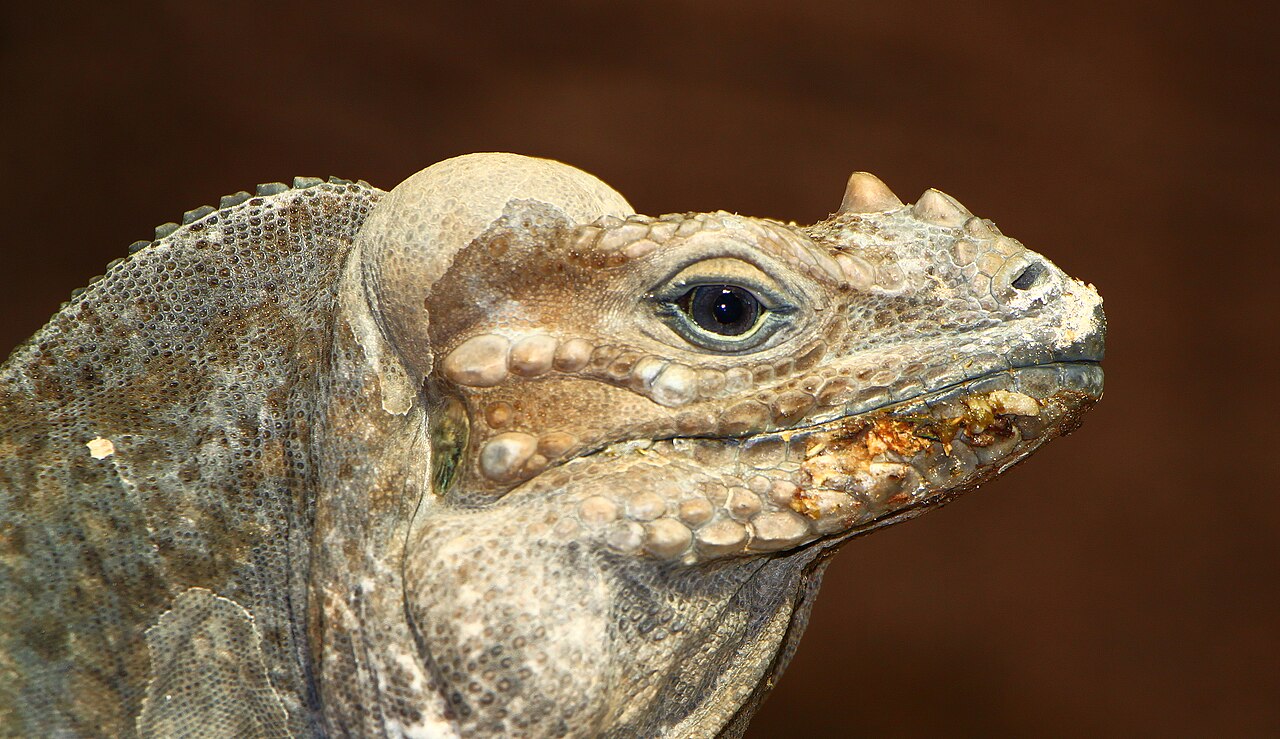
Leaves, flowers, and fruit form much of its diet, although it can eat some animal material too. Australia Zoo describes its feeding and behavior.
Males can defend territories and use displays such as head movements. Females dig nesting sites for their eggs.
The animal's impressive outline should not distract us from these ordinary needs: food, space, and suitable ground for breeding.
Looking after an island reptile
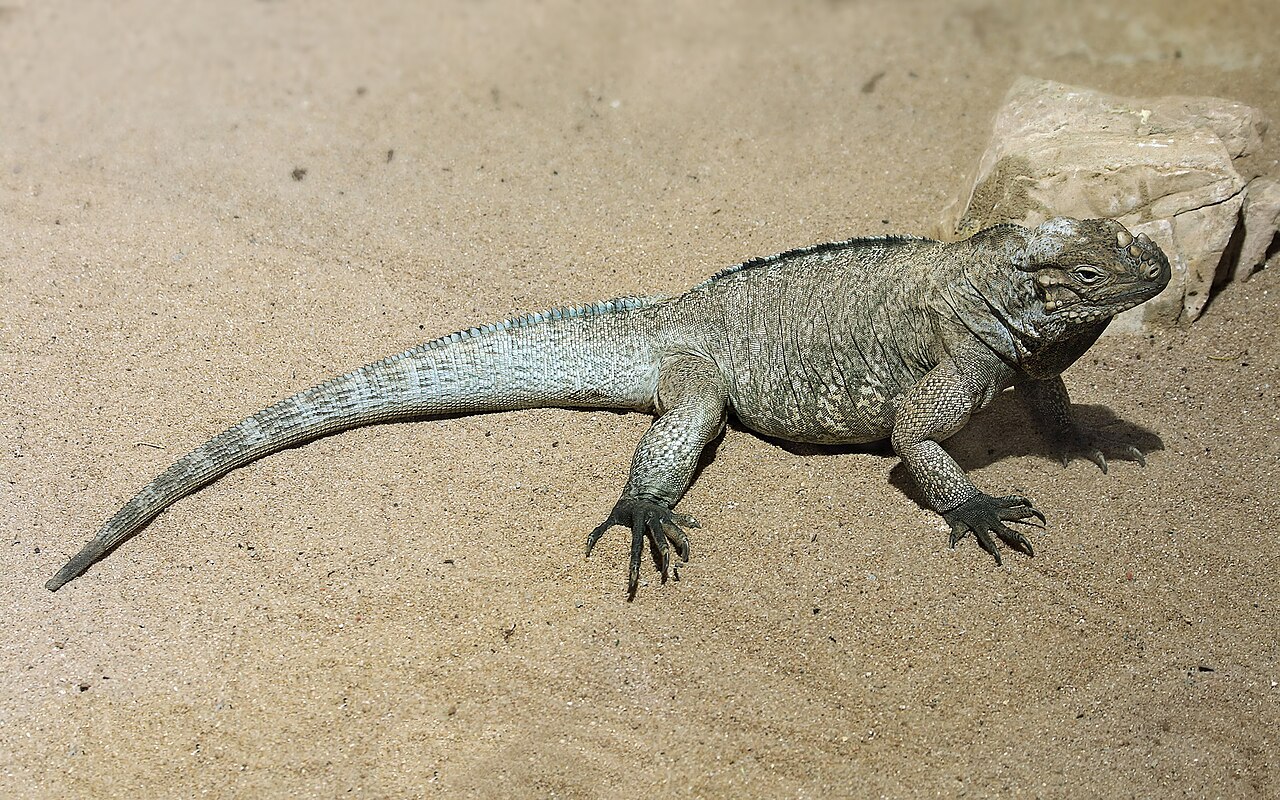
Habitat loss and introduced animals create conservation concerns for rhinoceros iguanas. Protecting their island habitats helps preserve the conditions they need to feed and reproduce.
For Amazing Nature readers, this iguana offers more than a prehistoric-looking portrait. Its horned face belongs to a living animal with a specific place in the Caribbean—and a future tied to how that place is cared for.
Photo credits
Featured image: Cyclura cornuta.004 - Zoo Aquarium de Madrid.JPG — Fernando Losada Rodríguez; CC BY-SA 4.0.

Body image 1: Cyclura cornuta - Reptilium Landau.jpg — H. Zell; CC BY-SA 3.0.

Body image 2: Nashornleguan Cyclura cornuta Richard Bartz.jpg — Richard Bartz , Munich aka Makro Freak; CC BY-SA 2.5.

Photographs resized for web display where available.