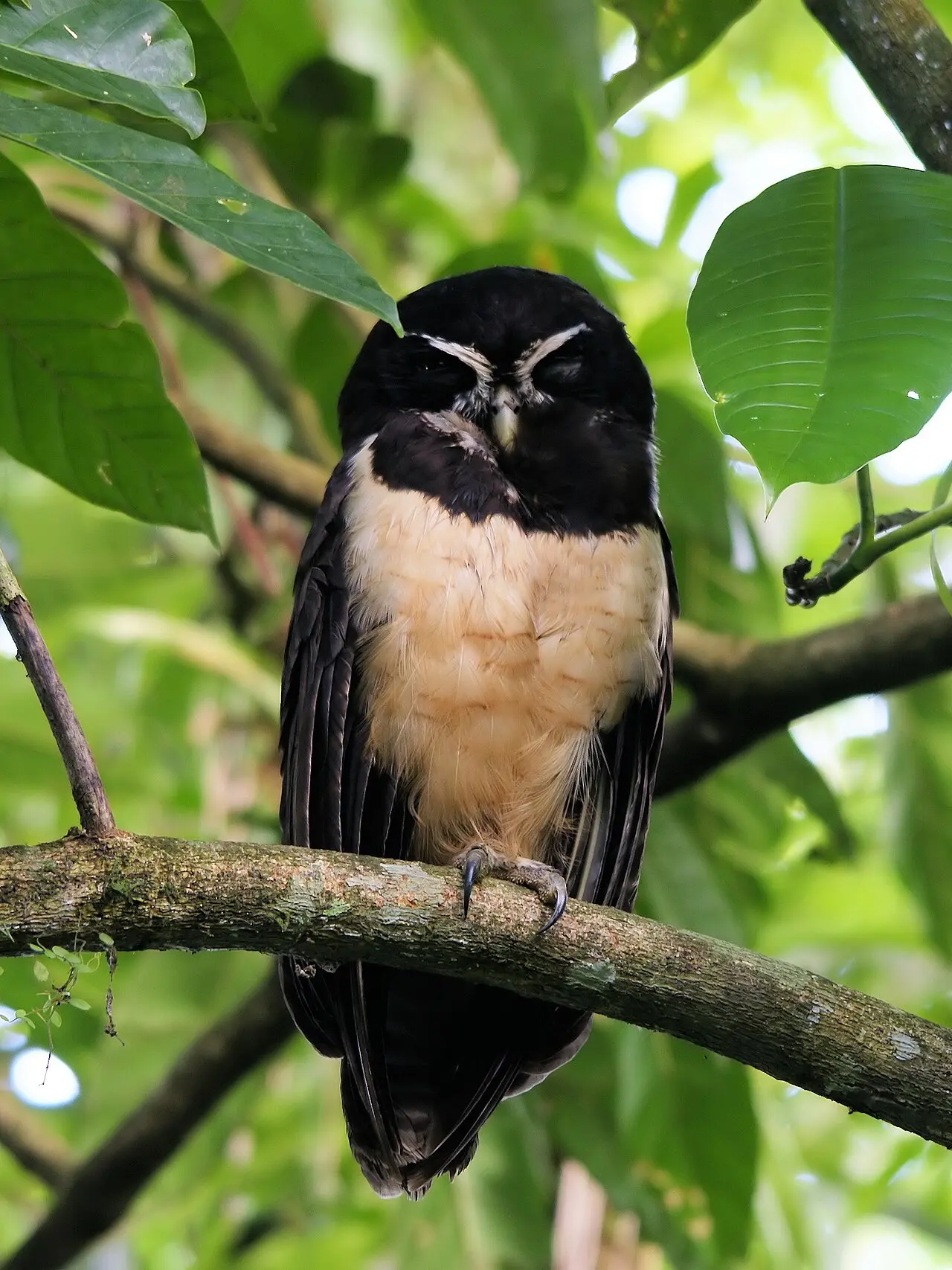
A Spectacled Owl seems to look through a pale pair of glasses. White markings frame its yellow eyes and stand out sharply against a dark face.
Pulsatrix perspicillata lives in tropical parts of the Americas. Its broad head and pale underparts give it a striking appearance, even when it sits quietly among shaded branches.
A face that changes with age
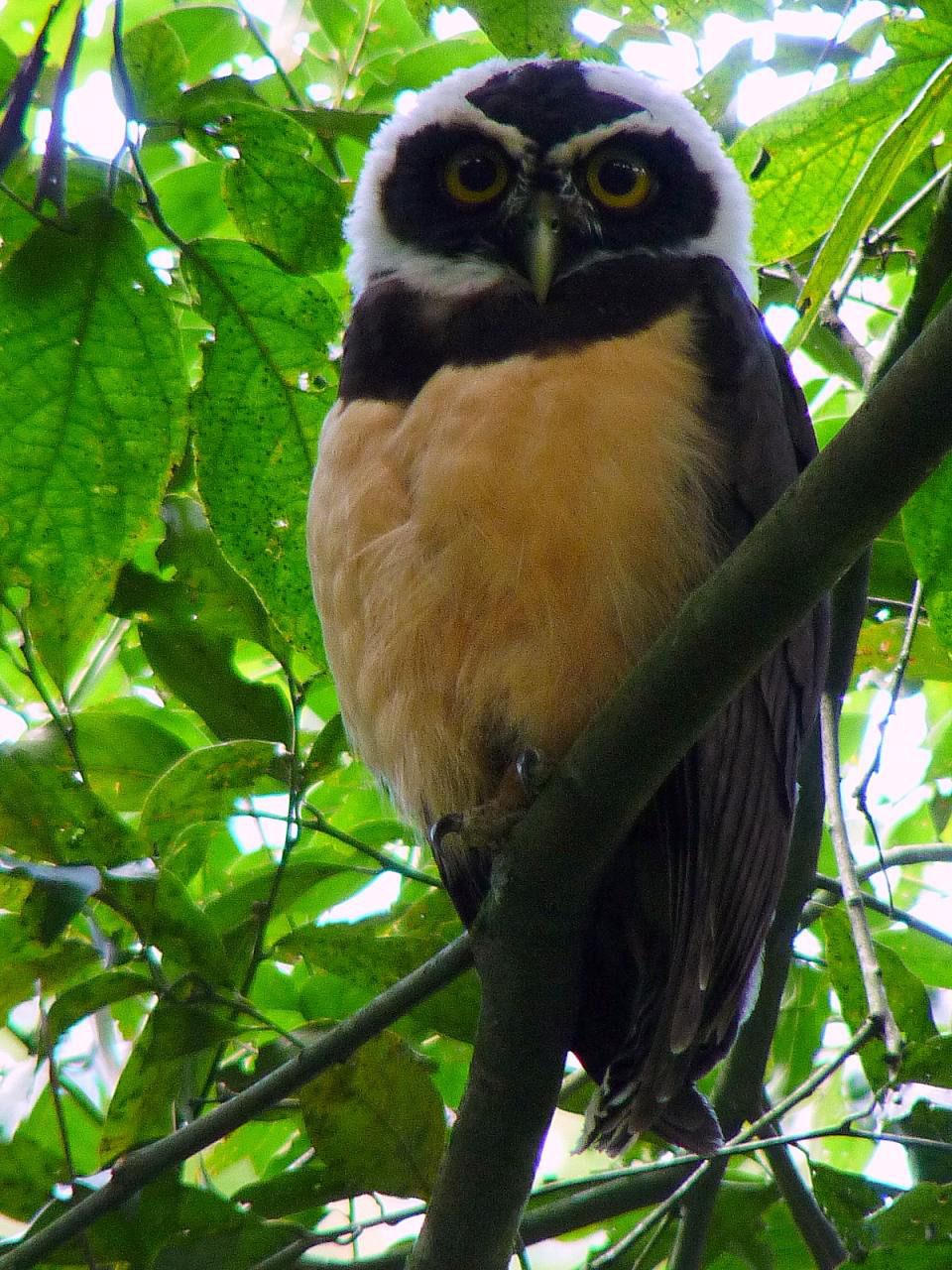
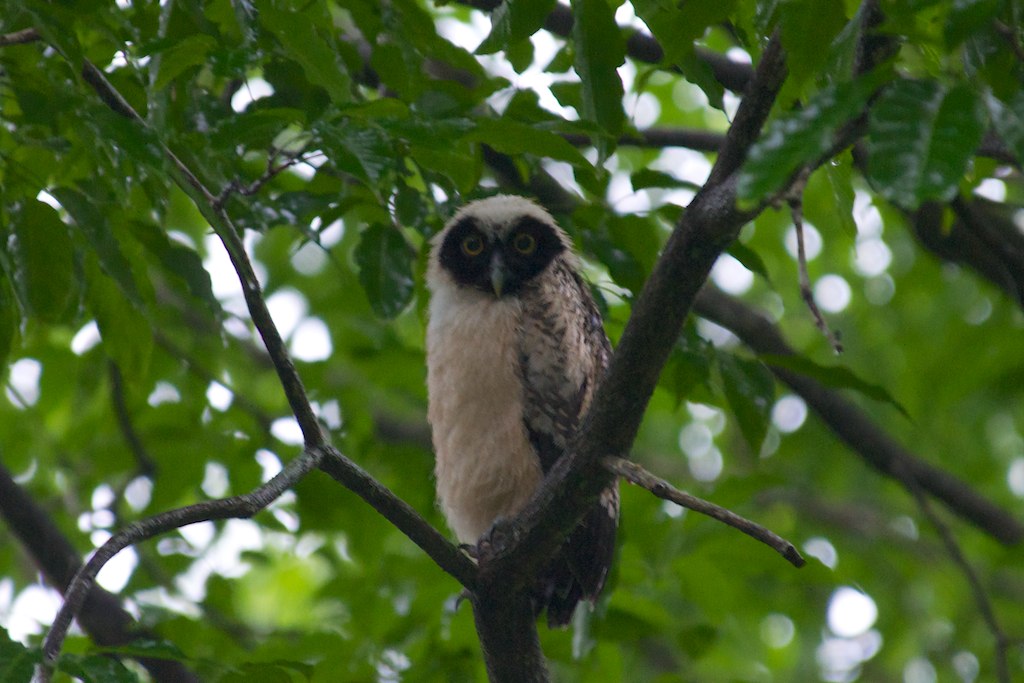
Animal Diversity Web describes adults with dark upperparts and lighter breasts. Young birds look very different: much of the body is pale, with a contrasting dark face.
That reversal can make a juvenile seem like another species. Age is an important part of the identification puzzle.
Waiting, watching, then striking
Spectacled Owls feed on a range of animal prey, including small mammals and insects. They often hunt from a perch, making a quick flight to catch food before returning to a resting place.
The quiet pose is therefore part of a predator’s routine. Stillness can be active attention rather than rest.
A forest home worth protecting
Woodland and rainforest provide feeding areas, cover, and nesting opportunities. Tree cavities can become nurseries.
Protecting forest structure means retaining more than an area shaded green on a map. Different trees and layers of vegetation offer different opportunities for wildlife.
The “glasses” may be the first thing we notice. The more rewarding view takes in the whole owl—and the living forest that surrounds its remarkable face.
Photo credits
Featured image: Pulsatrix perspicillata chapmani (Costa Rica).jpg — Hans Hillewaert; CC BY-SA 3.0.

Body image 1: Pulsatrix perspicillata -Manizales, Caldas, Colombia-8.jpg — Julian Londono from Manizales, Colombia; CC BY-SA 2.0.

Body image 2: Spectacled Owl - Panama 2.jpg — HarmonyonPlanetEarth; CC BY 2.0.

Photographs resized for web display where available. Existing crops are identified in their source filenames; captive birds and younger birds are identified in captions.