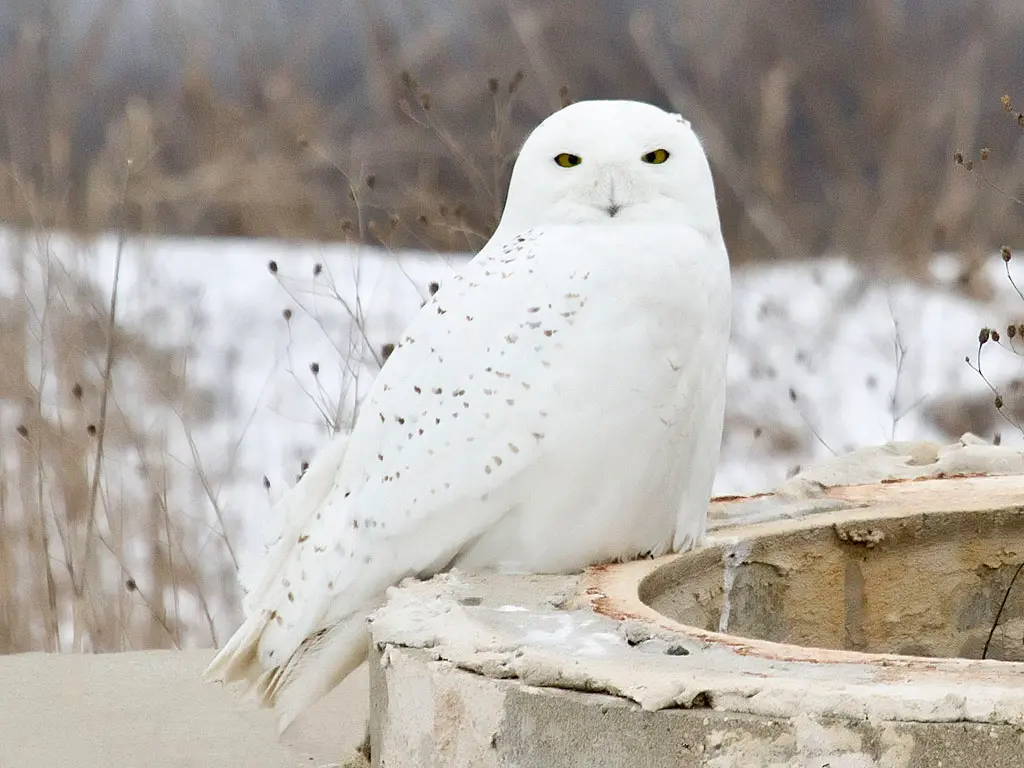
A Snowy Owl can hunt through the bright hours of an Arctic summer night. When daylight lasts around the clock, this owl does not need darkness to search for its next meal.
Bubo scandiacus combines yellow eyes with white plumage marked by varying amounts of dark brown. Its appearance is as striking on open tundra as it is against winter snow.
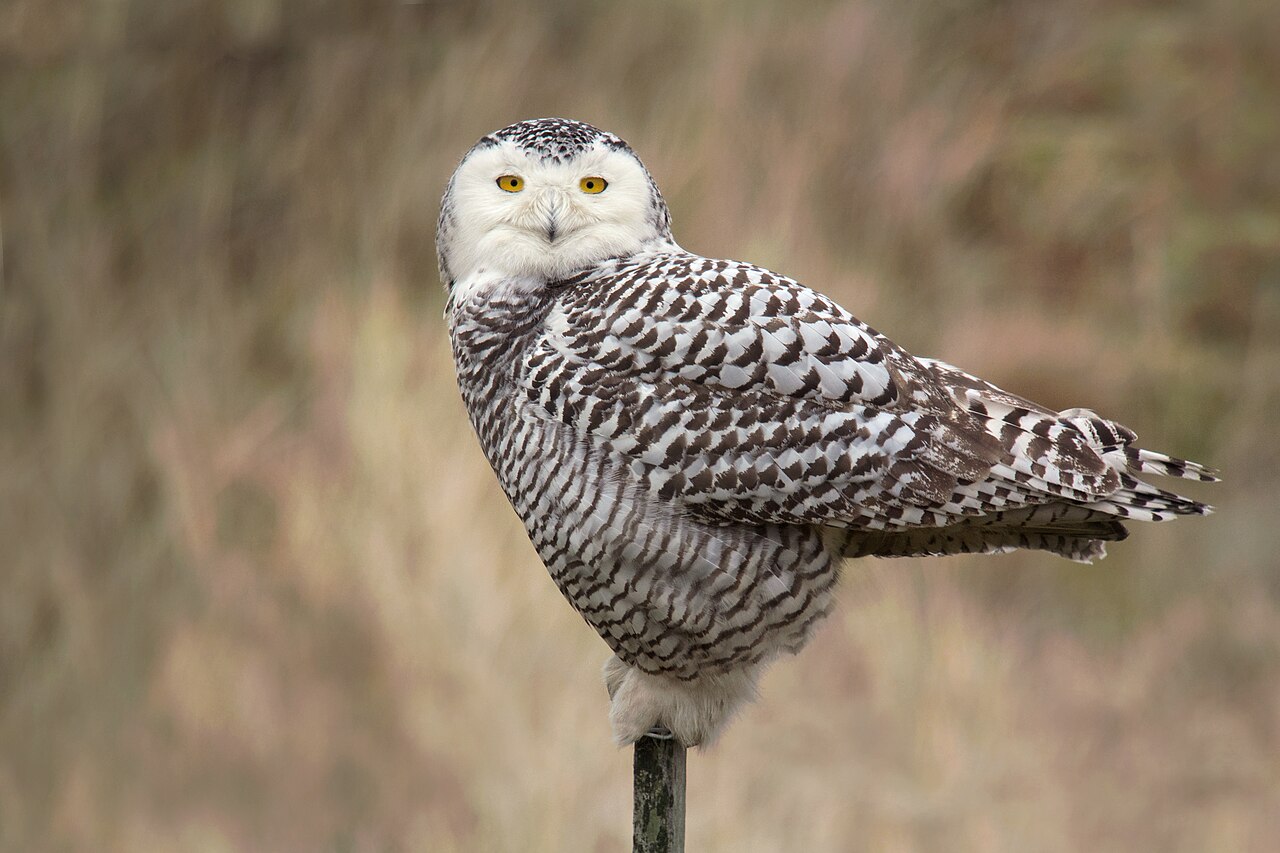
Not every Snowy Owl is pure white
Cornell Lab of Ornithology explains that males generally become whiter with age, while females retain dark markings.
Age and sex overlap in appearance, so a single dark mark is not enough for a confident identification. The variation is part of the species, rather than a flaw in its snowy name.
Food shapes an Arctic family
Lemmings are important prey. When these small mammals are abundant, Snowy Owls can raise larger broods.
The owl’s dense feathering helps insulate it in cold conditions. Beneath the calm stare is a predator whose daily routine depends on finding enough food in a demanding environment.
A visitor that needs space
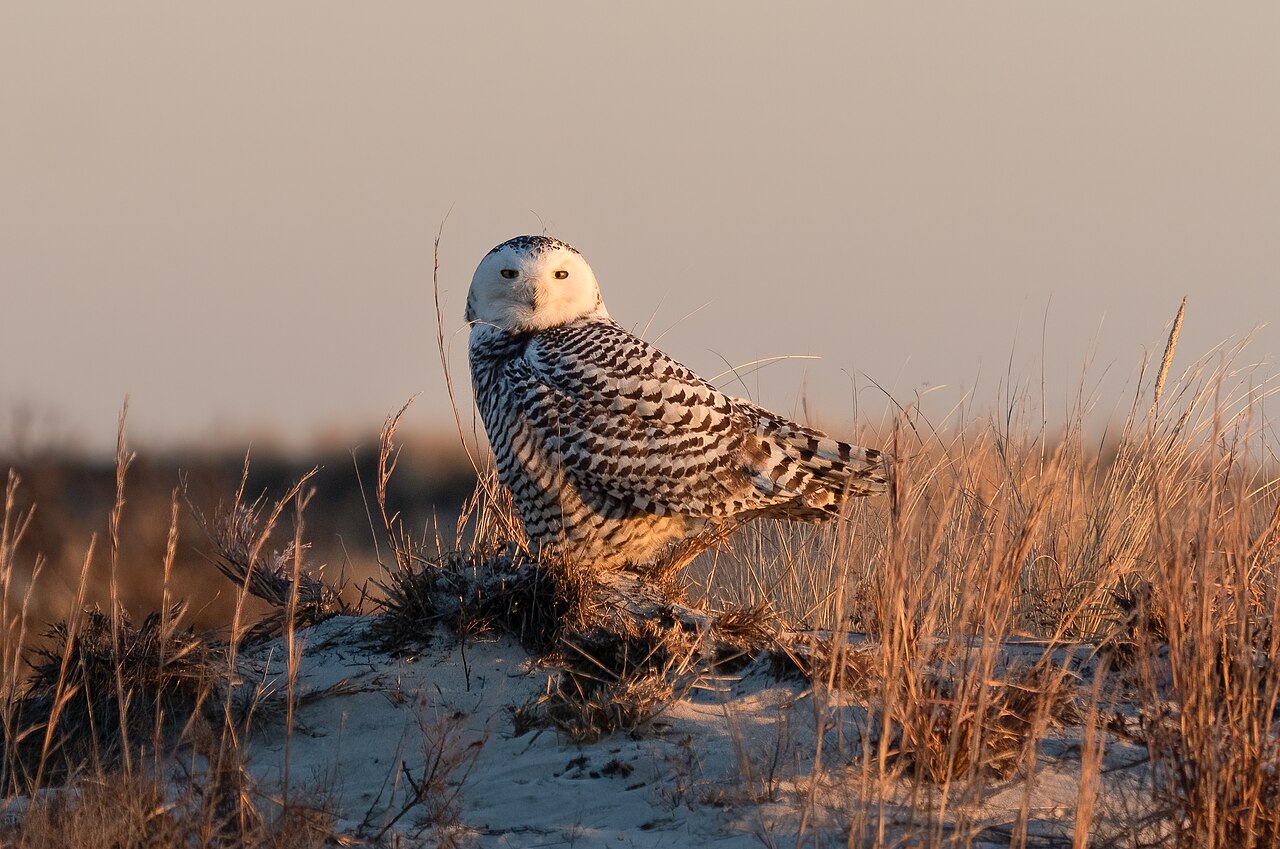
Some birds travel south in winter, appearing in open fields, dunes, and shorelines. Others stay farther north.
Enjoying such an encounter from a distance lets the bird rest and hunt without repeated disturbance.
A pale shape beside a snowy field can feel almost unreal. The Snowy Owl makes that moment even richer when we remember its Arctic home, changing plumage, and remarkable life in daylight.
Photo credits
Featured image: Bubo scandiacus male Muskegon.jpg — Bill Bouton from San Luis Obispo, CA, USA; CC BY-SA 2.0.

Body image 1: Snowy owl (Bubo scandiacus), Vlieland, Netherlands.jpg — Frank Vassen; CC BY 2.0.

Body image 2: Snowy owl at Jones Beach (04863).jpg — Rhododendrites; CC BY-SA 4.0.

Photographs resized for web display where available. Existing crops are identified in their source filenames; captive birds and younger birds are identified in captions.