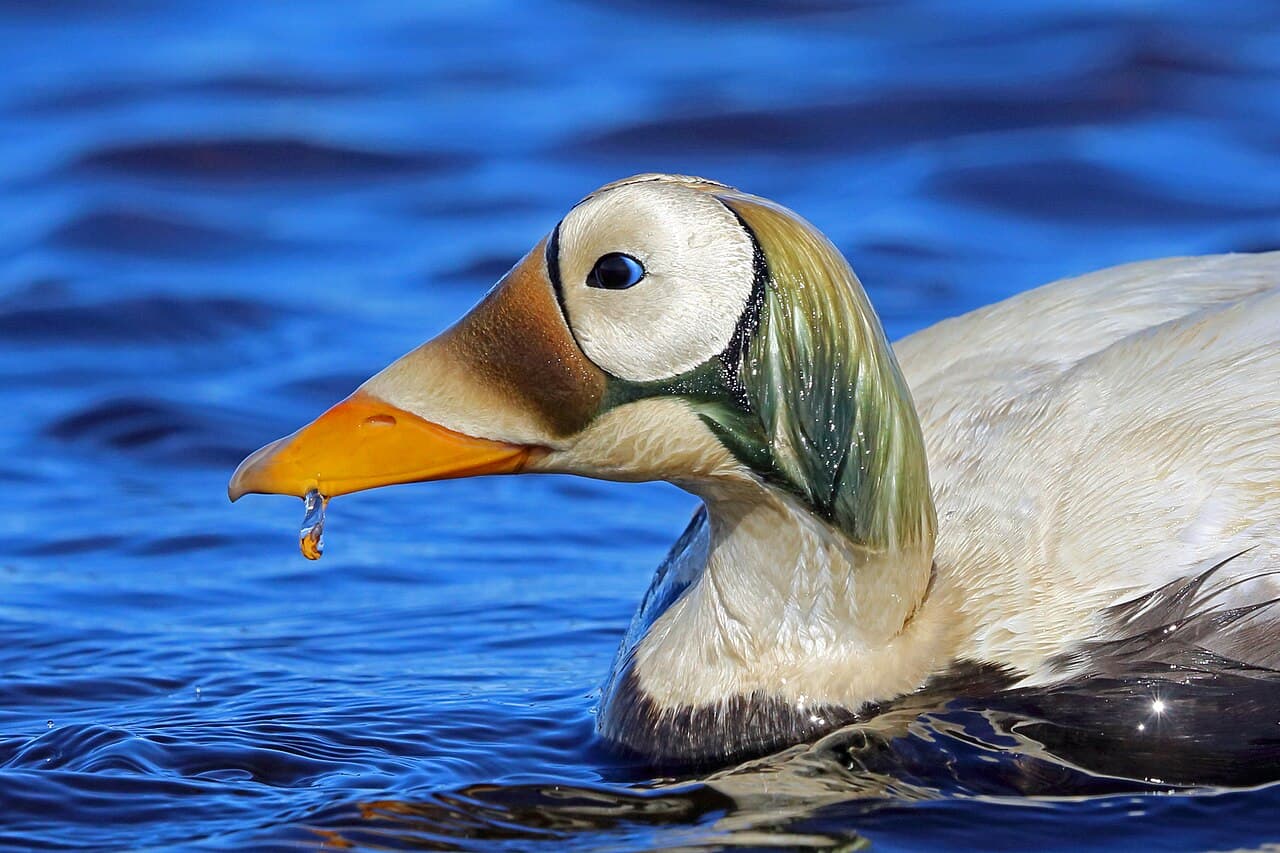
A male spectacled eider seems to wear a pair of white goggles. Dark outlines frame the pale patches around its eyes, giving this Arctic duck one of the most distinctive faces in waterfowl.
Somateria fischeri breeds on tundra in Alaska and Russia. Its year takes it between shallow summer wetlands and a much harsher winter world offshore.
The same bird in two feeding worlds
Cornell Lab of Ornithology describes summer feeding in shallow water for insects and plant seeds. In winter, the ducks dive for clams and other marine invertebrates.
The change is striking: a bird dabbling on tundra wetlands becomes a deep-diving sea duck when the season turns.
Where do they go in winter?
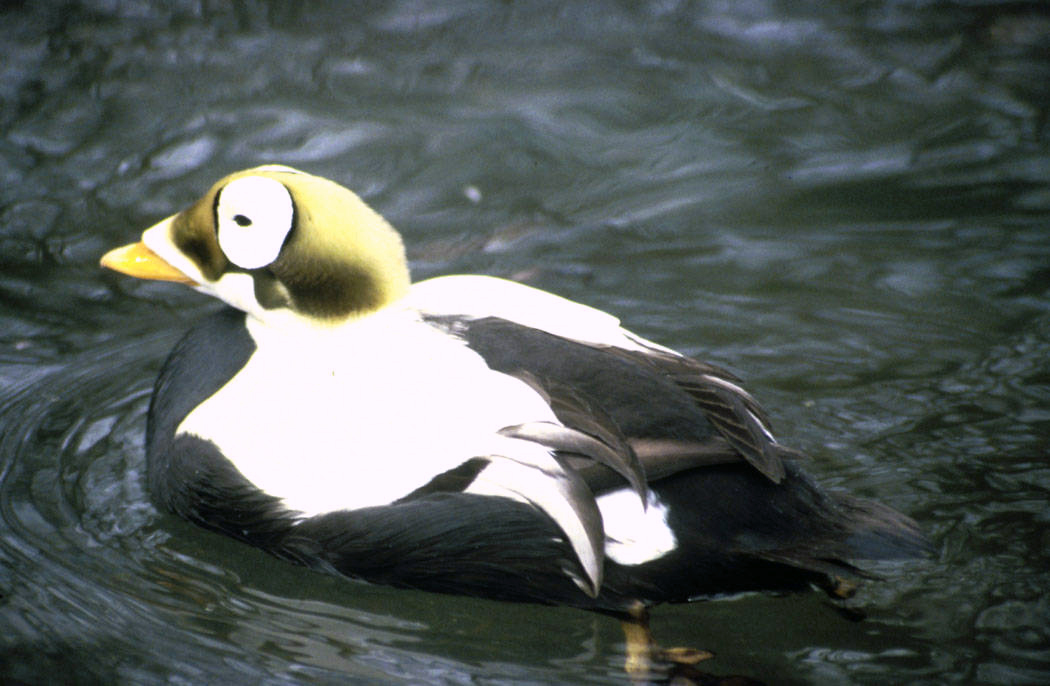
For years, the wintering grounds were a mystery. In the 1990s, satellite tracking helped researchers locate birds gathering in openings among northern sea ice.
Many spend winter in the Bering Sea, where access to open water is essential for feeding. The apparent emptiness of an icy seascape can conceal an important wildlife gathering.
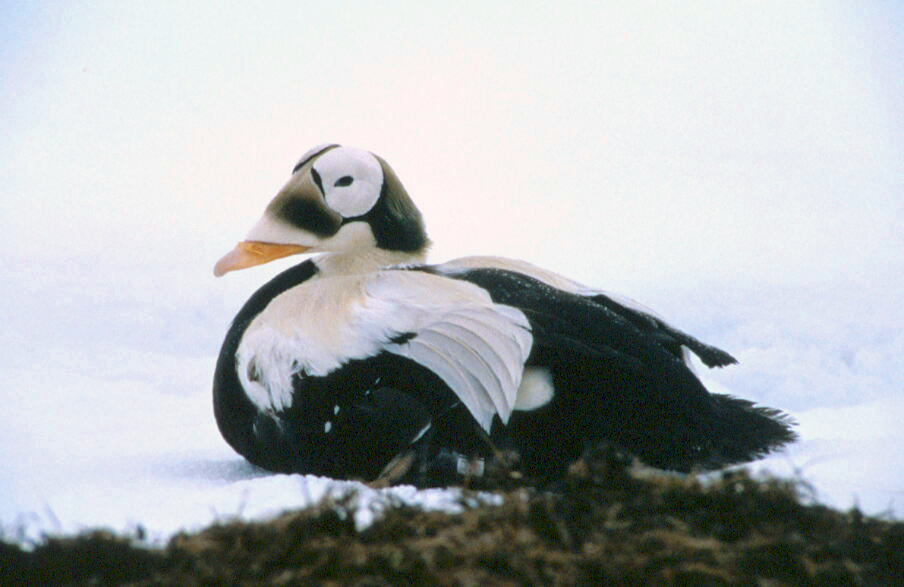
More than a male’s bright face
Females and young birds are browner, with subtler eye patches. The “spectacles” are still useful clues, even when the colors are understated.
Understanding where sea ducks spend each season helps conservationists identify the habitats they need.
The spectacled eider’s story turns a memorable face into a larger discovery: a bird’s survival can depend on distant places that people only recently learned to find.
Photo credits
Featured image: Spectacled Eider, Utqiagvik, Alaska, USA 2946643.jpg — (c) Nigel Voaden, some rights reserved (CC BY); CC BY 4.0.

Body image 1: Speceider53.jpg — Smart, Glen; Public domain.

Body image 2: Male Spectacled Eider on Snow.jpg — See source; Public domain.

Photographs resized for web display where available. Captive birds and seasonal plumages are identified in their captions.