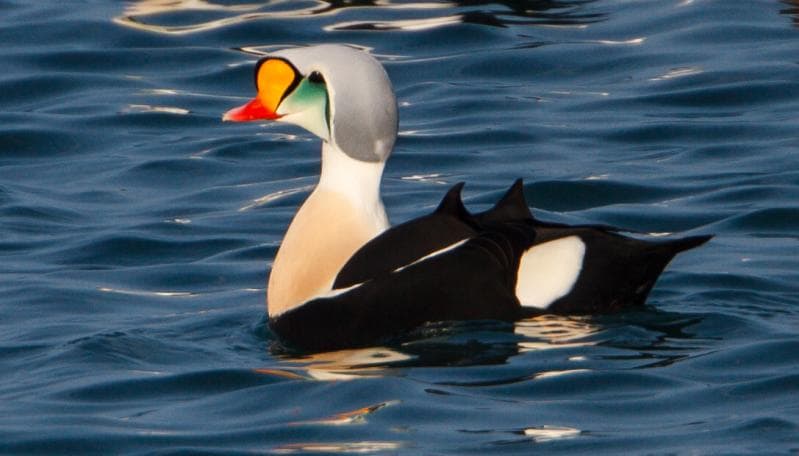
A male king eider brings blue, green, orange, red, black, and white into one extraordinary portrait. Its head can look almost sculpted, with a prominent colored shield above the bill.
Somateria spectabilis is an Arctic sea duck. Behind the spectacular appearance is a life shaped by tundra breeding grounds, cold seas, and underwater feeding.
Two very different looks
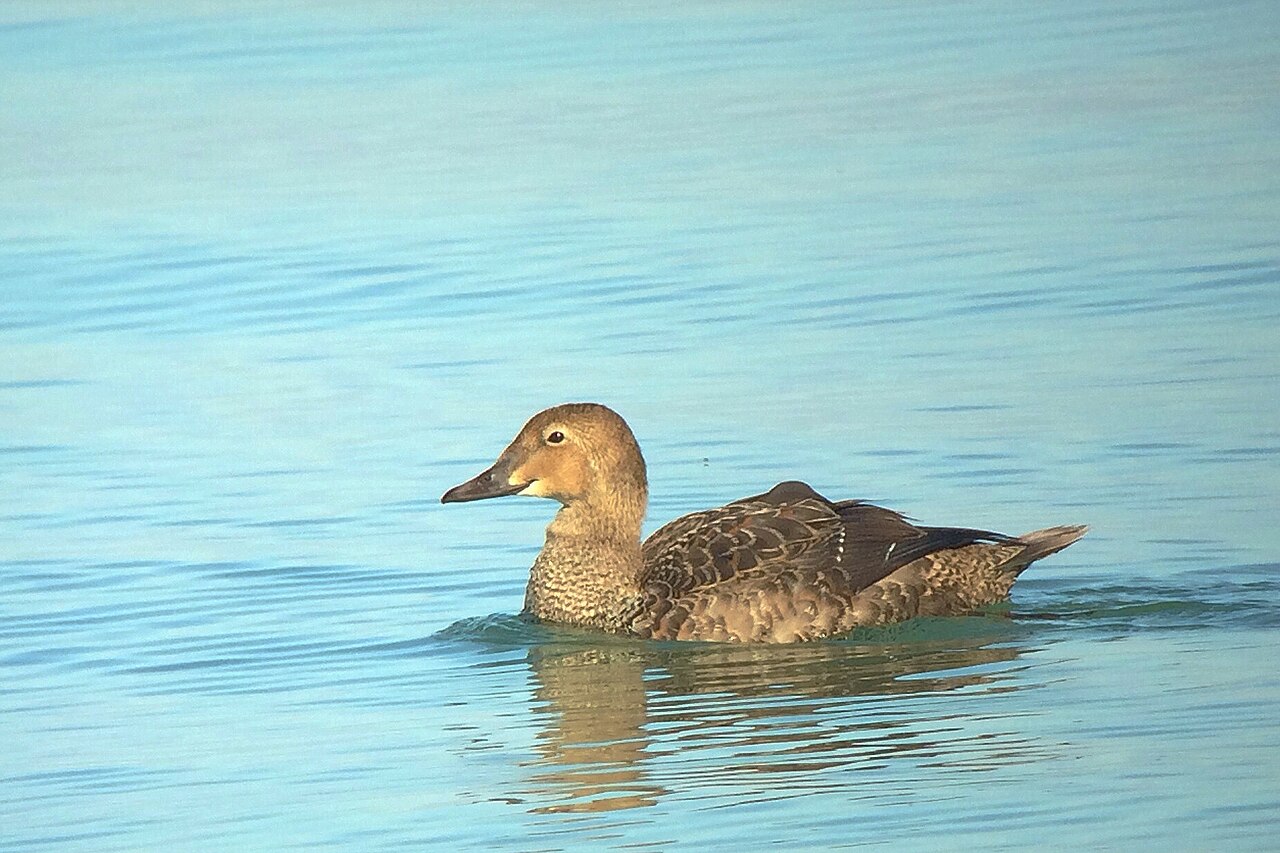
Cornell Lab of Ornithology describes the male’s pale blue crown and green cheek. Females wear a much quieter pattern of brown and dark markings.
Both appearances belong to the same species. A richly patterned female deserves as careful a look as the bright male beside her.
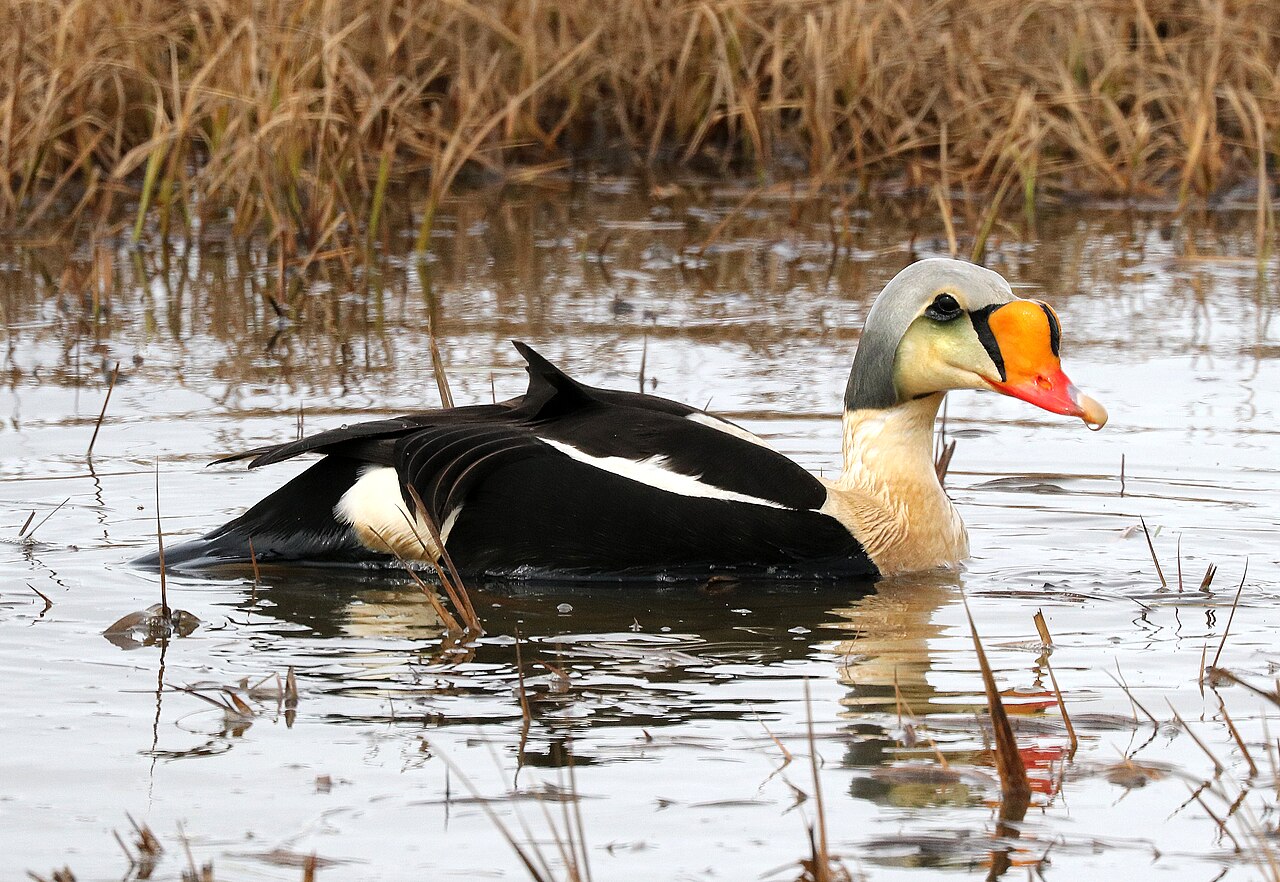
Feeding below the cold surface
King eiders dive for aquatic invertebrates, including shellfish. They breed on far-northern tundra and spend much of the nonbreeding season at sea, often near the edges of sea ice.
The colorful head is therefore only the visible beginning of a demanding life. Food must be reached beneath cold water, and breeding opportunities arrive within a short northern summer.
Following the Arctic calendar
Spring migration can bring large flocks past northern coasts. Those movements connect breeding areas with feeding grounds separated by long distances.
Protecting sea ducks means caring for more than the place where a photograph was taken. Coastal waters, migration routes, and northern nesting habitats all form part of the same story.
The king eider rewards a close look twice: first with its colors, then with the remarkable Arctic life those feathers accompany.
Photo credits
Featured image: Somateria spectabilis, Akranes 2.jpg — Ómar Runólfsson; CC BY 2.0.

Body image 1: 049 - KING EIDER (6-15-2016) barrow, alaska -06 (27577003883).jpg — ALAN SCHMIERER; CC0.

Body image 2: Somateria spectabilis, Sterling NY.jpg — Seabamirum from Ithaca; CC BY 2.0.

Photographs resized for web display where available. Captive birds and seasonal plumages are identified in their captions.