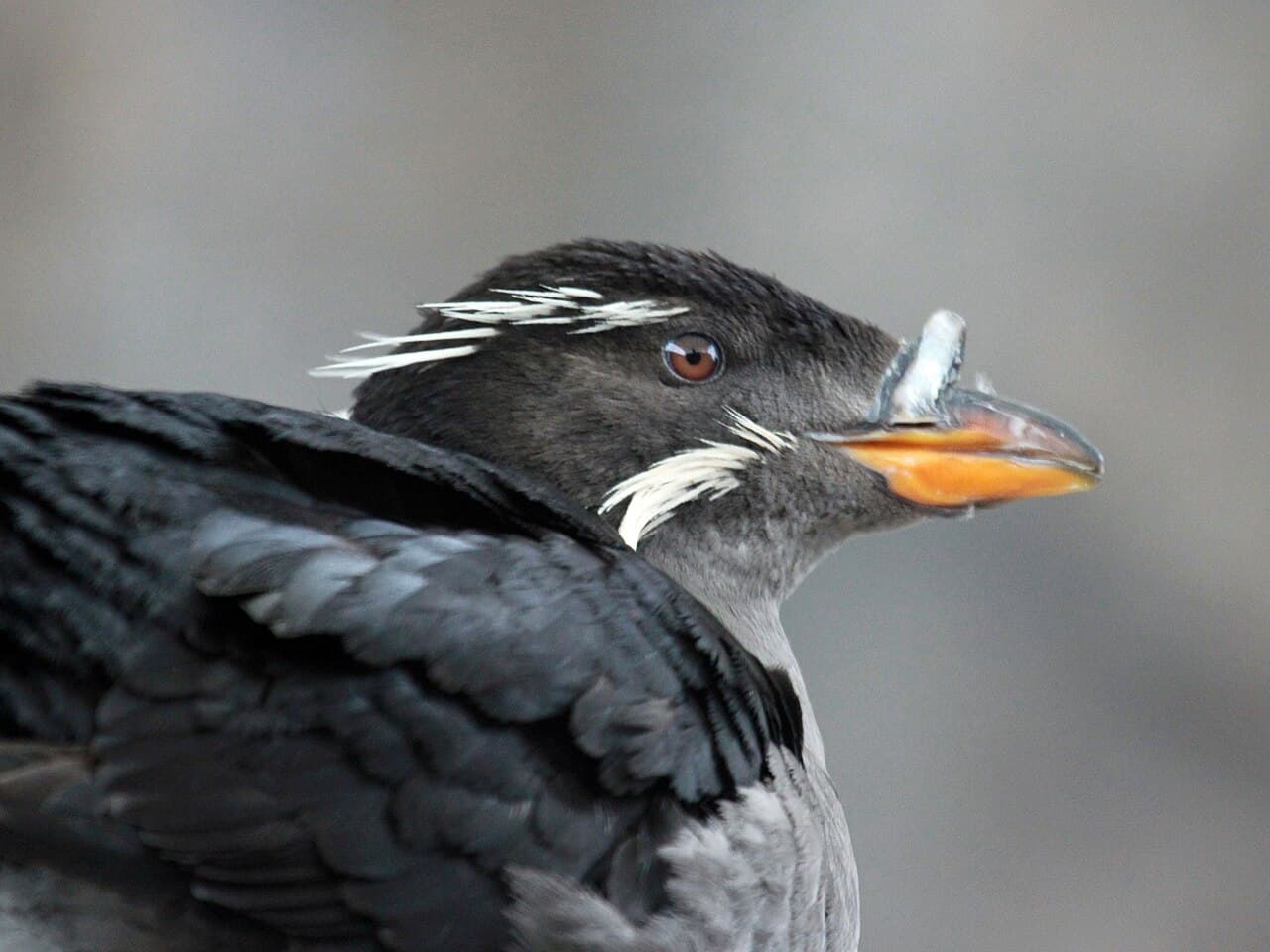
A rhinoceros auklet grows a small upright projection on its bill during the breeding season. This “horn” gives the seabird its name, turning an otherwise modest face into something extraordinary.
Cerorhinca monocerata belongs to the auk family and is closely related to puffins. It lives around the North Pacific, where much of its feeding happens beneath the waves.
A seasonal accessory with a mystery
Cornell Lab’s identification guide distinguishes breeding birds with a pale horn and white facial plumes from birds lacking those features outside the breeding season.
Research has also found that the horn fluoresces. Cornell’s overview explains that its role in communication remains a possibility rather than a settled answer.
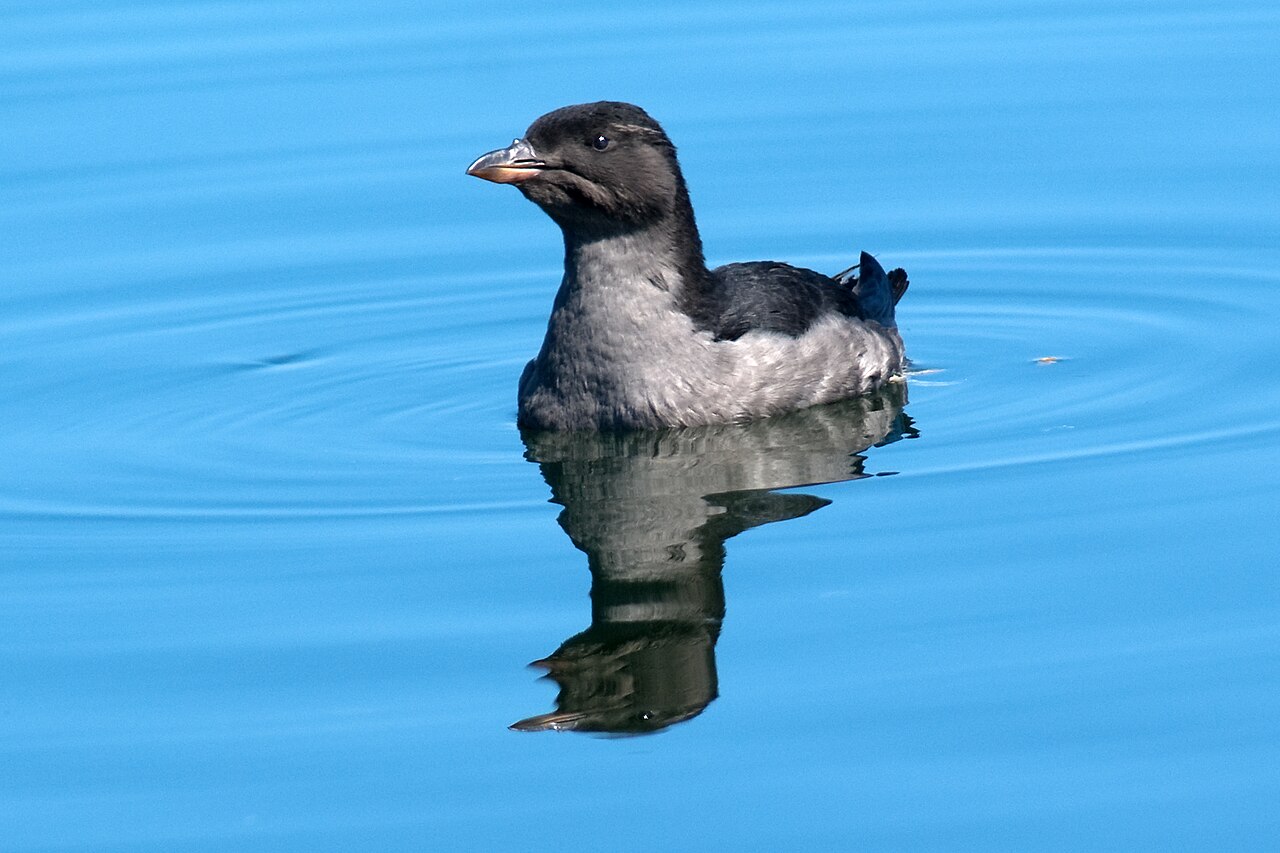
Flying beneath the surface
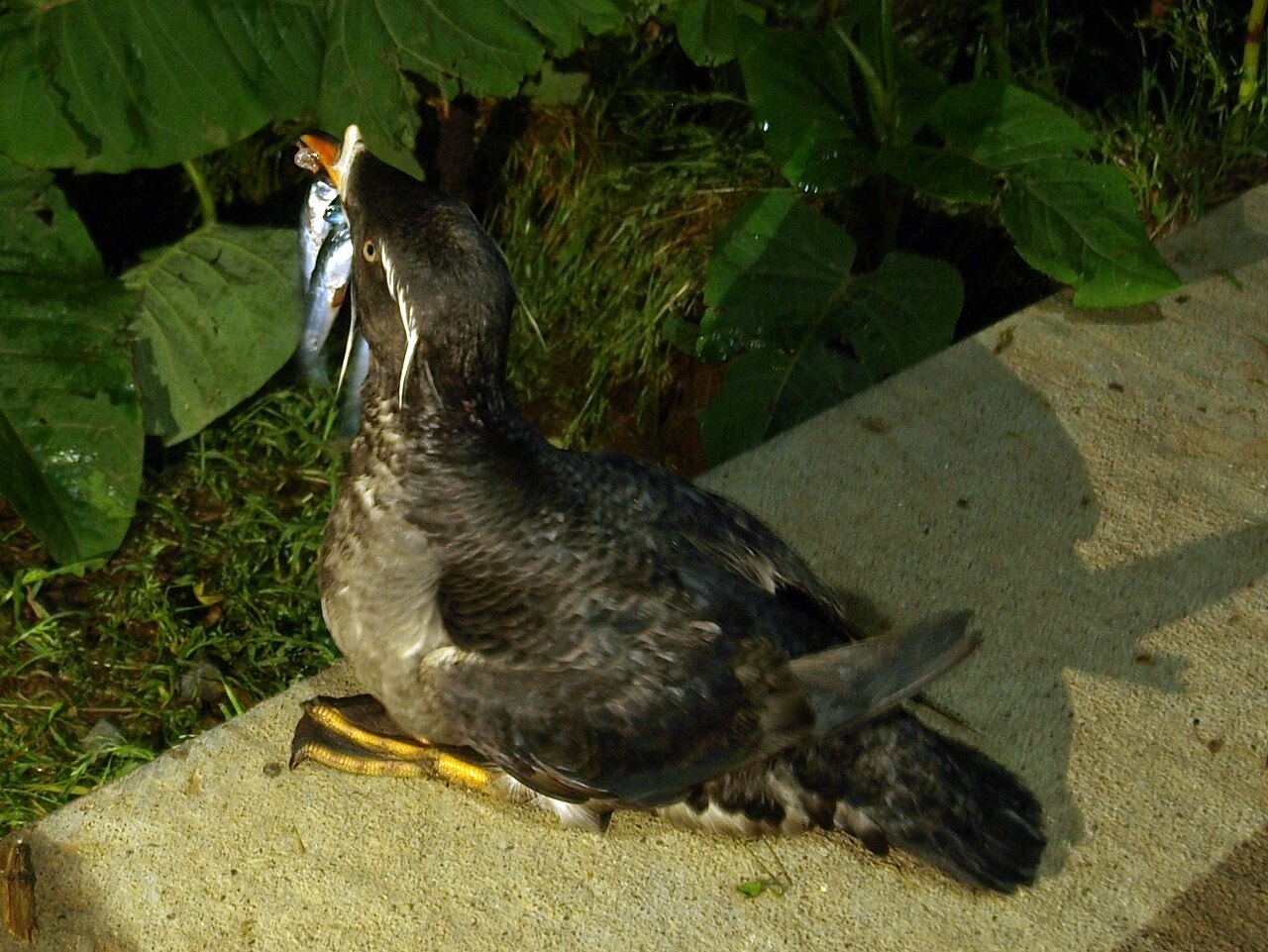
Rhinoceros auklets use strong wingbeats to pursue small fish underwater. They can hold several fish crosswise in their bills while continuing to catch more.
That ability is especially useful when returning with food for a chick. A well-loaded bill represents a series of successful captures, rather than one large meal.
A hidden nursery on an island
Cornell’s life-history account describes nesting burrows and adults often returning with food after dark.
Introduced predators on breeding islands, fishing-gear entanglement, and oil pollution are among the threats these birds face.
The horn may catch our attention first. The deeper story combines an underwater hunter, a careful food delivery, and a chick waiting out of sight beneath the island soil.
Photo credits
Featured image: Rhinoceros Auklet RWD1.jpg — Dick Daniels (theworldbirds.org); CC BY-SA 3.0.

Body image 1: Cerorhinca monocerata -Protection Island National Wildlife Refuge, Jefferson County, Washington, USA-8.jpg — Dow Lambert of U.S. Fish & Wildlife Service - Pacific Region's; CC BY 2.0.

Body image 2: TakayamaSoraUtoEsa.jpg — Takayama Sora; CC BY-SA 3.0.

Photographs resized for web display where available. Captive birds and seasonal plumages are identified in their captions.