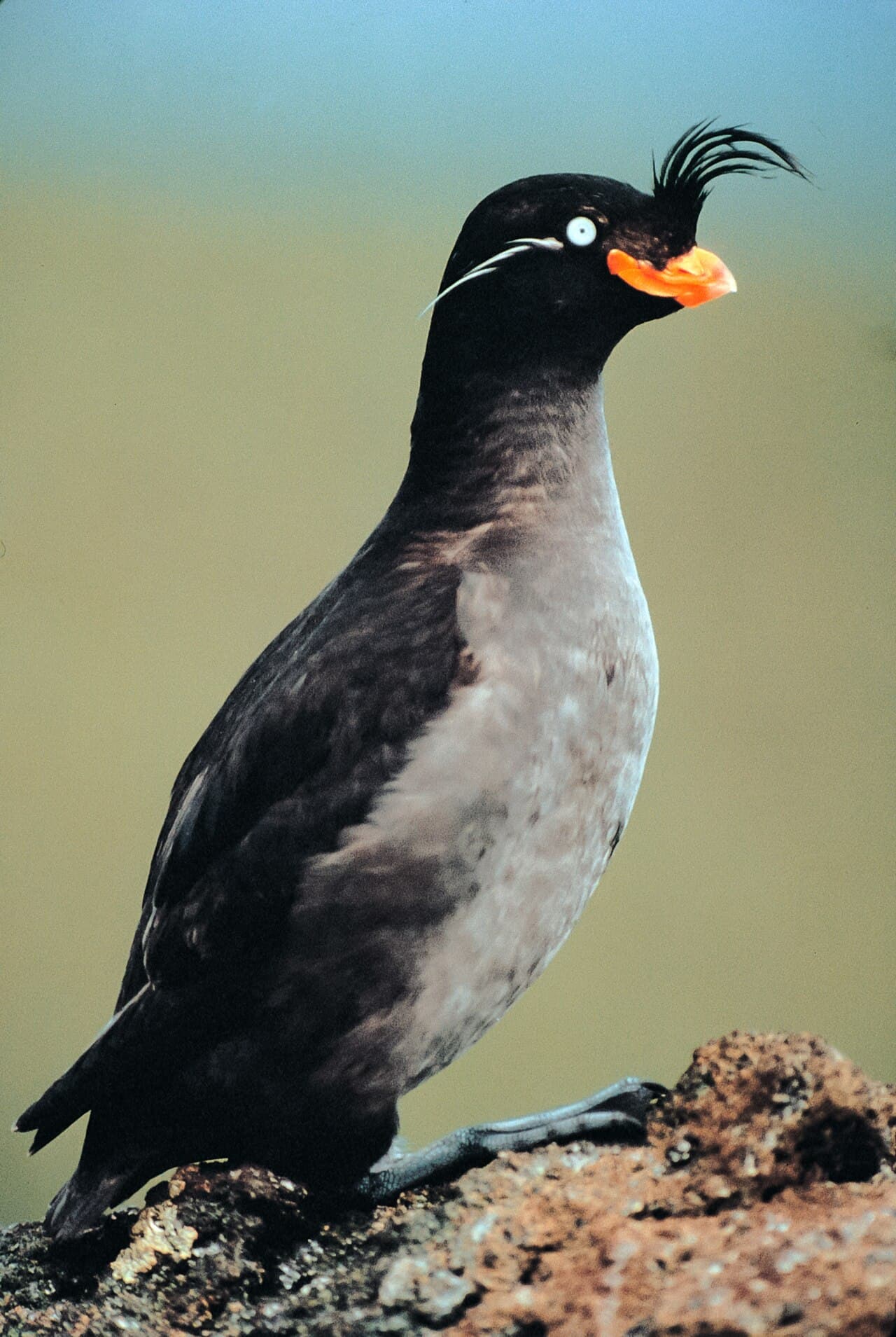
A seabird colony can smell like fresh citrus. Crested auklets produce a strong scent often compared with tangerines, adding an unexpected layer to their noisy island gatherings.
Aethia cristatella is a small, dark seabird of the northern Pacific region. Its bright bill and forward-curving feather crest make its face just as unusual as its smell.
More than a feathered hairstyle
The Audubon field guide describes a loose crest hanging over the face and a pale facial stripe. During winter, the crest becomes shorter and the bill less vivid.
Season matters when comparing photographs. A bird with a modest winter appearance can look much more elaborate during the breeding season.
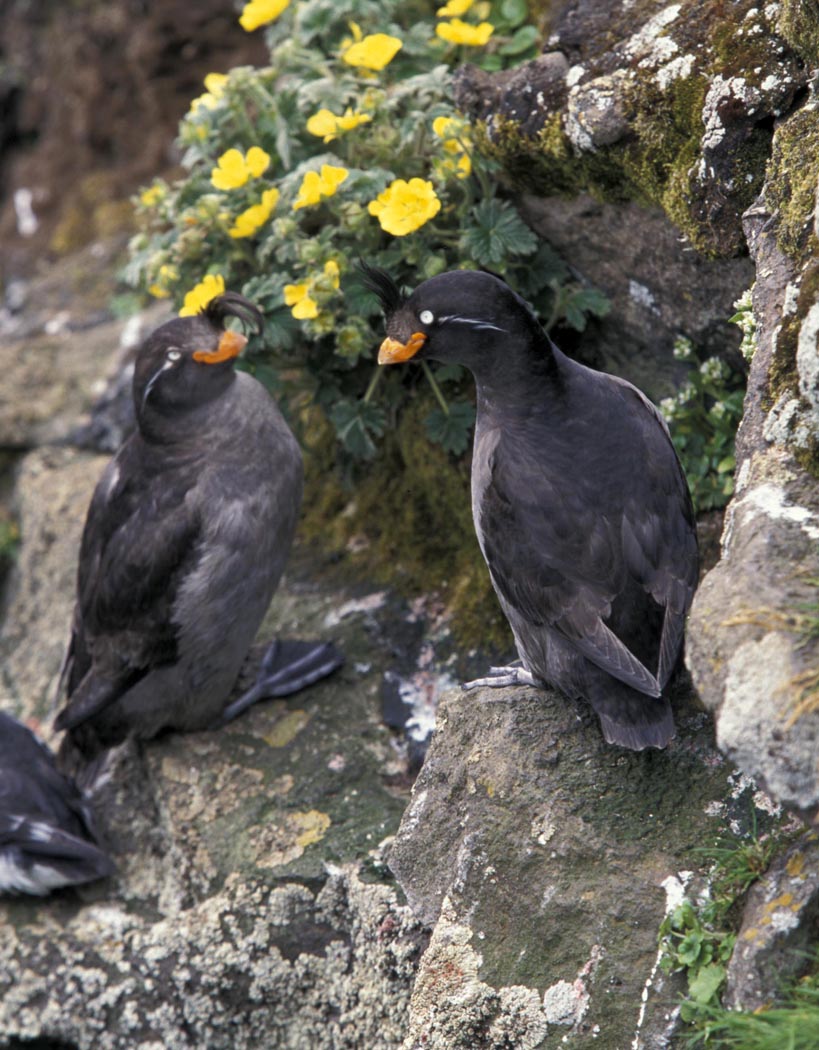
A colony for several senses
Audubon’s interviews with researchers describe the citrus odor and close interactions in which birds put their bills into one another’s neck feathers.
Scent may contribute to social communication, but its exact role should not be treated as fully explained. What is clear is that these birds have more going on than a striking visual display.
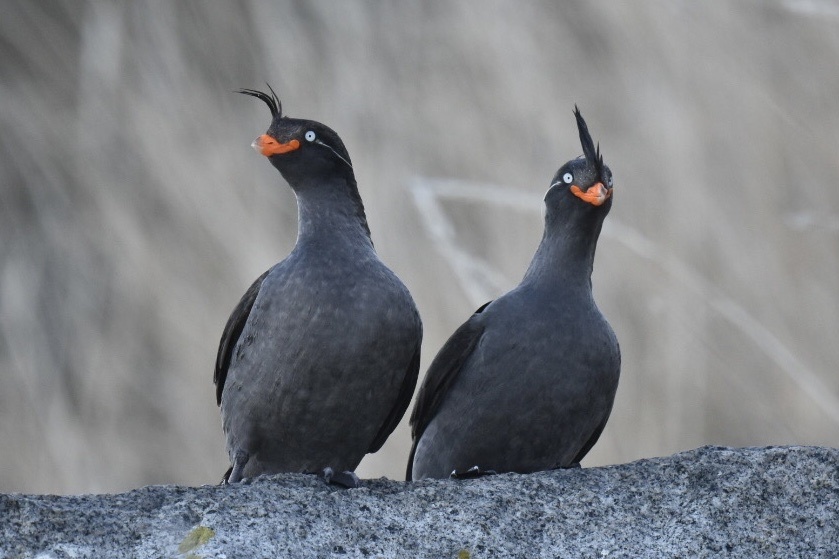
Life between rocks and open water
Crested auklets nest in crevices among rocks and feed by diving at sea, often gathering in large groups.
Protecting nesting islands and clean, productive waters supports both halves of that life.
The crested auklet challenges a familiar assumption: appreciating birds is not always just about watching and listening. Sometimes nature adds an unforgettable smell.
Photo credits
Featured image: Aethia cristatella.jpg — F. Deines, USFWS; Public domain.

Body image 1: Crested Auklet pair.jpg — Art Sowls, USFWS; Public domain.

Body image 2: Aethia cristatella 395004636.jpg — Лариса Артемьева; CC0.

Photographs resized for web display where available. Captive birds and seasonal plumages are identified in their captions.