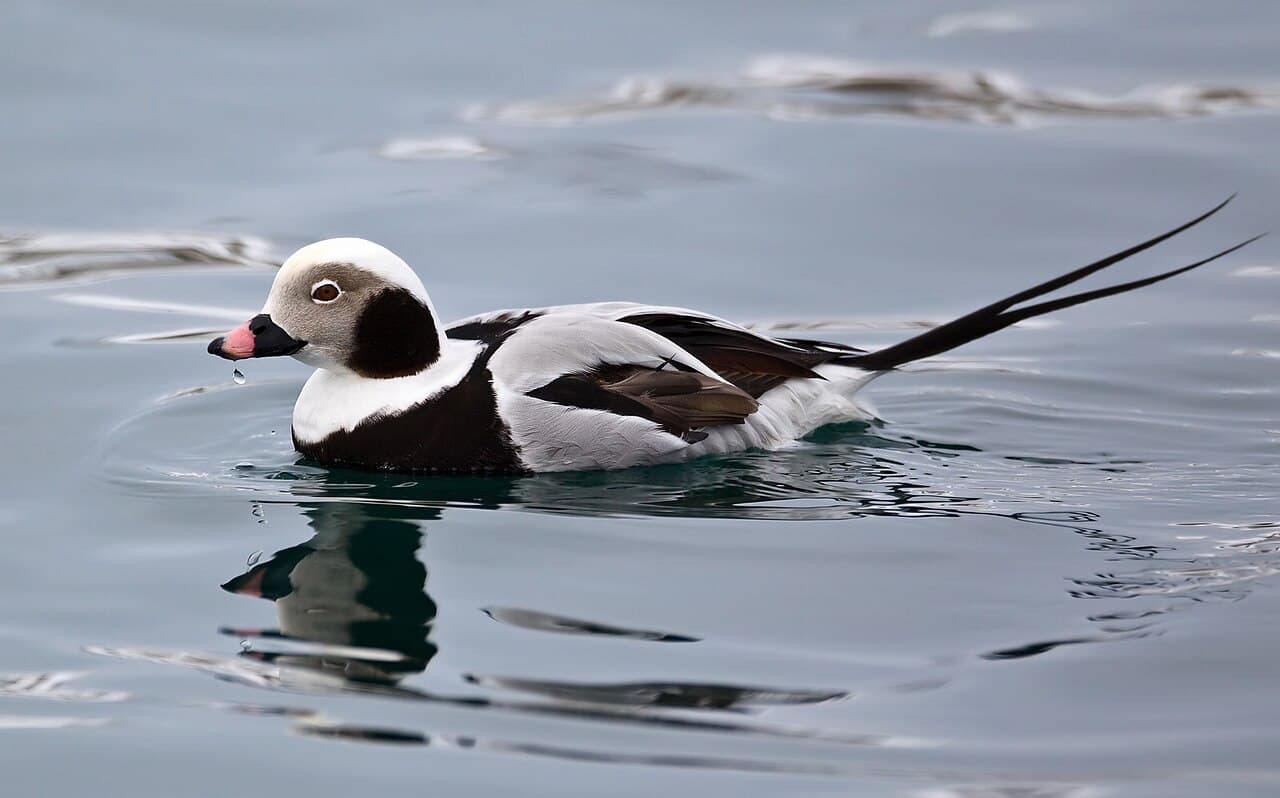
A male long-tailed duck can look like two different birds across the year. A mostly pale winter head gives way to a much darker summer appearance, while slender tail plumes add an elegant outline.
Clangula hyemalis breeds in the Arctic and spends winter on coastal waters and large lakes. Its name highlights one feature, but its diving ability is just as remarkable.
A tail beyond one season
Cornell Lab’s identification guide notes that males carry long tail plumes for much of the year. They are not limited to a brief summer display.
Females and immature birds lack the same extended tail. Comparing sex, age, and season helps make sense of this species’ many appearances.
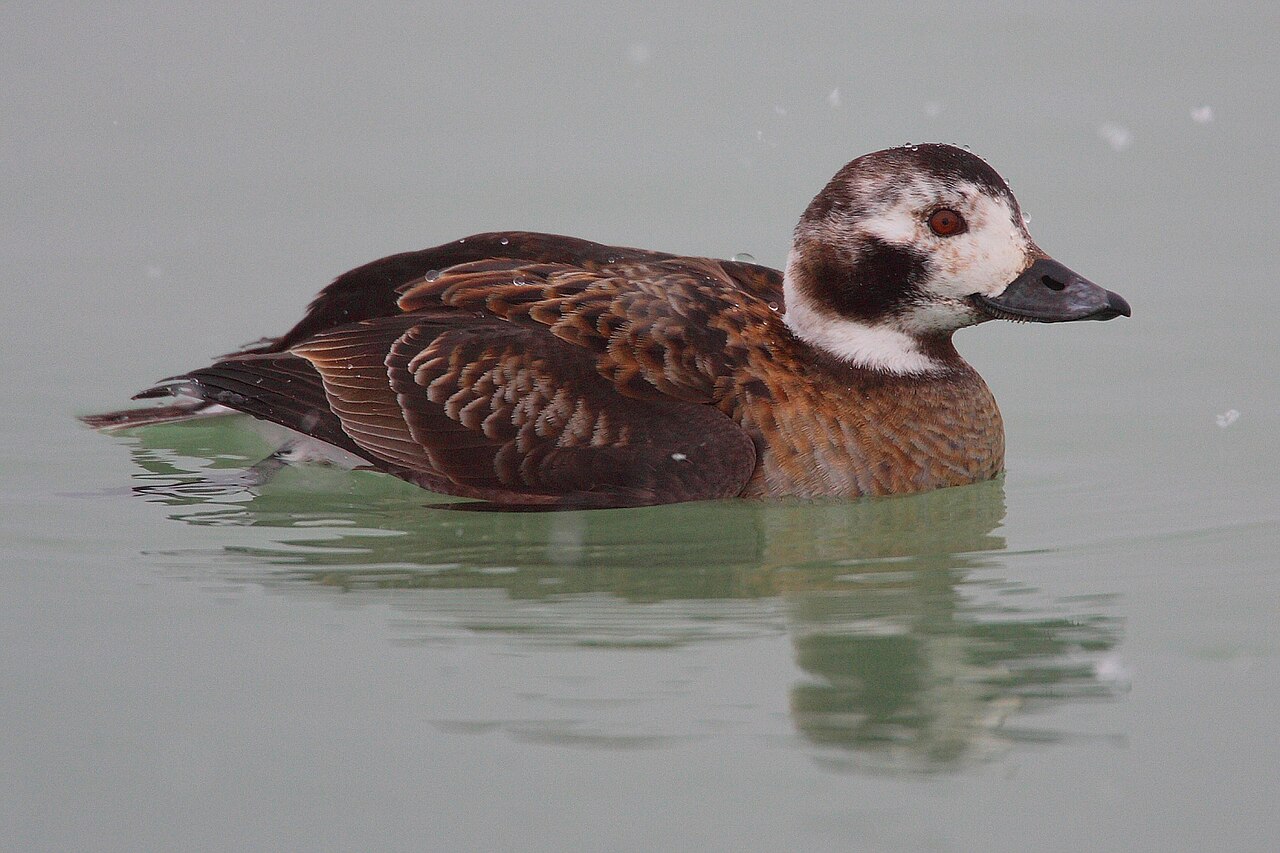
An impressive underwater forager
Cornell’s overview describes dives reaching about 200 feet, or 60 meters. These ducks use their wings while swimming underwater.
Invertebrates and small fish provide food. The apparent calm of a bird floating on the surface gives little hint of the effort happening between its brief appearances above water.
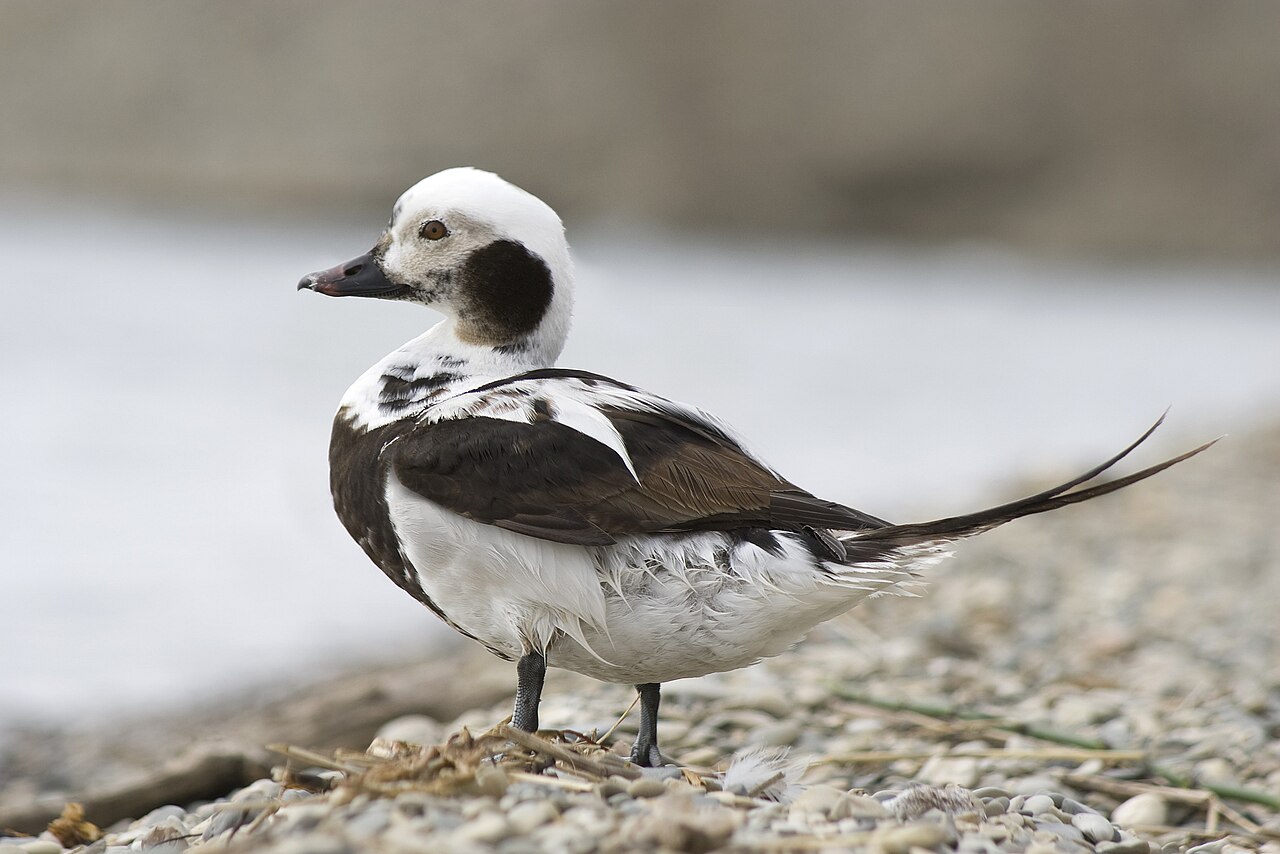
Connected by water
Arctic wetlands provide nesting habitat, while winter feeding areas can lie far offshore. Calls may draw attention to a flock before its markings become clear.
Protecting feeding waters and northern breeding grounds preserves different parts of the same annual journey.
The long-tailed duck invites us to look past a single portrait. Its beauty changes with the season, and its daily life extends well below the surface.
Photo credits
Featured image: Clangula hyemalis Hokkaido17.jpg — Sammy Sam at Picasa Web Albums; CC BY-SA 3.0.

Body image 1: Clangula-hyemalis-011.jpg — No machine-readable author provided. Mdf assumed (based on copyright claims).; CC BY-SA 3.0.

Body image 2: Clangula hyemalis.jpg — Olga Filatova; CC BY-SA 4.0.

Photographs resized for web display where available. Captive birds and seasonal plumages are identified in their captions.