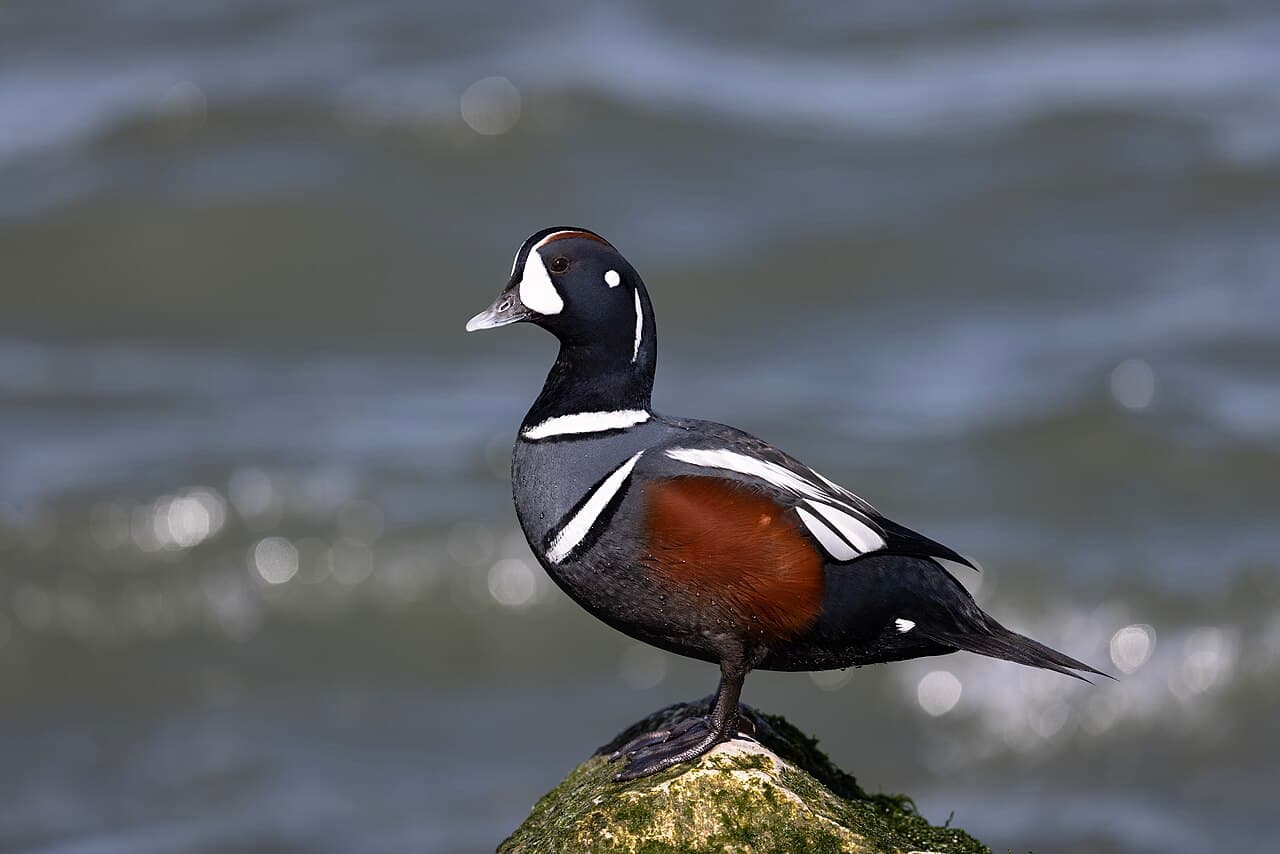
A harlequin duck can ride the kind of rushing water that sends other birds searching for shelter. Its brilliant colors belong to a compact diver at home beside whitewater and crashing surf.
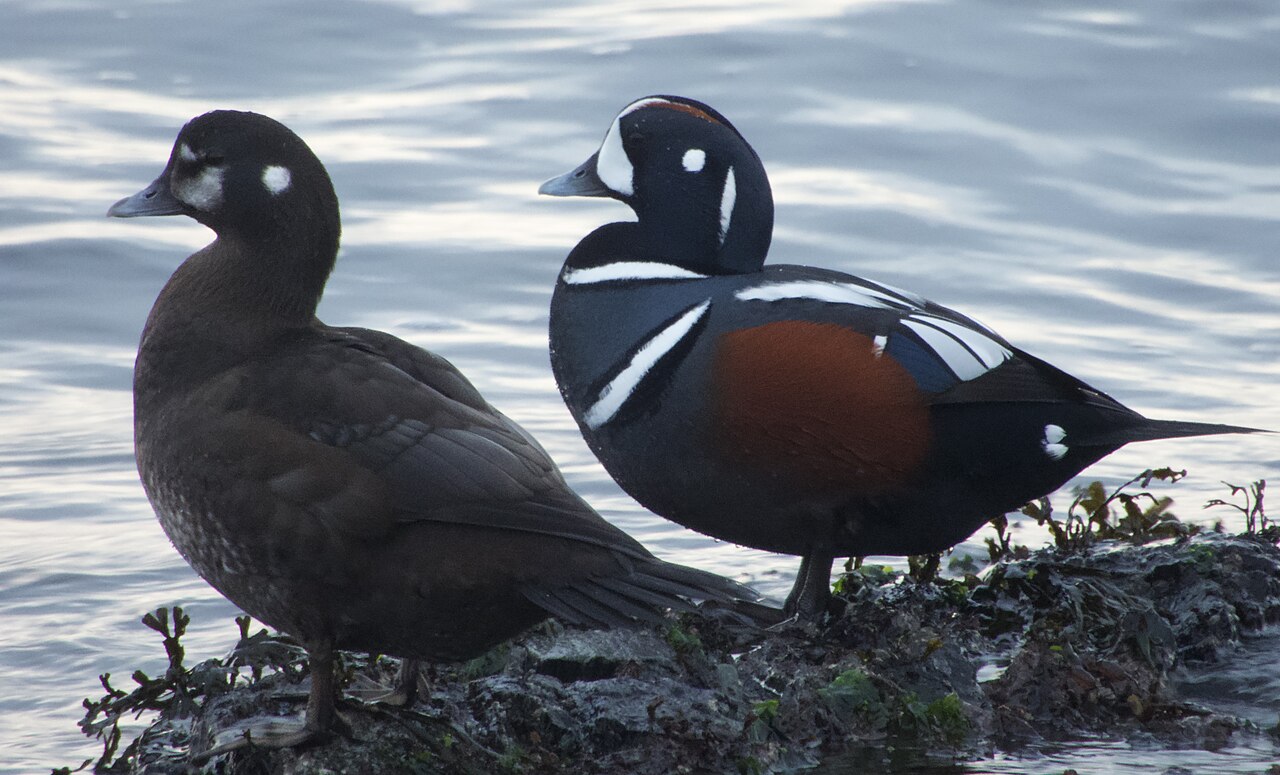
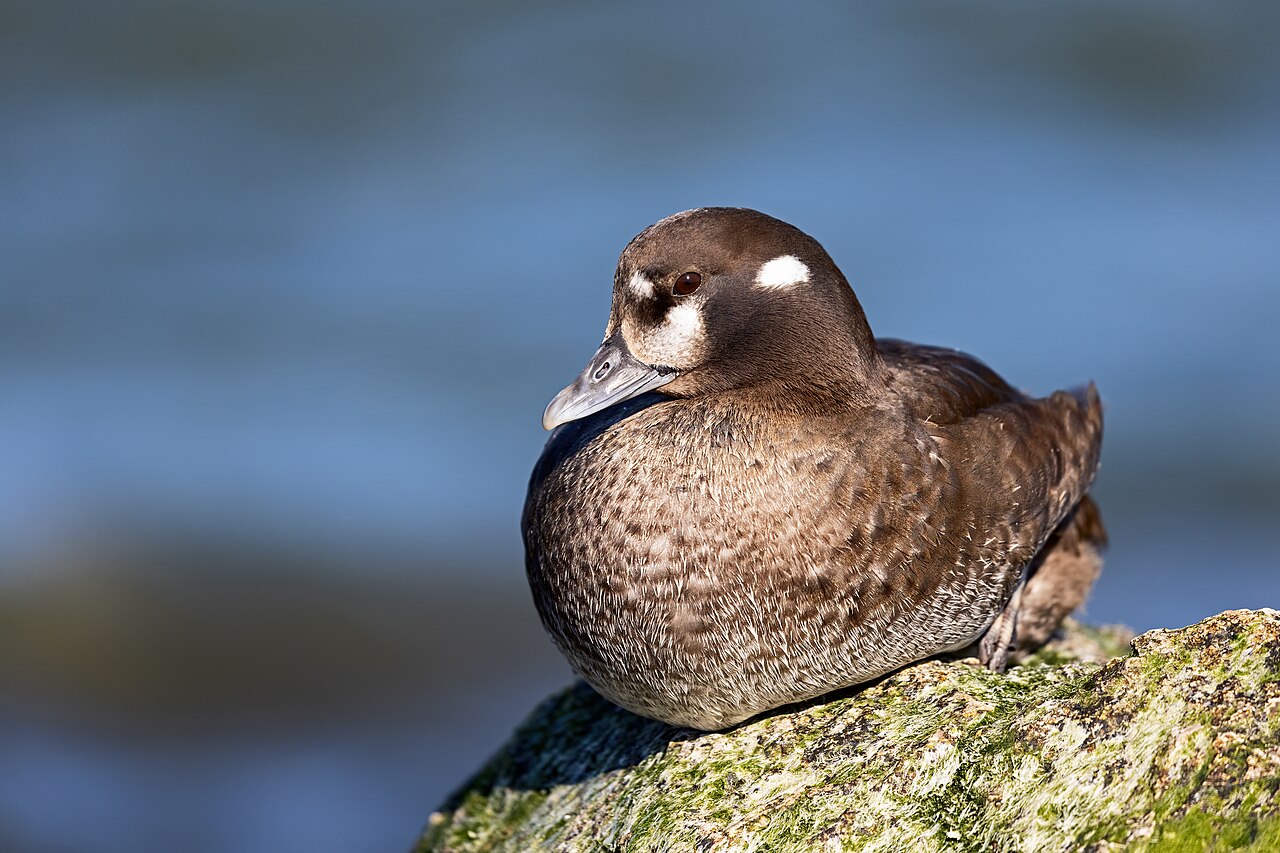
Male Histrionicus histrionicus combine slate blue, chestnut, and crisp white markings. Females are quieter brown, with distinctive pale facial patches.
A painted appearance with a practical life
Cornell Lab of Ornithology describes breeding along fast-moving rivers and wintering on exposed rocky coasts.
Those settings are demanding. A duck must feed, rest, and keep its position while water moves around it. The striking plumage is only one part of the animal’s story.
Diving for small meals
Cornell’s life-history account lists aquatic insects, crustaceans, mollusks, and some small fish among its foods.
What is available changes between inland breeding waters and marine wintering grounds. A flexible menu helps connect two very different places through the year.
Clean rivers, healthy coasts
Logging and sediment can affect breeding streams and their invertebrates. At the coast, oil spills and polluted runoff threaten feeding habitat.
Protecting this duck therefore reaches from forested watersheds to the sea. A winter flock on the rocks depends partly on places far beyond the view of a coastal observer.
Watch a harlequin duck quietly beside the waves and its name makes immediate sense. Stay longer, and the skill behind that beautiful appearance becomes just as impressive.
Photo credits
Featured image: Drake Harlequin duck (Histrionicus histrionicus) perched on a rock in the Barnegat Inlet, New Jersey, USA.jpg — Chuck Homler d/b/a Focus On Wildlife; CC BY-SA 4.0.

Body image 1: Harlequin ducks.jpg — IOHANNVSVERVS; CC0.

Body image 2: Hen Harlequin duck (Histrionicus histrionicus) sitting on a rock in the Barnegat Inlet, New Jersey, USA.jpg — Charles Homler d/b/a FocusOnWildlife; CC BY-SA 4.0.

Photographs resized for web display where available. Captive birds and seasonal plumages are identified in their captions.