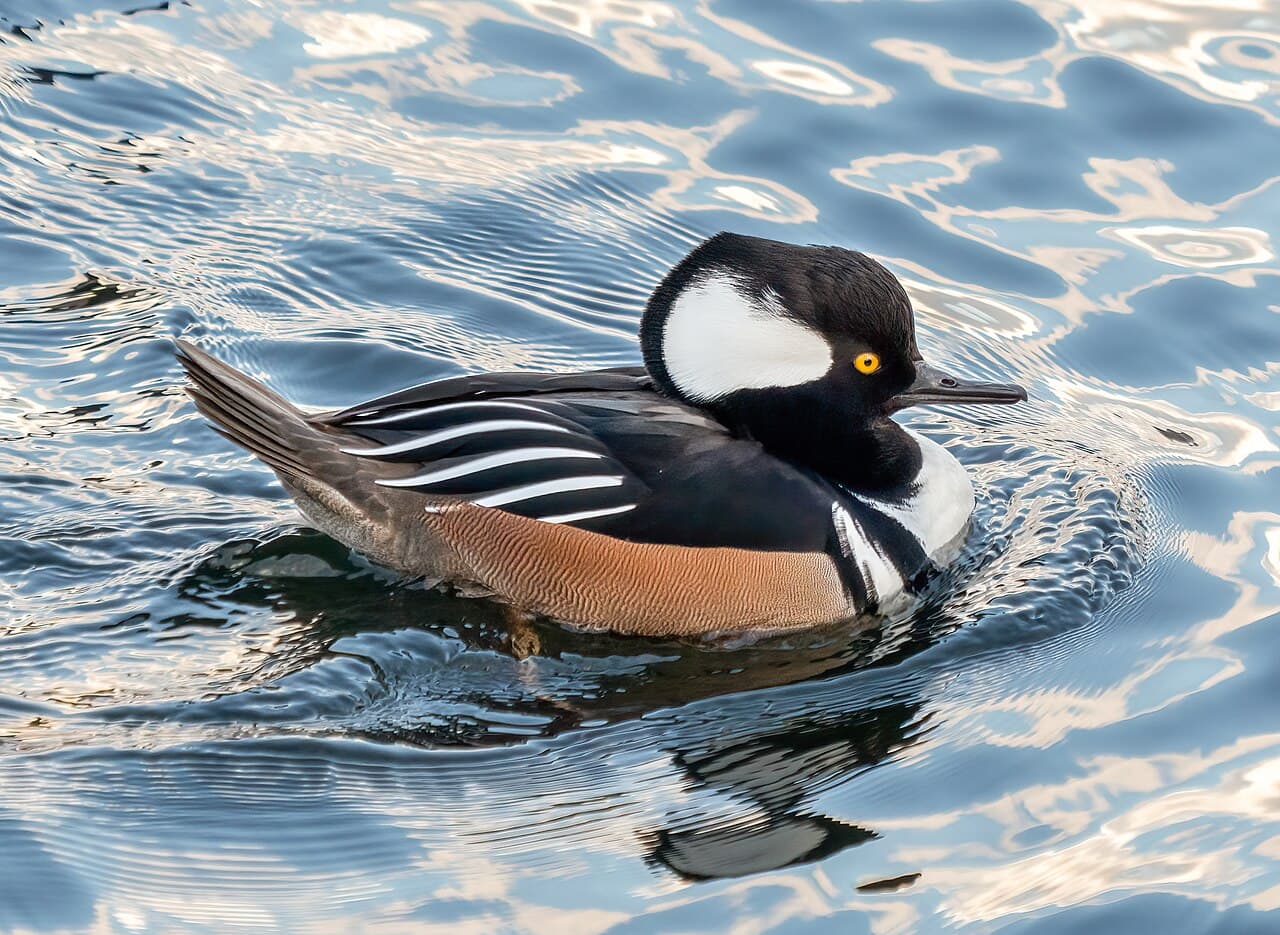
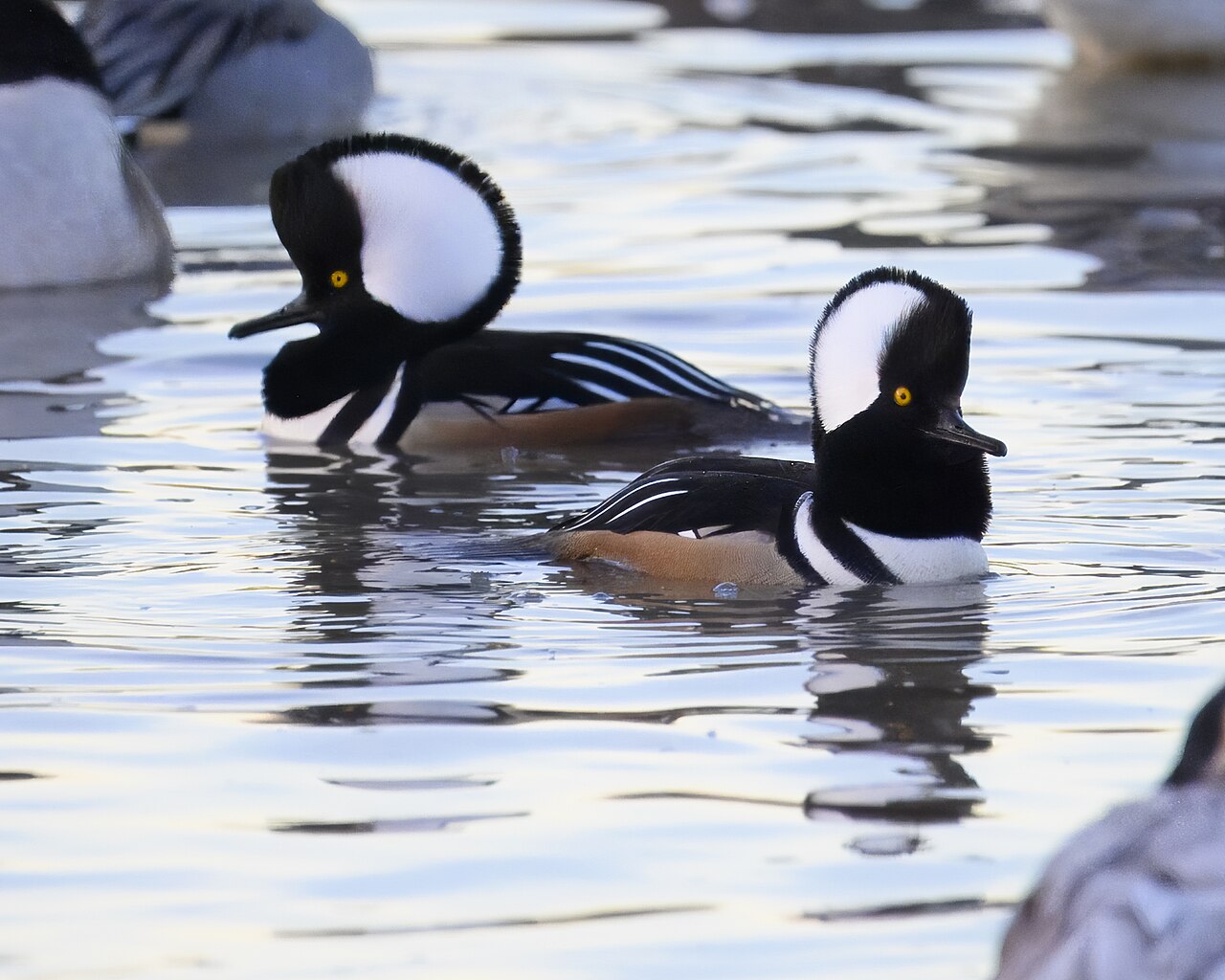
A hooded merganser can change the outline of its head in an instant. Raise the crest, and a male’s white patch spreads into a bold fan bordered with black.
Lophodytes cucullatus is a North American diving duck. Its dramatic hairstyle is made of feathers that can be lifted or flattened, rather than a fixed structure.
One bird, several silhouettes
Cornell Lab’s identification guide describes how crest position changes the head shape and the size of the visible white patch.
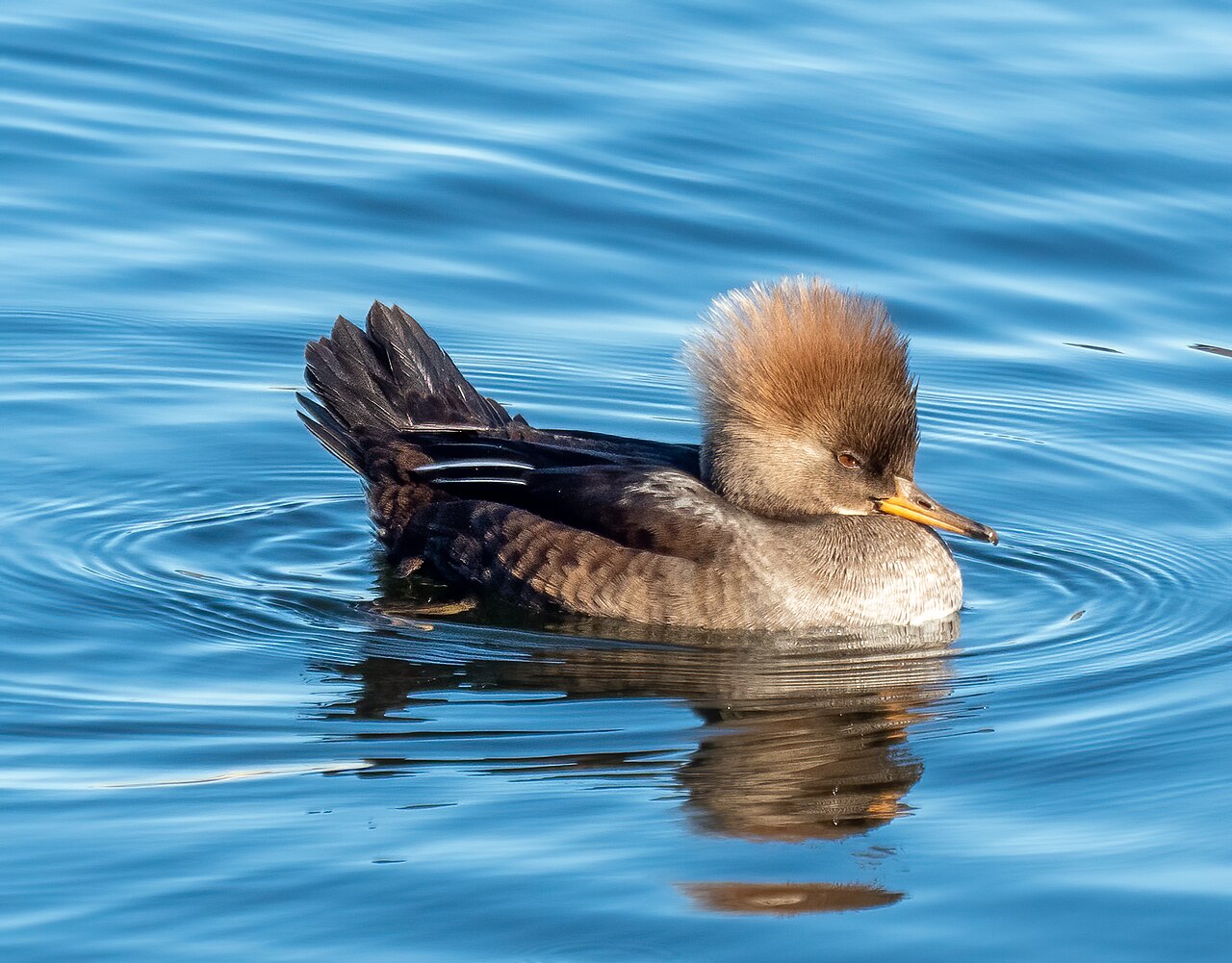
Females also have a movable crest, usually warm brown. Their appearance offers a different version of the same remarkable feature.
A diver with a narrow bill
Hooded mergansers hunt aquatic prey, including small fish, crustaceans, and insects. The slender bill is well suited to grasping a meal rather than filtering food like the broad bill of a dabbling duck.
A brief view from a pond edge can therefore reveal two useful clues: the head’s changing outline and the narrow bill beneath it.
A nursery inside a tree
Cornell’s life-history account describes nesting in cavities. Suitable tree holes are an important part of habitat, even though these ducks spend much of their visible lives on water.
Preserving cavity-bearing trees where safe helps retain those nesting opportunities.
The hooded merganser turns a familiar duck-watching moment into something theatrical. Behind the fan of feathers lies a life that links a watery hunting ground with a hidden home inside wood.
Photo credits
Featured image: Hooded merganser male in Central Park (95790).jpg — Rhododendrites; CC BY-SA 4.0.

Body image 1: Hooded merganser huntley meaadows 12.16.23 DSC 2981-topaz-denoiseraw-sharpen.jpg — lwolfartist; CC BY 2.0.

Body image 2: Hooded merganser female in CP (40676).jpg — Rhododendrites; CC BY-SA 4.0.

Photographs resized for web display where available. Captive birds and seasonal plumages are identified in their captions.