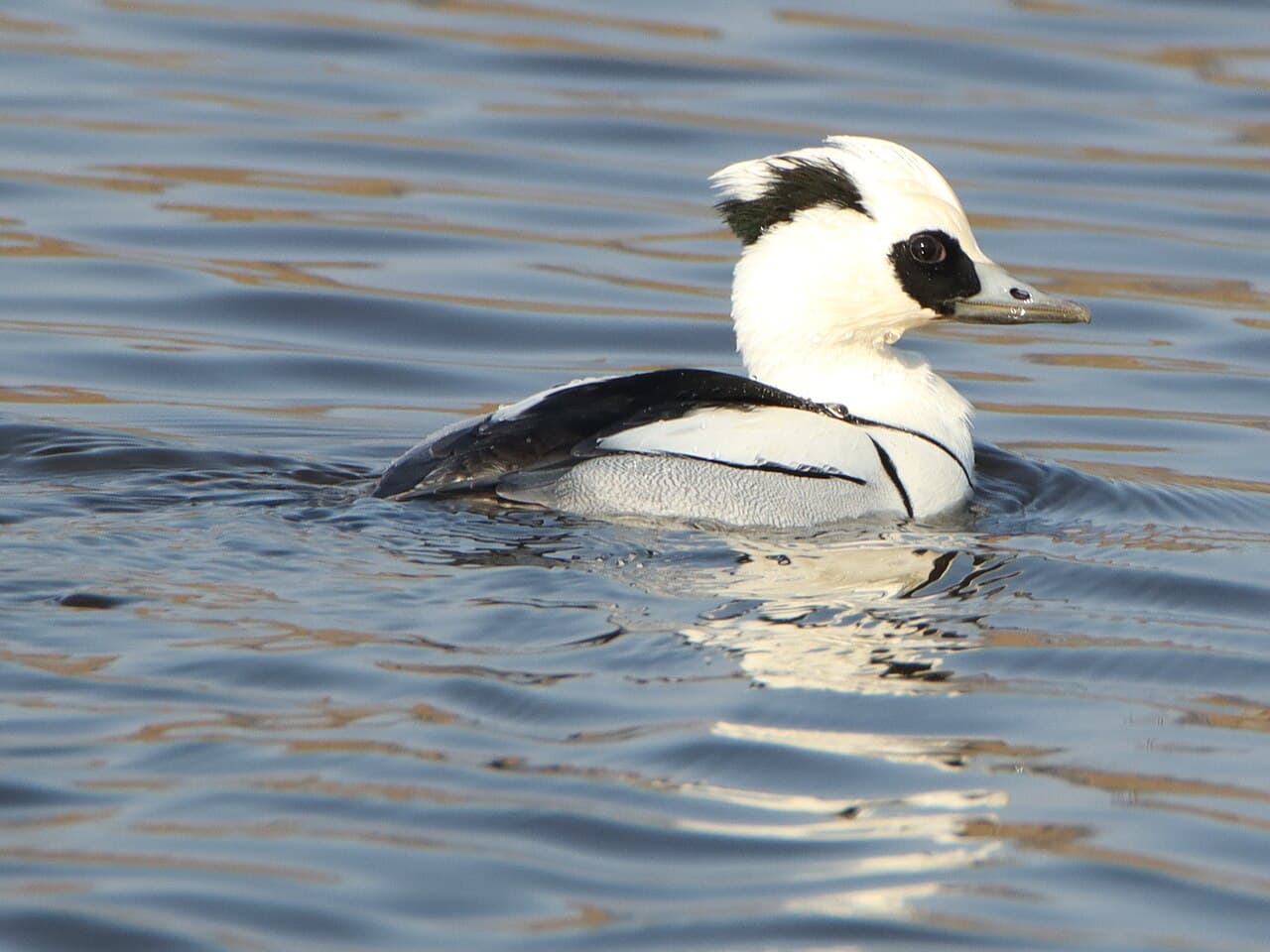
A male smew looks as though someone drew bold black lines across white feathers. A dark eye patch and fine body markings create one of the cleanest contrasts in the duck family.
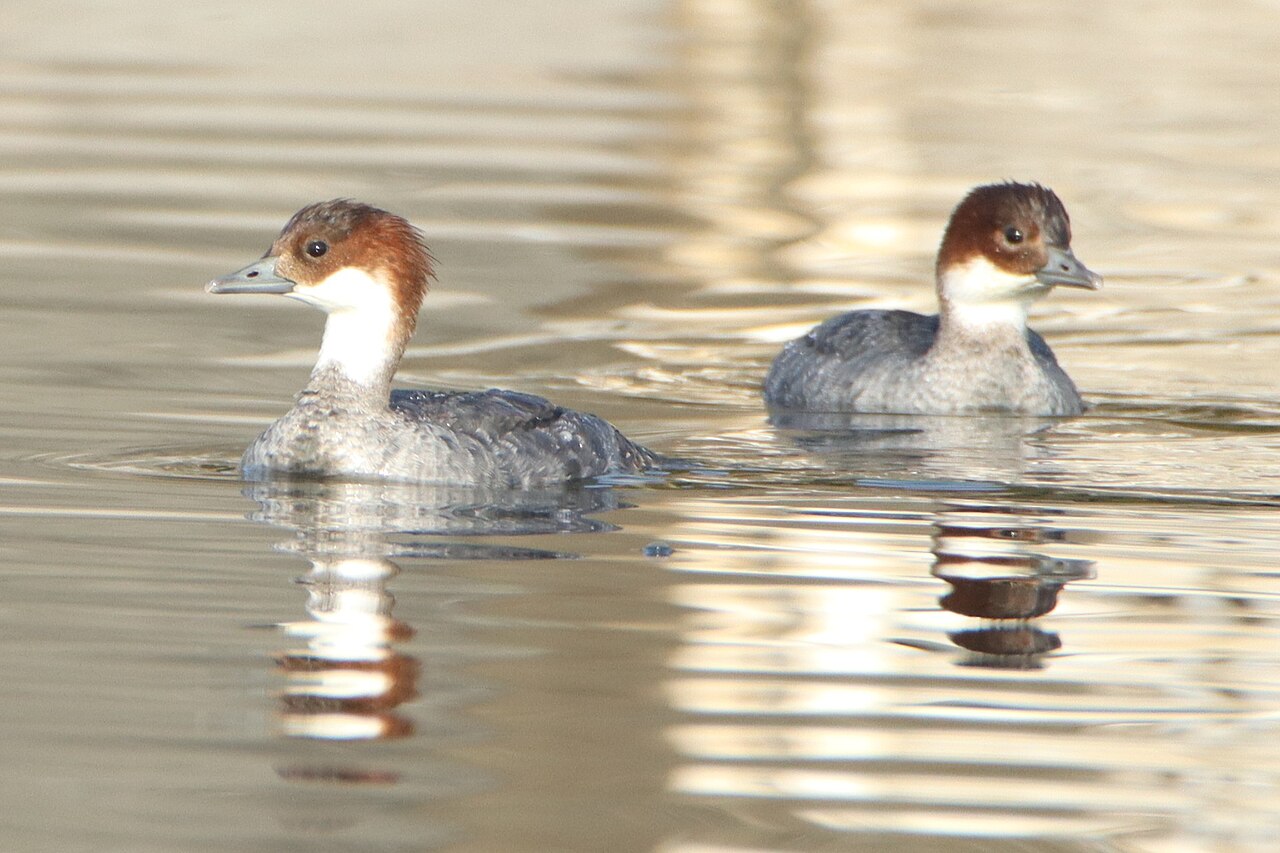
Mergellus albellus is a small diving duck of Eurasia. Females offer a different portrait, with a warm chestnut-brown head and paler face.
The useful edge of a small bill
WWT’s species feature describes smew as small members of the sawbill group. Fine serrations along the bill help hold slippery prey.
The bill is not a saw used to cut wood. Its edges are part of a feeding tool shaped for life in the water.
A diver with a seasonal menu
Smew feed on small fish and aquatic invertebrates. Their diet can shift with the season, with invertebrates important in summer and fish more prominent in winter.
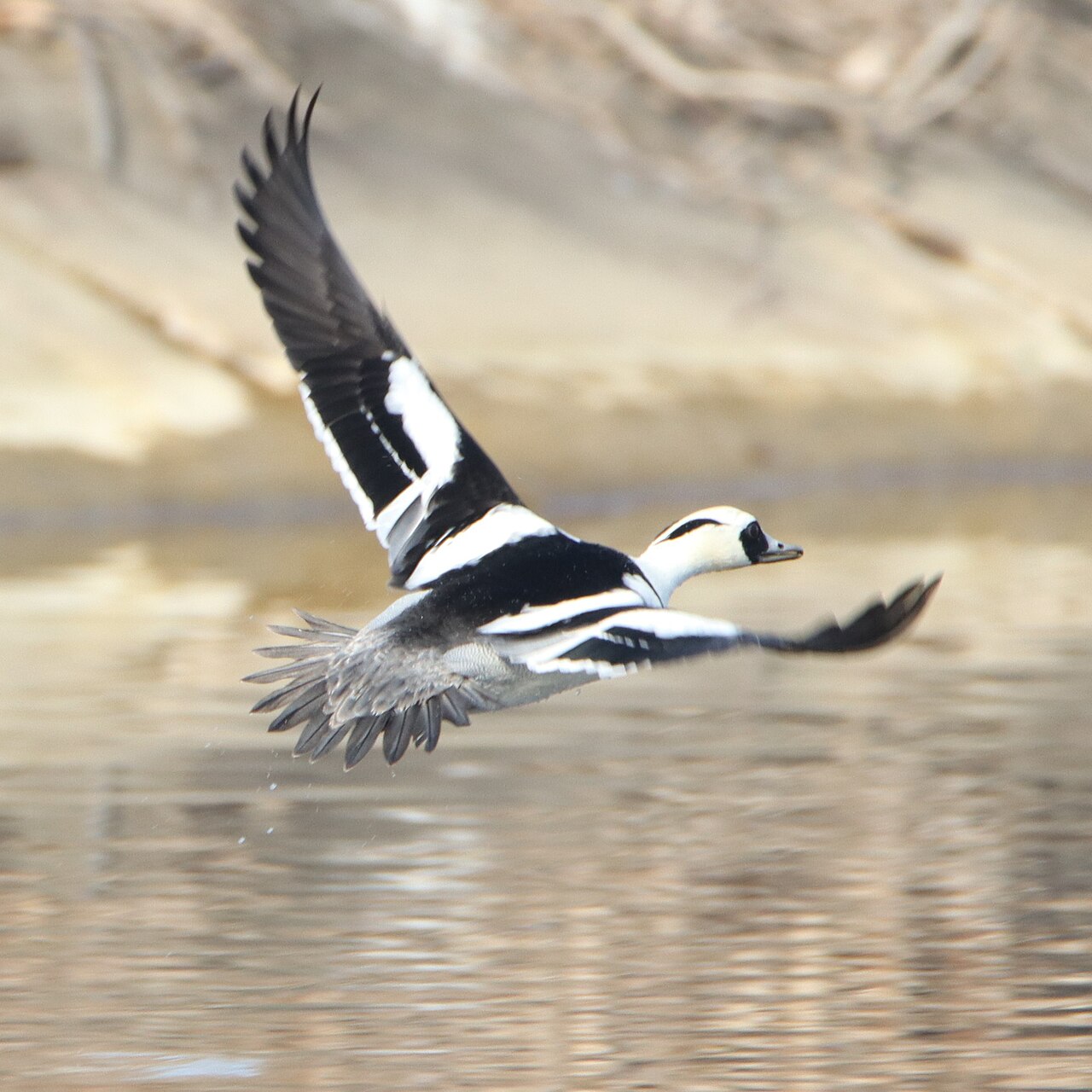
Lakes and coastal wetlands across parts of Europe and Asia provide places to feed and rest. A small flock may keep disappearing beneath the surface, leaving only ripples to show where each duck dived.
Beauty depends on healthy water
Habitat loss, pollution, oil spills, and hunting pressure are among the challenges identified by WWT.
Keeping wetlands healthy preserves more than a scenic place for birds to float. It supports the food and shelter that a diving duck needs.
The smew rewards a close look: first with the male’s graphic plumage, then with the finely detailed bill that helps turn every dive into a chance for a meal.
Photo credits
Featured image: Male of Mergellus albellus (male).jpg — Alpsdake; CC BY-SA 4.0.

Body image 1: Mergellus albellus (female).jpg — Alpsdake; CC BY-SA 4.0.

Body image 2: Mergellus albellus (male in flight).jpg — Alpsdake; CC BY-SA 4.0.

Photographs resized for web display where available. Captive birds and seasonal plumages are identified in their captions.