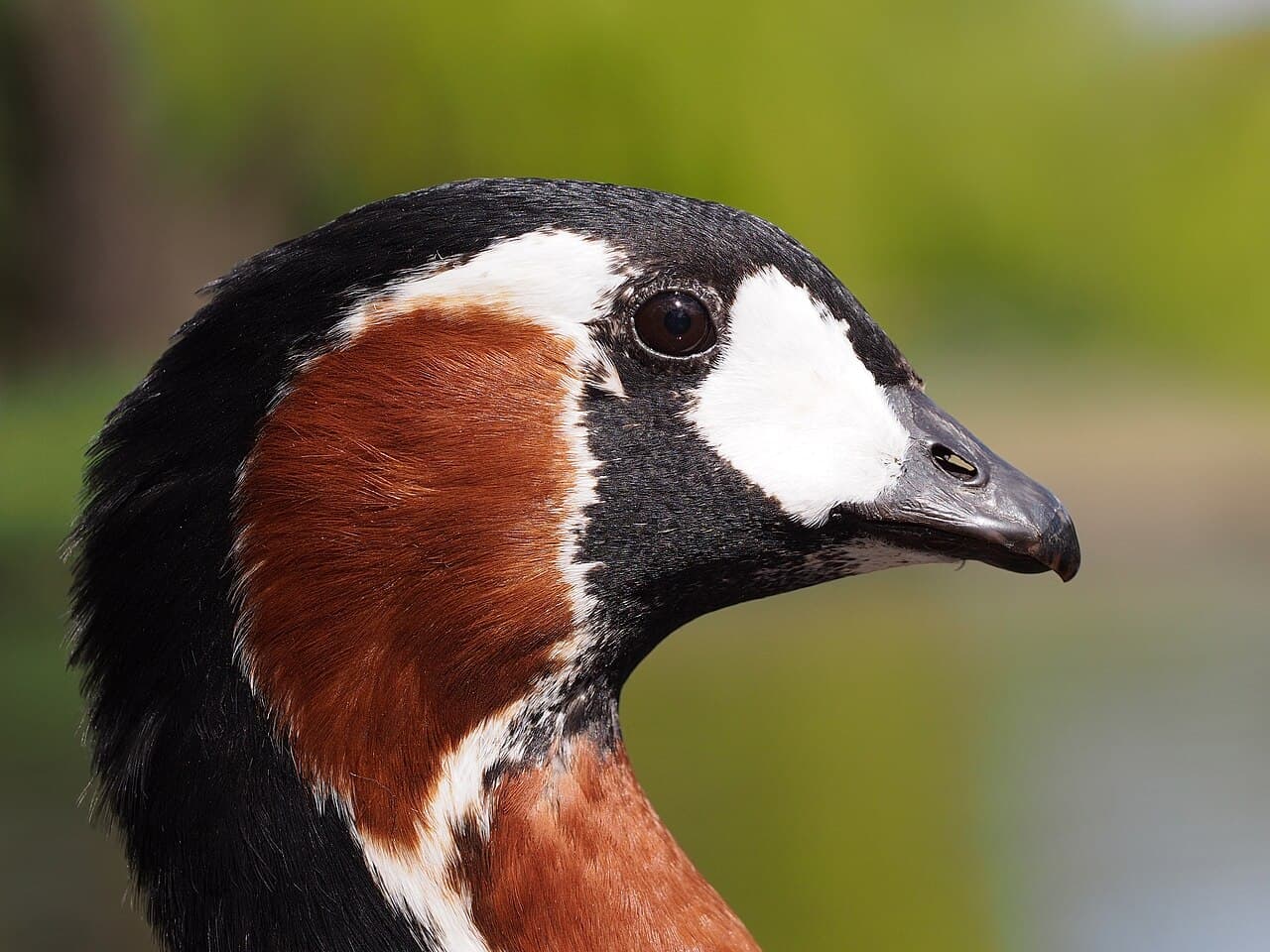
A red-breasted goose may choose to nest close to a bird of prey. It sounds risky, yet a protective raptor can help keep another danger—Arctic foxes—away from the nesting area.
Branta ruficollis is a small goose with rich chestnut coloring framed by black and white. Its extraordinary pattern belongs to a bird with a long annual journey.
A surprising nesting neighborhood
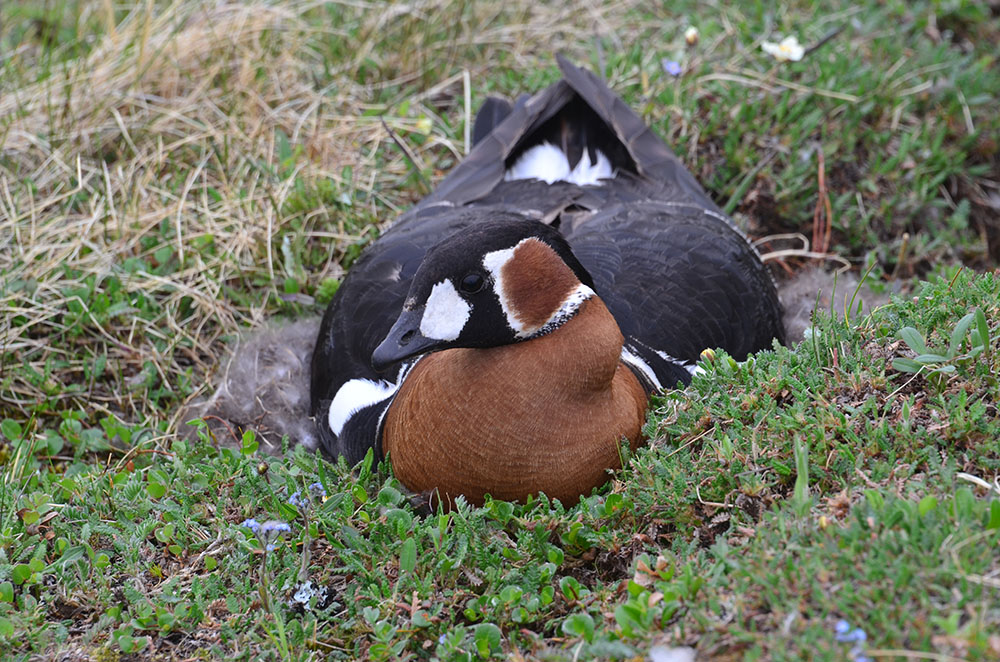
WWT describes nests near peregrine falcons or snowy owls on the Siberian tundra.
This association is not a promise of perfect safety. It shows how one animal’s defensive behavior can change the opportunities available to another.
From Arctic breeding grounds to winter wetlands
Red-breasted geese migrate from Arctic Russia toward wintering areas around the Black Sea. Their journey depends on places to stop, feed, and rest along the way.
A tracking study published in Wildfowl highlights the importance of stopover and staging wetlands. These sites help birds build the reserves needed for travel and the coming breeding season.
Protecting the whole journey
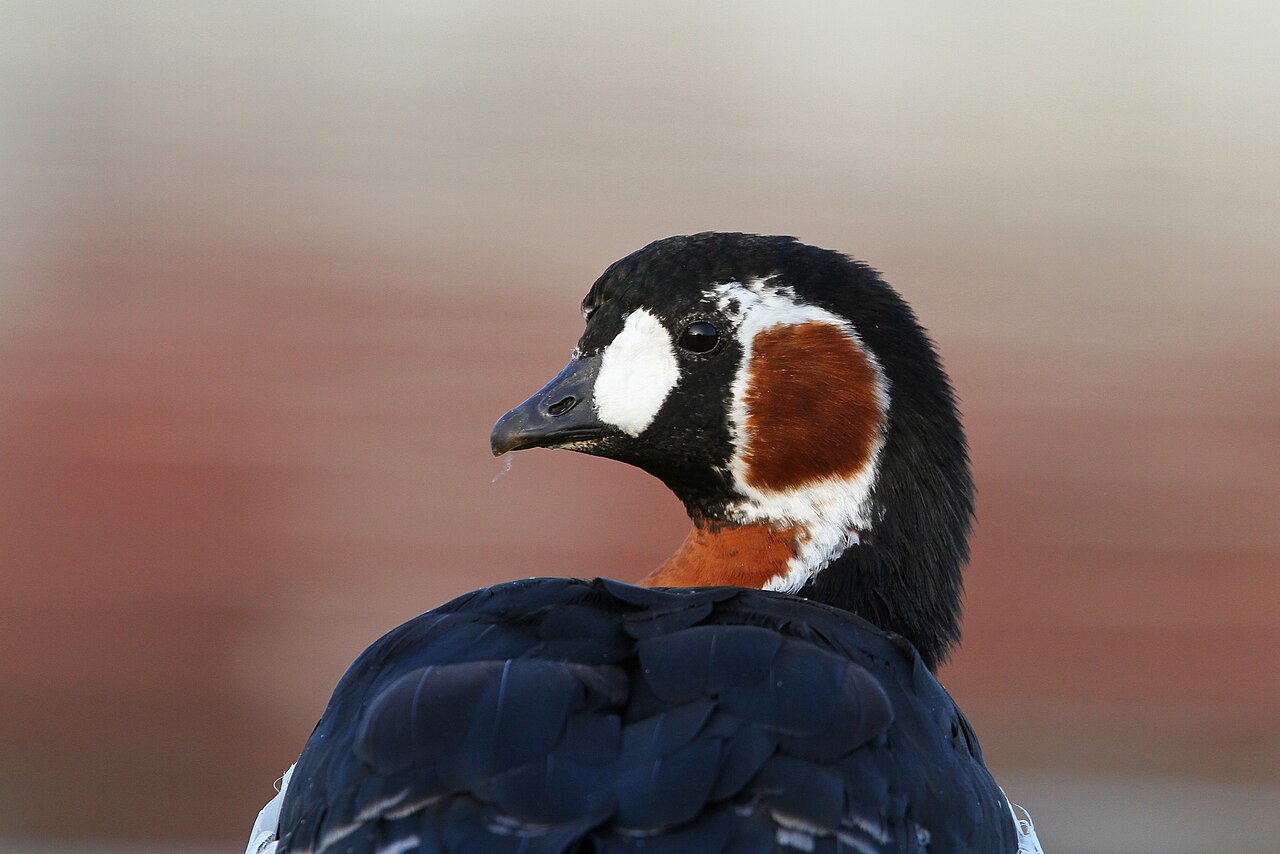
Habitat loss, hunting, and climate change place pressure on the species. Conservation must connect breeding grounds, migration stops, and winter feeding areas.
A colorful goose in a field is therefore part of a much larger map. Its plumage may draw the first glance, but its journey—and its unusual nesting neighbors—give us even more reasons to value it.
Photo credits
Featured image: Branta ruficollis portrait.jpg — Francis C. Franklin; CC BY-SA 3.0.

Body image 1: Brantha ruficollis In Taimyr Reserve.jpg — Поспелов Игорь Николаевич; CC BY-SA 3.0.

Body image 2: Branta ruficollis 94321098.jpg — Christoph Moning; CC BY 4.0.

Photographs resized for web display where available. Captive birds and seasonal plumages are identified in their captions.