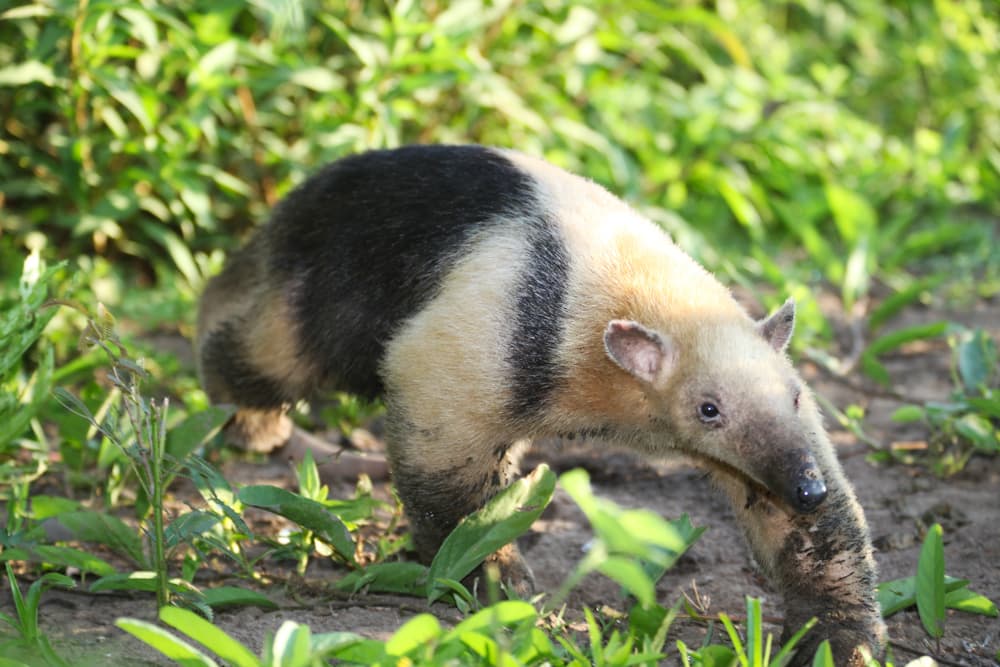
A southern tamandua can use its tail almost like an extra climbing limb. The underside near the tip is bare, helping this unusual anteater grip branches as it moves through the trees.
Found in South America, Tamandua tetradactyla is often recognized by dark markings that resemble a vest. But its wardrobe varies: some individuals have much more uniform coats.
An insect hunter above the ground
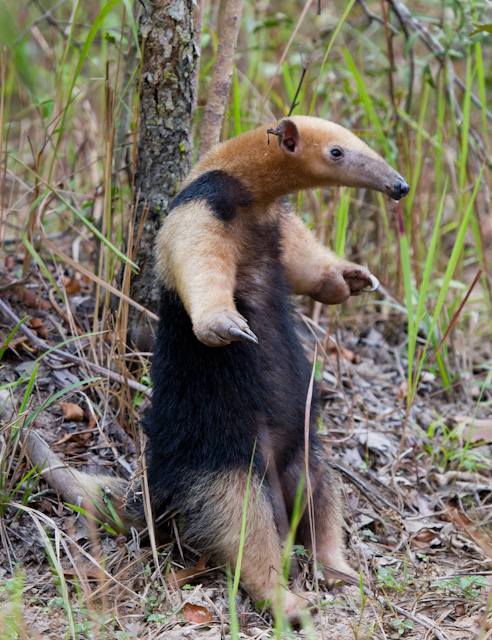
The Smithsonian’s National Zoo describes strong forearms and large claws that help tamanduas open insect nests. Ants and termites are among their foods.
The same animal must solve two problems: reach the meal and stay steady while feeding. Its gripping tail and powerful limbs make a useful combination.
More than one kind of home
Southern tamanduas use varied habitats, including forests, savannas, and mangroves. They spend time both in trees and on the ground, and may rest inside hollow trees.
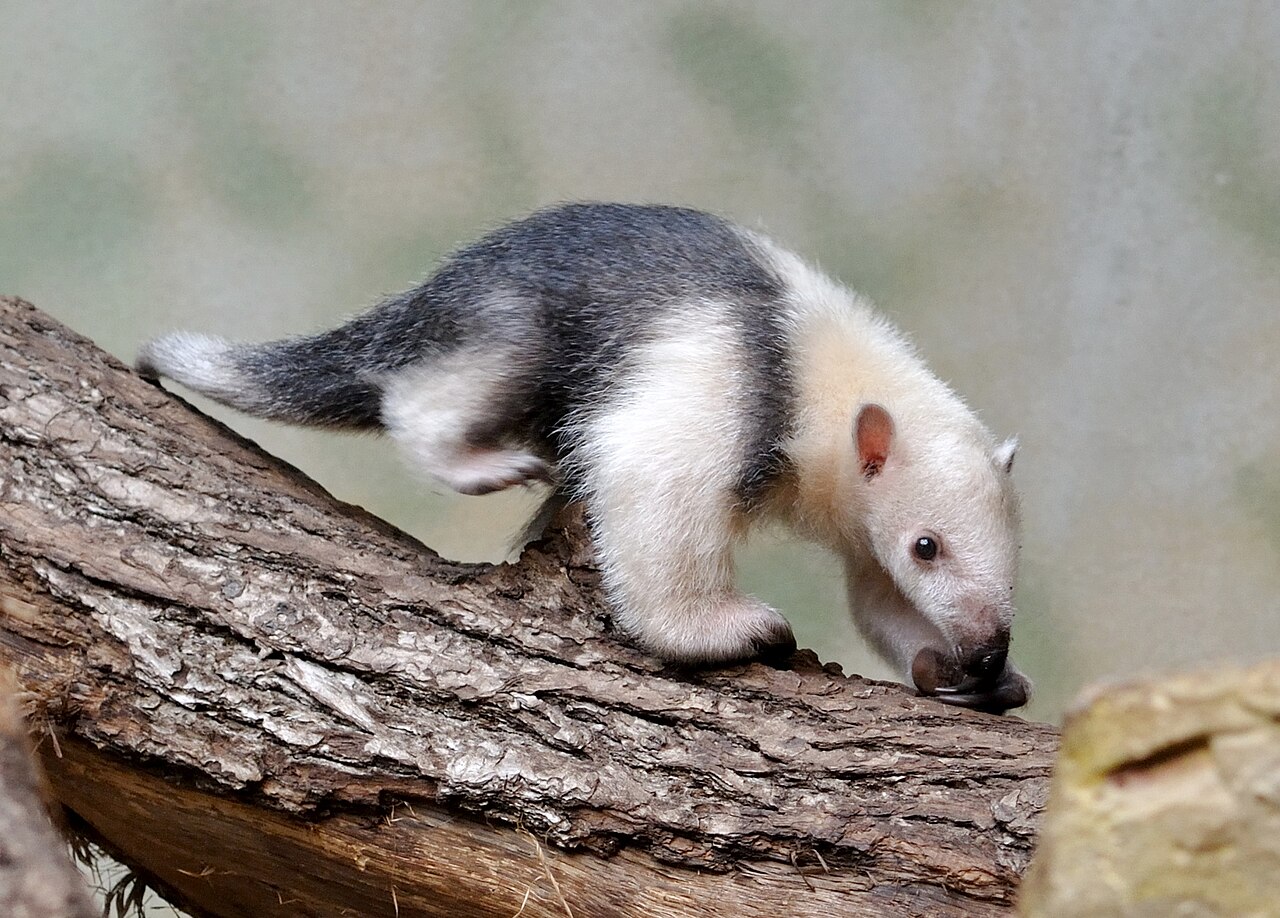
A mother usually gives birth to one young. The youngster can ride on her back, creating one of the forest’s most striking family portraits.
Keeping a place for an unusual climber
Road traffic, fires, habitat loss, and capture for the pet trade can harm tamanduas. Protecting habitat and leaving wild animals in the wild support a better future for them.
Look beyond the vest-like coat and the southern tamandua becomes even more remarkable: a careful climber equipped to find a tiny meal in a very large forest.
Photo credits
Featured image: Tamandua Pantanal.jpg — Nori Almeida; CC BY 2.0.

Body image 1: T tetradactyla 1.jpg — Sinara Conessa; CC BY 2.0.

Body image 2: Tamandua tetradactyla qtl1.jpg — Quartl; CC BY-SA 3.0.

Photographs resized for web display where available. Infrared and captive photographs are identified in their captions.