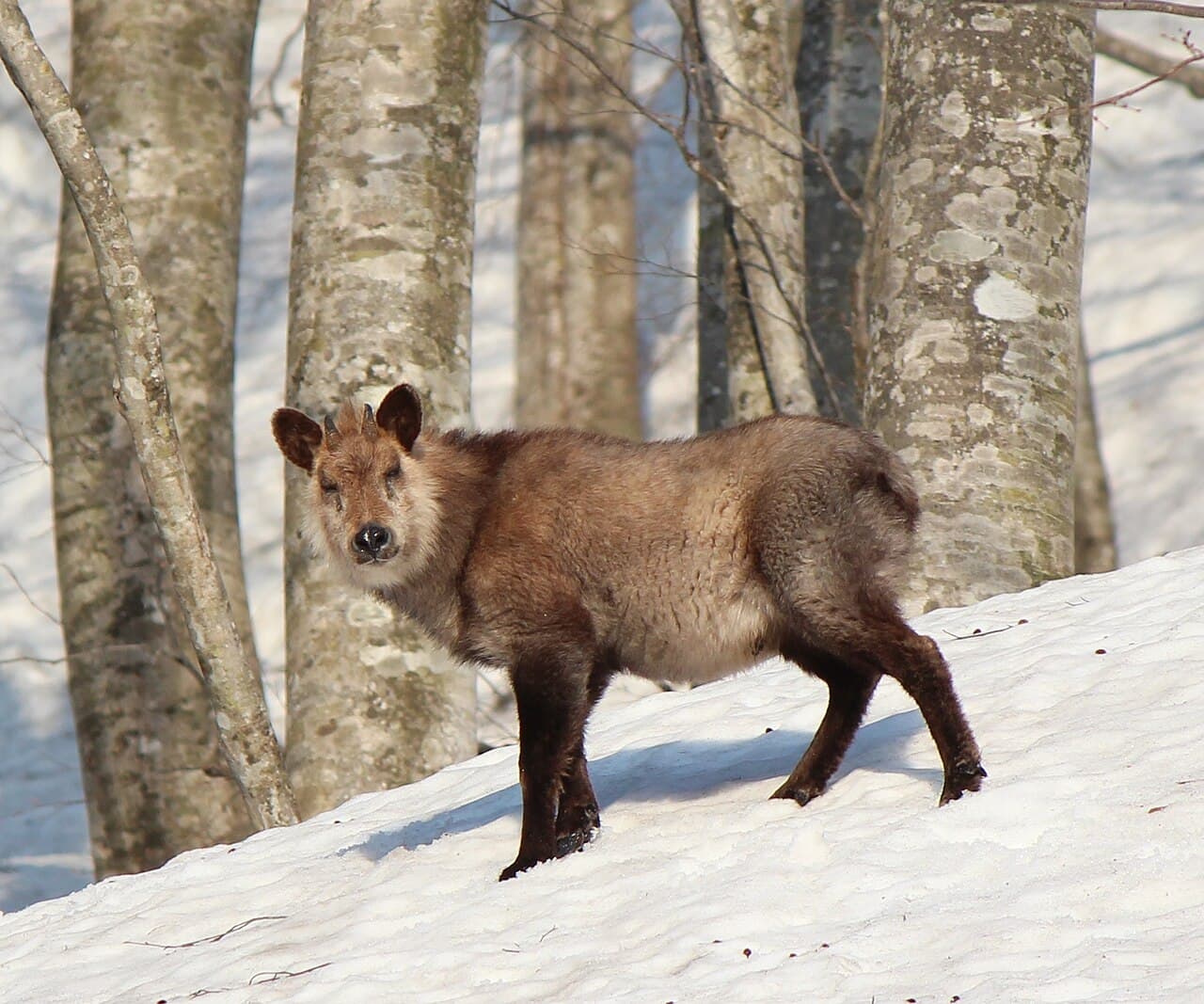
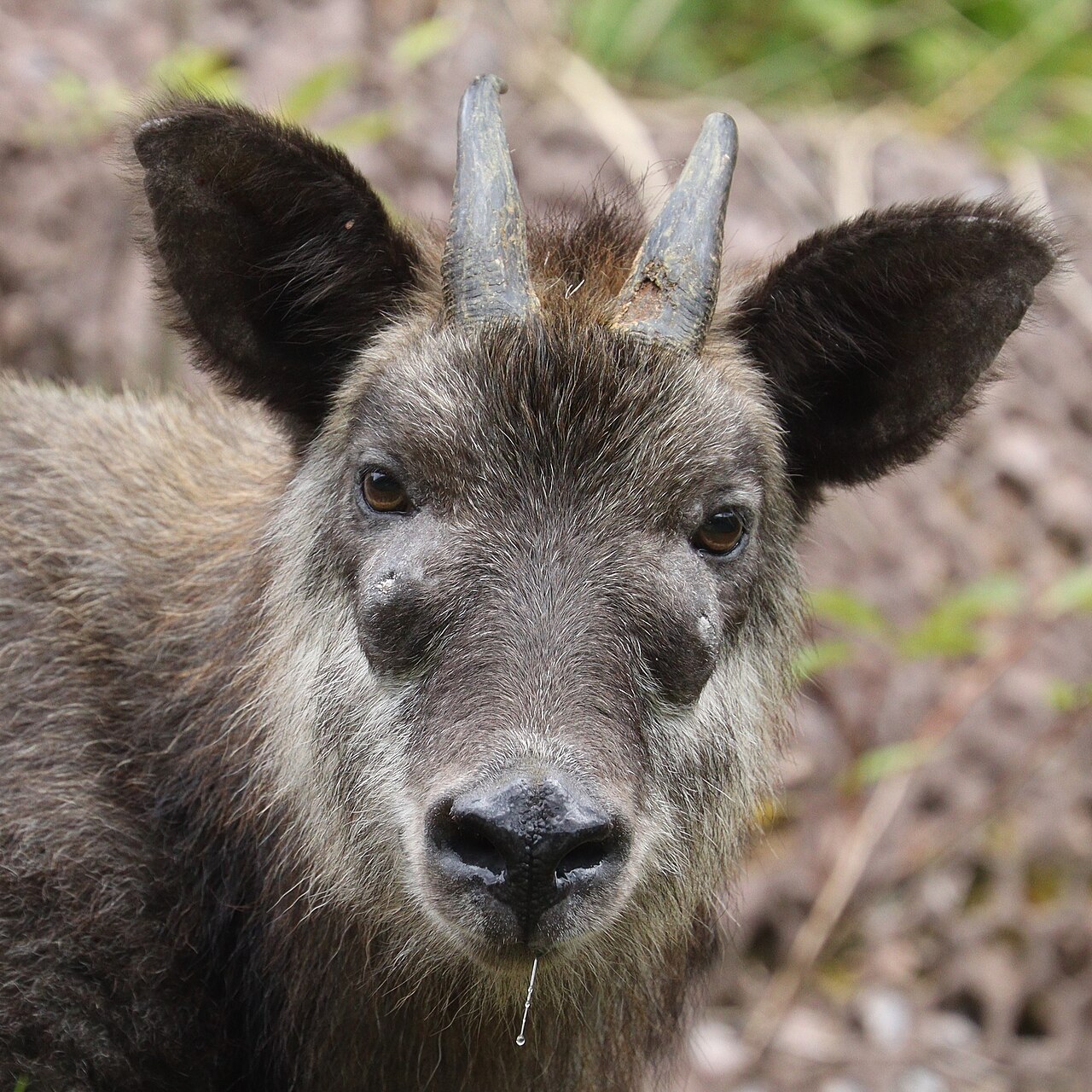
A Japanese serow seems to have an extra pair of eyes. Those round bumps beneath its real eyes are actually scent glands—a surprising detail on one of Japan’s most distinctive mountain mammals.
The Japanese serow, Capricornis crispus, lives in forests on Honshu, Shikoku, and Kyushu. Its shaggy outline makes it a memorable sight among the trees.
A message left on a branch
According to Inokashira Park Zoo, the glands release fluid that serows rub onto branches and rocks. These scent marks help define their territories.
Both males and females defend territories, and adults generally live alone. A quiet forest can therefore hold messages that human visitors cannot see.
Built for leaves and cold weather
Serows eat young shoots, leaves, bark, and grasses. They are ruminants: a four-part stomach and repeated chewing help them process plant food.
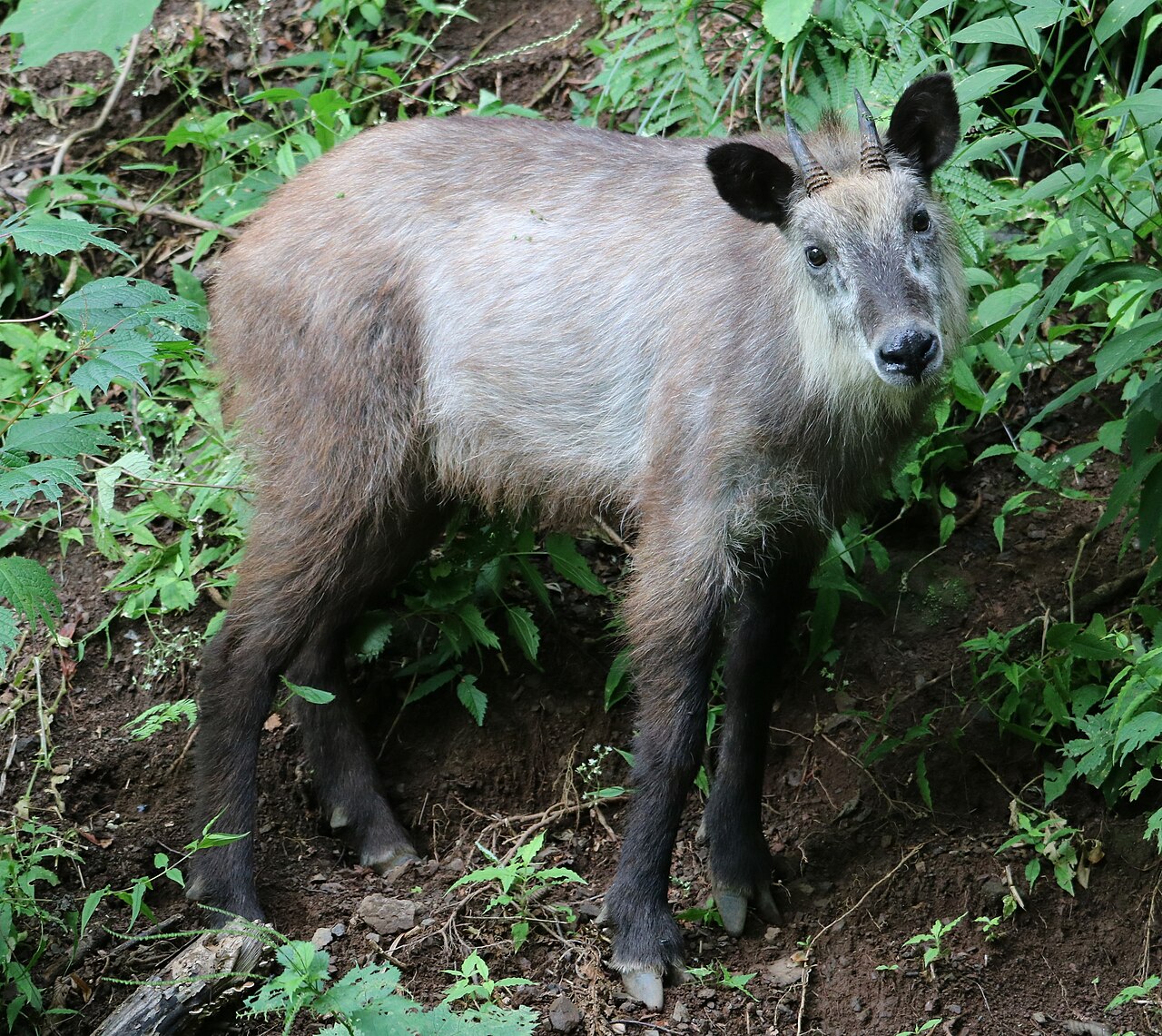
Winter brings another useful feature. Beneath the coarse outer hair, a soft, dense undercoat helps keep the animal warm. The fluffy appearance has a practical purpose.
A forest encounter worth slowing down for
Watching a serow from a distance lets its ordinary behavior become the main event. A pause beside a branch may be part of its daily communication.
Amazing Nature often rewards a second look. Here, the detail that resembles an extra eye opens a window into an entire hidden world of scent.
Photo credits
Featured image: Capricornis crispus in Mount Sanpoiwa.JPG — Alpsdake; CC BY-SA 3.0.

Body image 1: Capricornis crispus (head s3).jpg — Alpsdake; CC BY-SA 4.0.

Body image 2: Capricornis crispus s3.jpg — Alpsdake; CC BY-SA 4.0.

Photographs resized for web display where available. Infrared and captive photographs are identified in their captions.