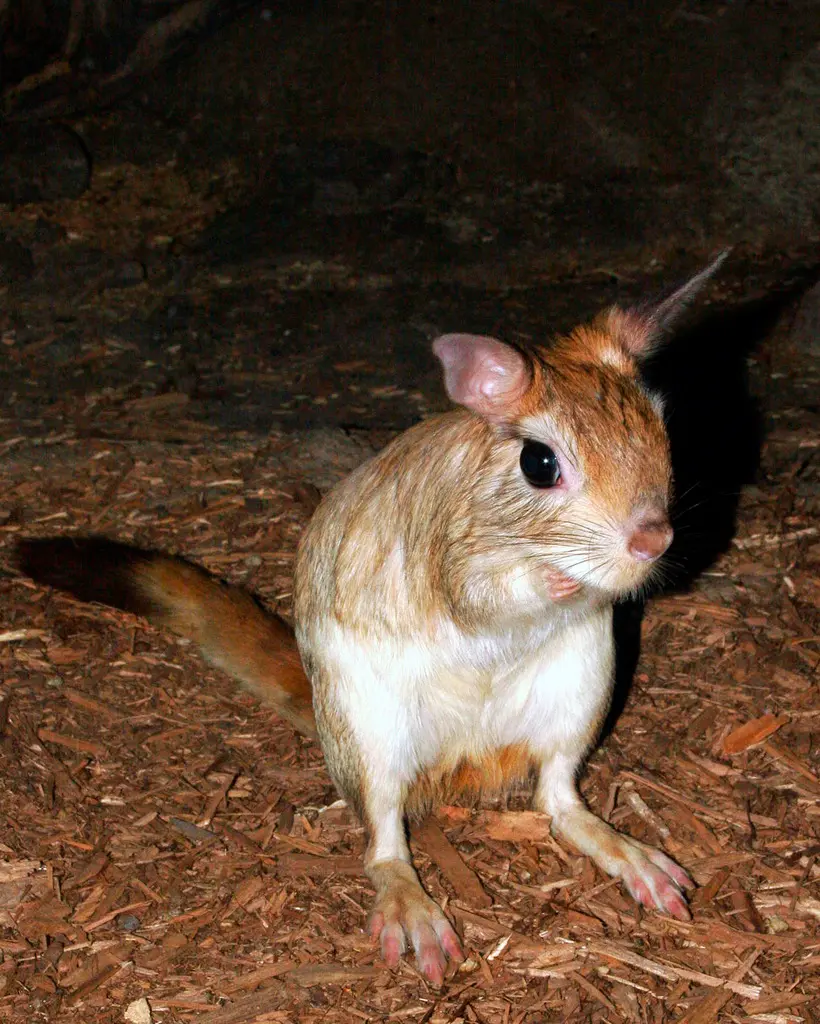
A southern springhare can bound away on powerful hind legs like a tiny kangaroo. Yet this African mammal is a rodent, rather than a marsupial—or a hare.
The species featured here is Pedetes capensis. Its long tail, large eyes, and tall ears make an unforgettable silhouette after sunset.
Different animal, a similar solution
Animal Diversity Web describes short forelegs paired with long, strong hind limbs. Those rear legs provide the push for hopping, while the long tail completes the animal’s striking outline.
The resemblance to a kangaroo shows how different groups can arrive at similar ways of moving. A quick glance at shape alone does not reveal an animal’s family tree.
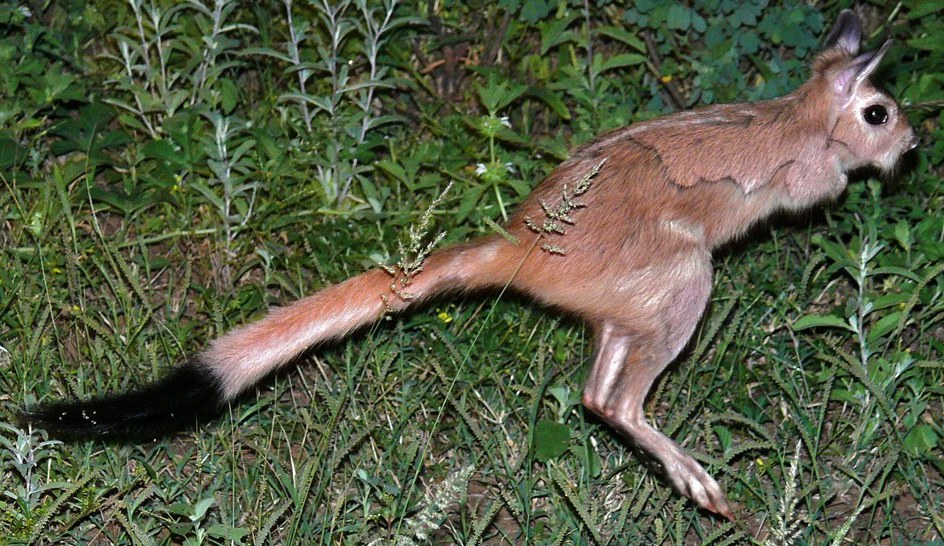
A daytime home beneath the soil
Southern springhares dig burrows in suitable dry, sandy ground. These tunnels provide a retreat during the day, before the animals emerge to feed mainly at night.
Plant foods form most of the diet, although some insects are also eaten. Cultivated crops can attract them where farmland overlaps their habitat.
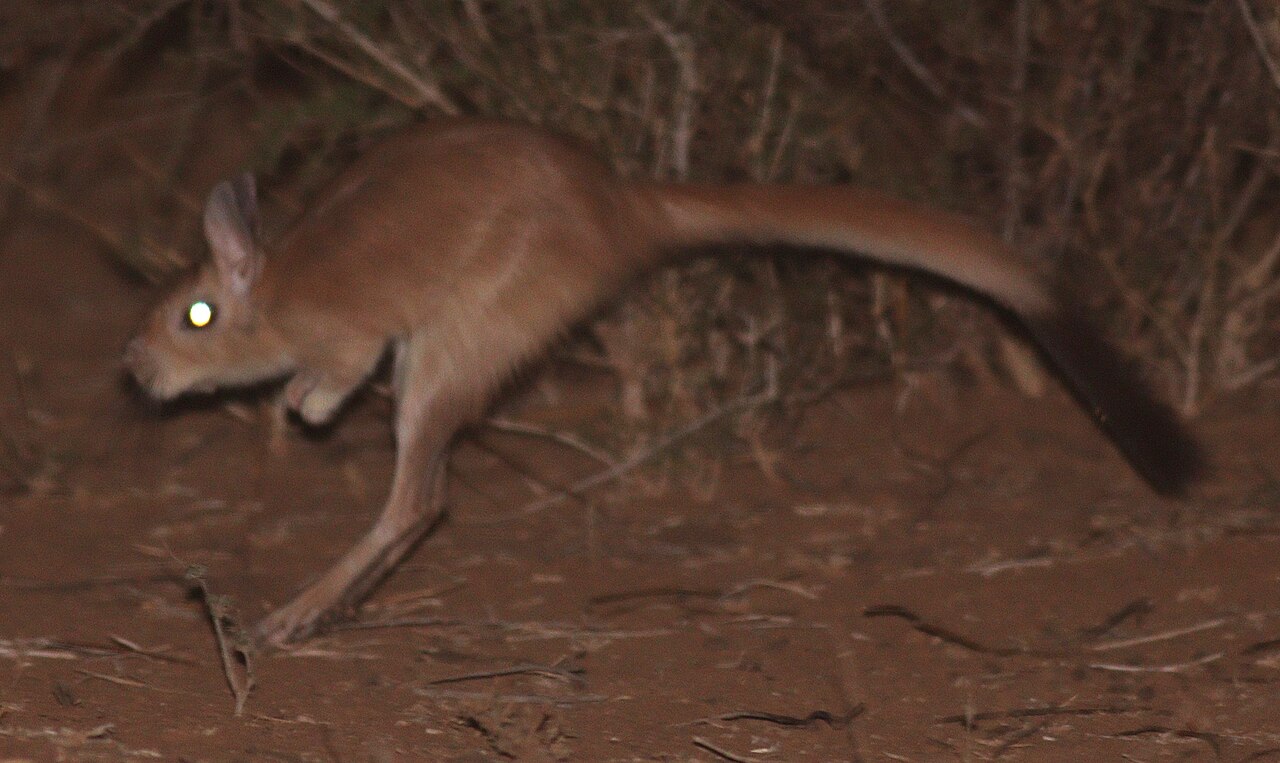
More to the grassland than daylight reveals
A feeding animal may look still for a moment, then suddenly spring toward shelter when disturbed. That contrast is part of what makes watching nocturnal wildlife so rewarding.
Keeping suitable ground and feeding habitat intact leaves room for these unusual diggers.
Amazing Nature can look familiar from a distance and become surprising up close. The springhare combines a kangaroo-like leap with an entirely different life story.
Photo credits
Featured image: Springharelg.jpg — Devonpike at English Wikipedia; Public domain.

Body image 1: Spring Hare (Pedetes capensis) (6042009463).jpg — Bernard DUPONT from FRANCE; CC BY-SA 2.0.

Body image 2: Pedetes capensis 114160651.jpg — Jan Ebr; CC BY 4.0.

Photographs resized for web display where available. Captive animals and contextual habitat photographs are identified in their captions.