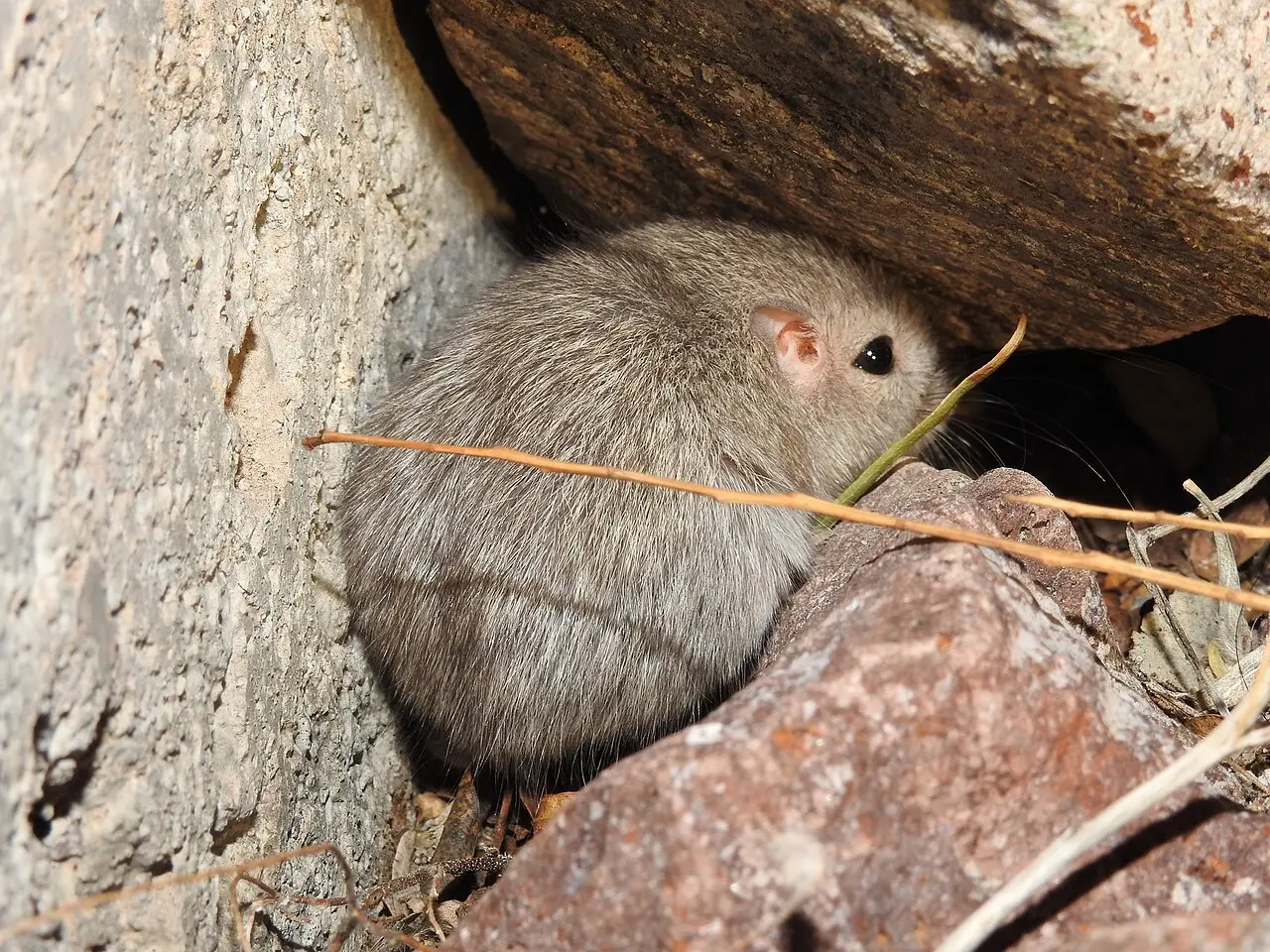
A desert pocket mouse carries food in pockets built into its face. Its external cheek pouches are lined with fur, making them useful bags for moving dry seeds, as described in Clark County’s species account.
Chaetodipus penicillatus is a small rodent of the southwestern United States and northern Mexico. A sandy coat and pale underside suit an animal easily overlooked beside desert shrubs.
A seed collector with a transport system
Animal Diversity Web records seeds of plants such as mesquite and creosote bush in these mice’s cheek pouches.
Collected food can be stored in burrows or hidden in scattered caches. The pouches carry a meal; the caches keep it for later.
Finding a home in soft ground
Desert pocket mice favor sandy or silty soils in places such as washes and valleys. Sparse scrub may look unpromising to us, yet it can provide seeds, cover, and ground suitable for shelter.
A long tail adds to the animal’s outline. Despite its small size, this mouse must move between feeding patches while avoiding owls, snakes, and mammalian predators.
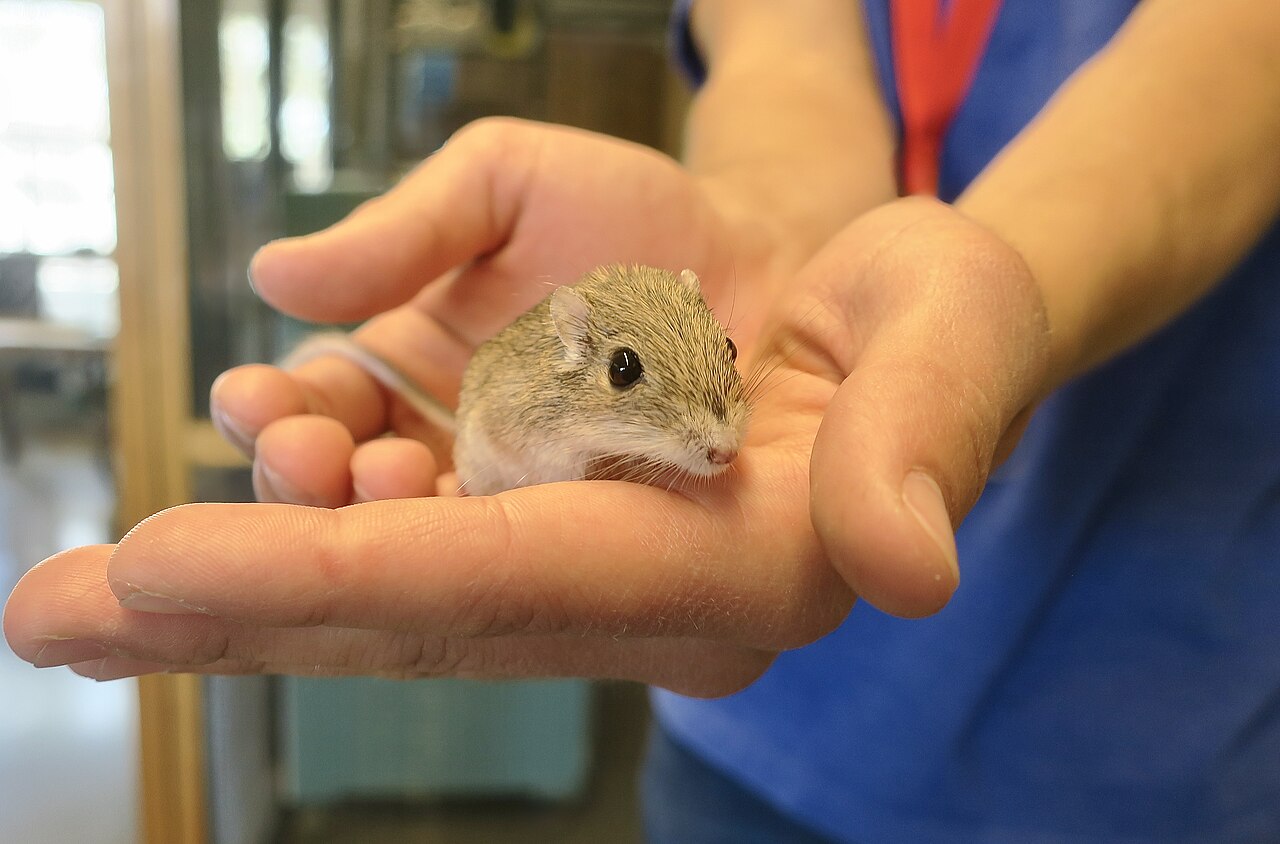
Small movements, wider connections
Seeds are the main food, with some green vegetation and insects adding variety. Carrying and caching seeds links the mouse’s feeding routine to the plants around it.
Protecting desert habitat means valuing its small residents as well as its larger, more visible animals.
A pocket mouse can disappear beneath a shrub in a moment. The hidden food bags in its cheeks reveal how much practical ingenuity fits into that tiny shape.
Photo credits
Featured image: Chaetodipus penicillatus 345743103.jpg — Yann Kemper; CC0.

Body image 1: Desert pocket mouse.jpg — FWS; Public domain.

Body image 2: Desert pocket mouse Liberty Wildlife Center.jpg — RatioTile; CC BY-SA 4.0.

Photographs resized for web display where available. Captive animals and contextual habitat photographs are identified in their captions.