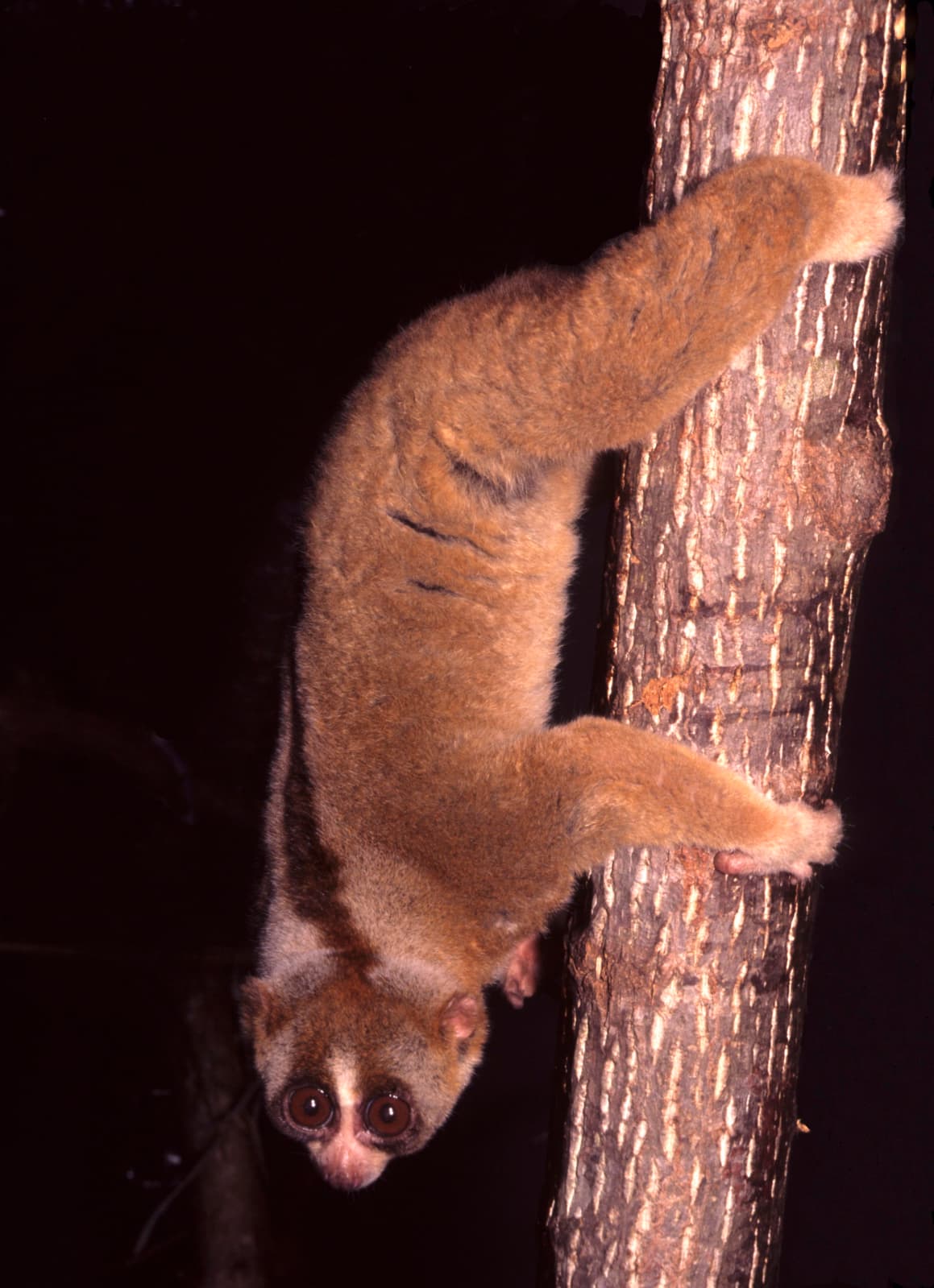
A slow loris looks gentle enough to belong in a storybook. Yet this wide-eyed primate has a venomous bite—a rare feature among mammals.
Its quiet movements and unusual chemistry are parts of a complex wild life, not reasons to treat it as a pet.
A two-part chemical system
Slow lorises have a gland near the upper arm that produces a secretion. Licking this area brings that material together with saliva.
A scientific review of loris venom describes this as a two-step system. The animal can deliver the resulting mixture through a bite.
Researchers are still investigating its chemistry and different uses. It is more complicated than the simple idea of a poison used only to catch dinner.
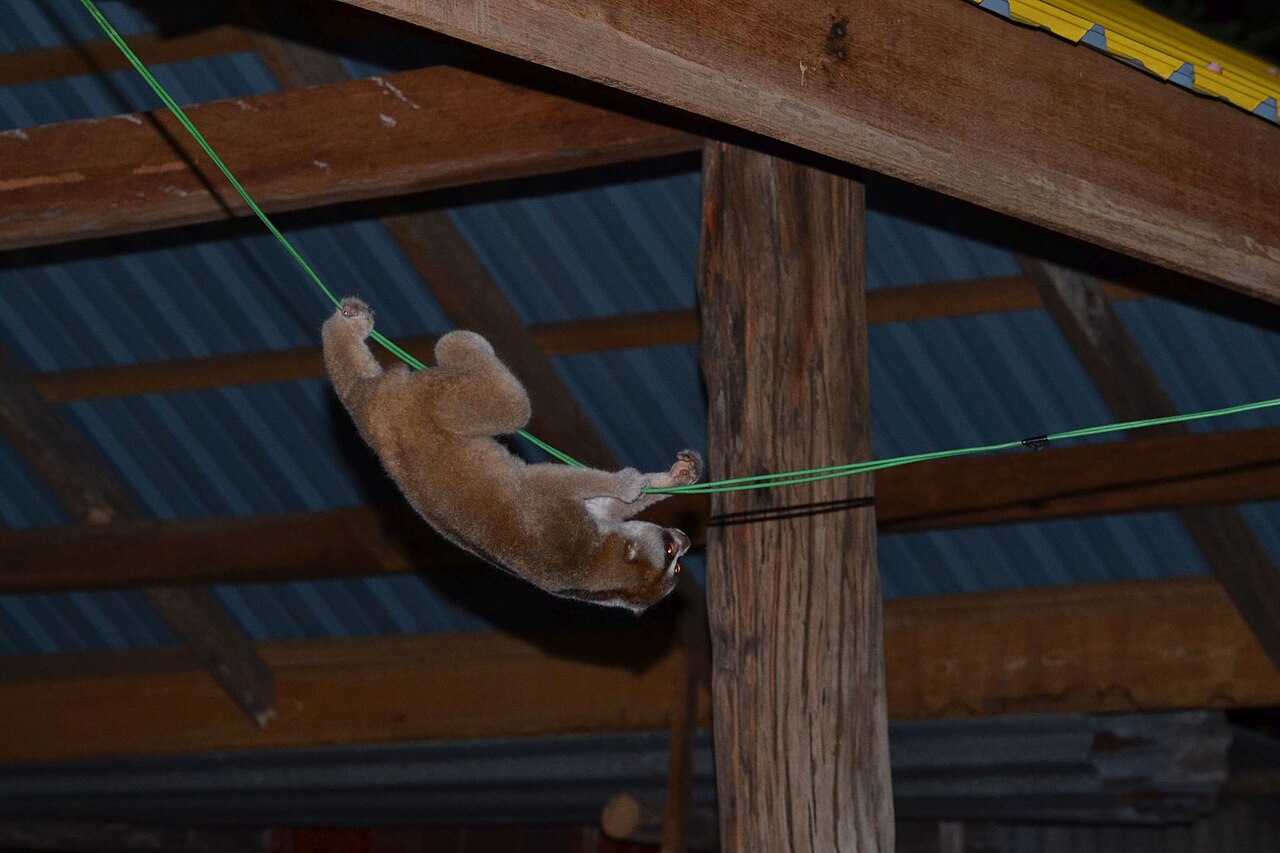
Why would a primate need venom?
One important clue comes from encounters between lorises themselves. An eight-year study of wild Javan slow lorises found evidence linking venomous bites to competition over territories and mates.
That finding concerns a studied species and population. It should not become a claim that every loris uses venom in exactly the same way.
Built for the night
Slow lorises are Asian primates that move through trees with a firm grip. Their large eyes help them operate in low light, while careful climbing lets them search branches for food.
The Duke Lemur Center places lorises within a wider family of remarkable primates. “Slow” describes their usual movement, not a lack of ability or awareness.
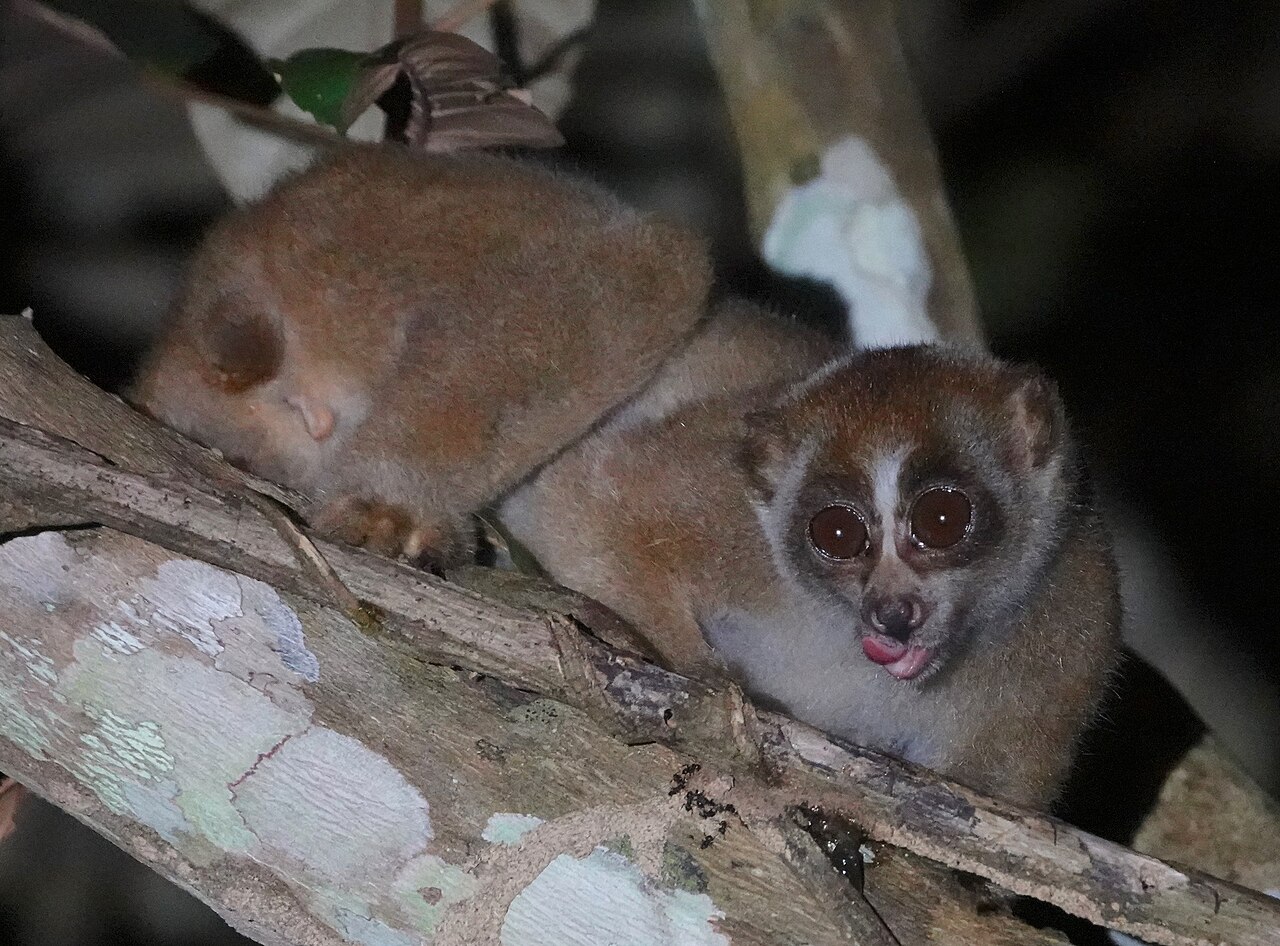
A cute video can hide a serious problem
Wildlife trafficking and habitat loss threaten lorises. Oxford Brookes University's conservation researchers have worked to challenge misleading pet content online.
Admiring a loris means giving its behavior context. The real wonder is a forest animal shaped by life after dark—with a chemical defense scientists are still working to understand.
Photo credits
Featured image: David Haring / Duke Lemur Center; Wikimedia Commons source; CC BY-SA 3.0. Resized for web display.

Body image 1: Philipp Hoenle; Wikimedia Commons source; CC0. Resized for web display.

Body image 2: desertnaturalist; Wikimedia Commons source; CC BY 4.0. Resized for web display.
