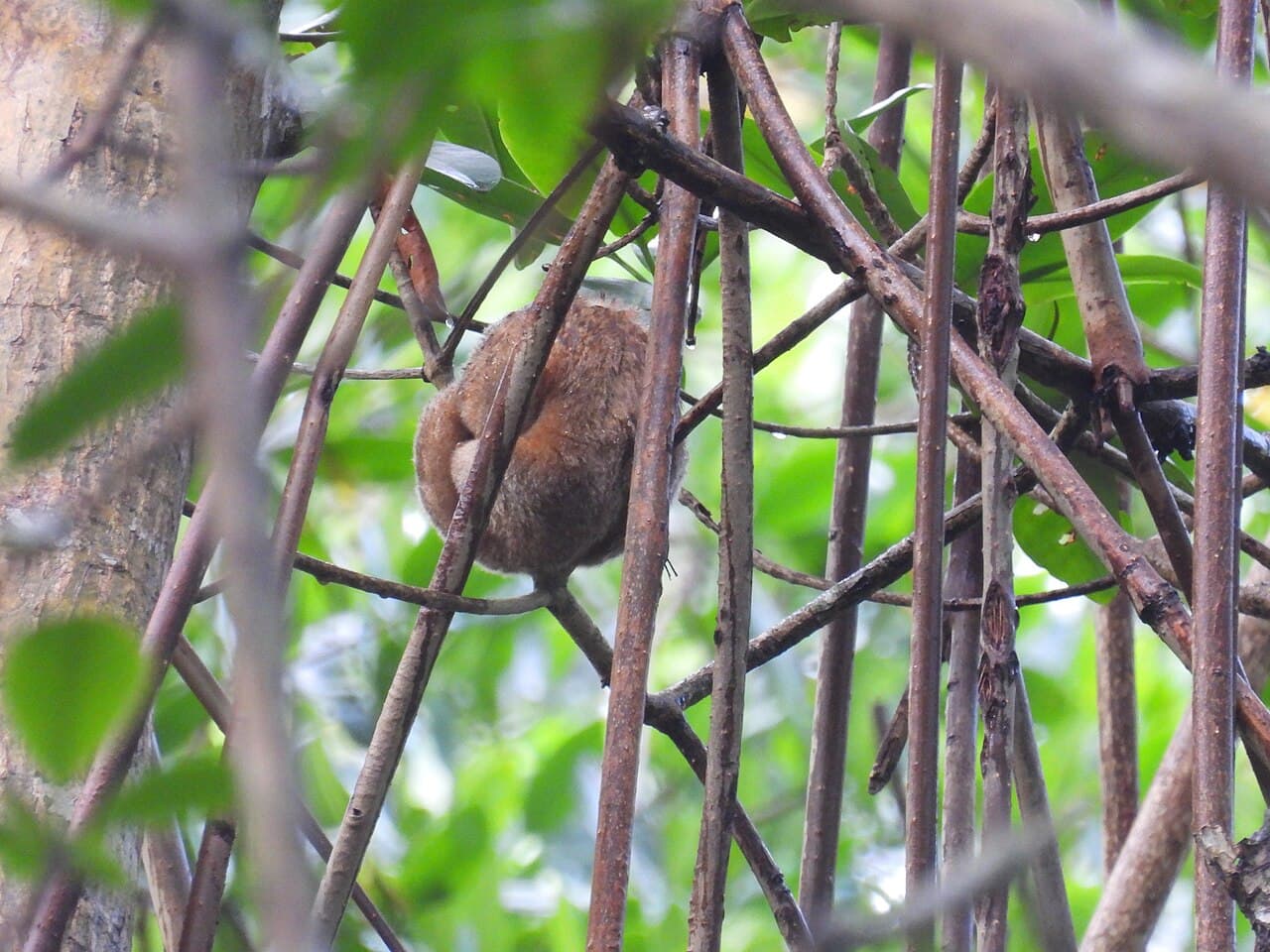
A silky anteater can curl among branches like a small bundle of fur. Its size and coat make it easy to underestimate, but this animal is a specialized climber and insect hunter.
The name also hides a scientific surprise: silky anteaters are not all one widespread species.
A small anteater above the ground
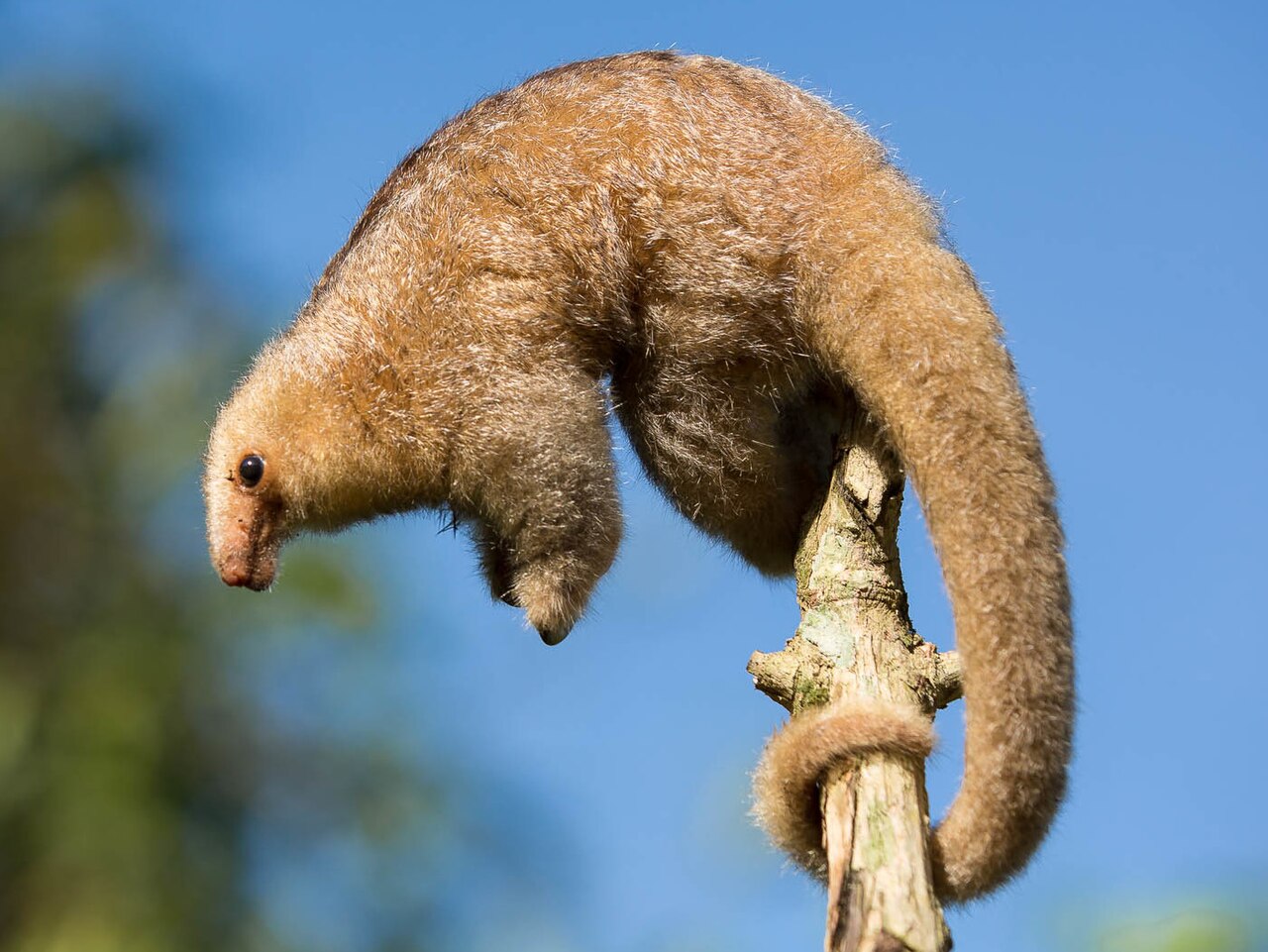
Silky anteaters belong to the genus Cyclopes. They live in tropical parts of the Americas and spend much of their time in trees.
A natural-history account published before the modern revision describes their small bodies, arboreal habits, and feeding biology.
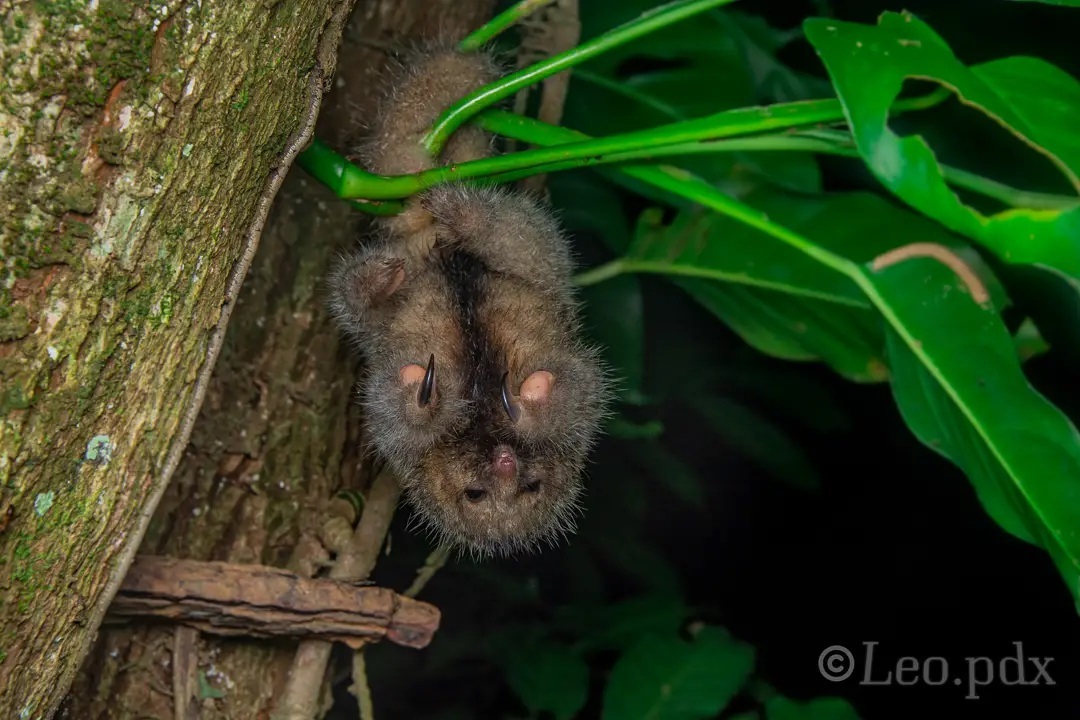
Their curved claws help them grip and open routes to insect food. A prehensile tail supplies another point of support.
Sleeping small, feeding carefully
When inactive, silky anteaters may rest curled up in vegetation. Their fur and quiet posture can make them difficult to distinguish from the surrounding canopy.
They feed mainly on ants, using a specialized mouth and tongue rather than chewing with a set of ordinary mammal teeth.
Their lives illustrate how a large animal's food resource can also support a tiny specialist—provided the right structures and behavior are present.
One old label, several species
A taxonomic revision combined genetic evidence with skull and coat features and recognized at least seven species.
Older photographs and records may still label many different animals Cyclopes didactylus. Their historical names should not be mistaken for a modern genetic identification.
The broad term “silky anteater” is used here for the group, with individual photograph labels retained where appropriate.
Small differences matter
Recognizing distinct species can reveal that a particular population has a smaller range than once assumed. That matters when forests are cleared or fragmented.
The silky anteater's appeal begins with a soft-looking animal curled in a tree. Its deeper wonder is the diversity hidden within that familiar picture.
Photo credits
Featured image: ntitelbaum; Source; CC BY 4.0. Resized for web display.

Body image 1: Leo.paudeleux; Source; CC BY-SA 4.0. Resized for web display.

Body image 2: Quinten Questel; Source; CC BY-SA 3.0. Resized for web display.
