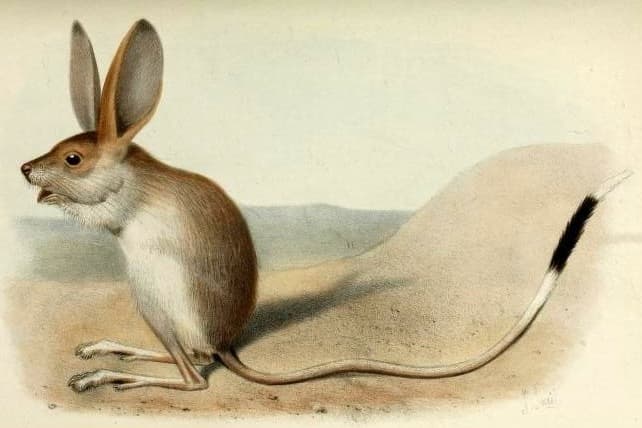
A long-eared jerboa looks as though its ears and hind legs were designed at a larger scale than the rest of its body. Yet those features belong to a real, tiny desert rodent.
Its most unusual proportions make sense in a life spent moving and listening after dark.
A small animal in dry country
The long-eared jerboa is Euchoreutes naso. It occurs in parts of Mongolia and northwestern China.
Animal Diversity Web describes its dry-country habitats, elongated hind feet, and long tail.
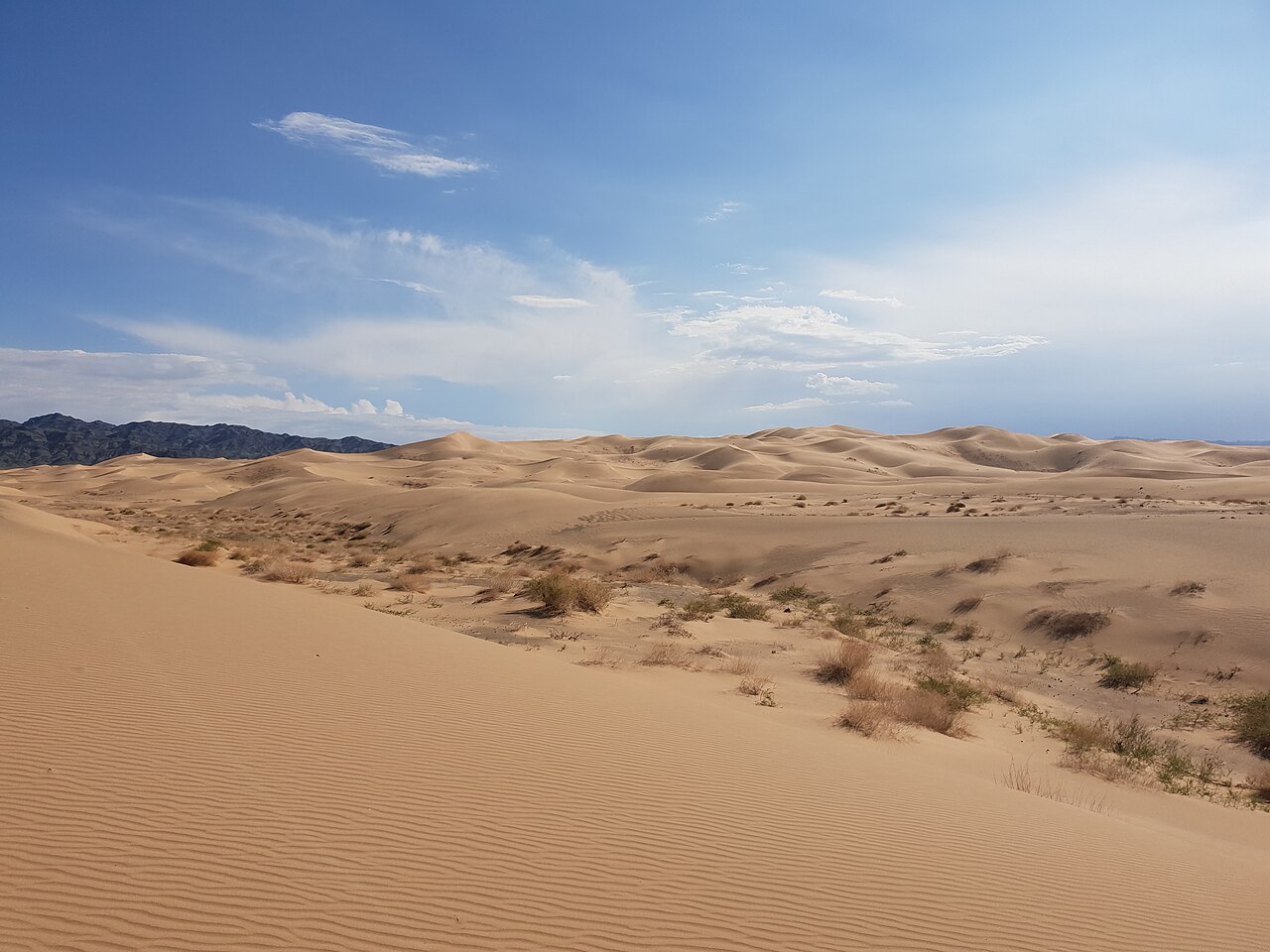
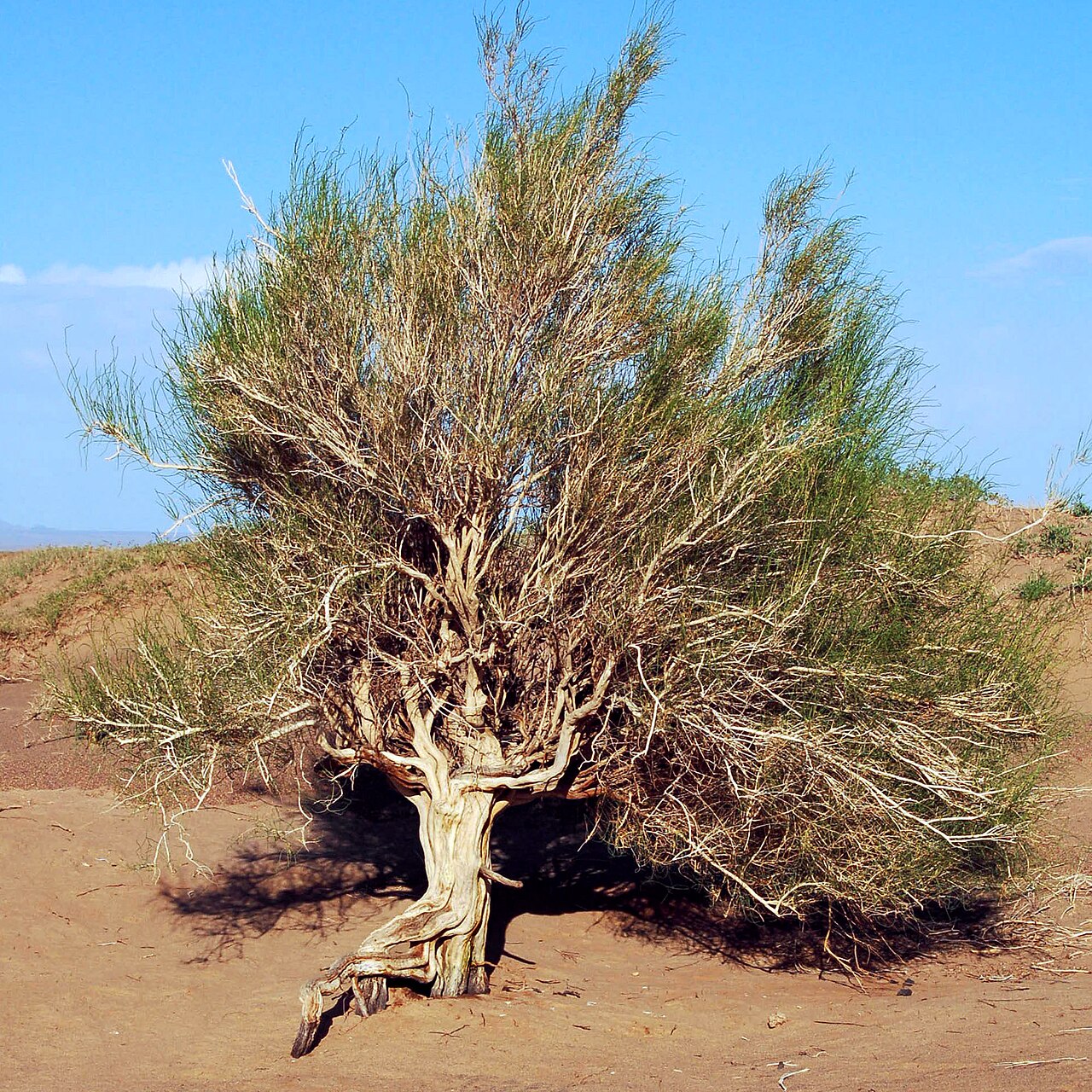
The habitat images here show regional Gobi scenery and associated dry-country vegetation. They are not presented as exact locations where the pictured jerboa was found.
Long legs change the movement
The hind limbs provide the main power for hopping and leaping. A long tail helps the animal manage balance as it moves.
Large ears contribute to the striking outline and provide an important sensory surface. It is better to describe observed anatomy and behavior than to assume every oversized ear evolved for exactly the same reason.
Much of this animal's natural history remains difficult to study in the wild.
A night hunter of small food
Long-eared jerboas feed largely on insects. Their desert is therefore a food web of plants, invertebrates, small mammals, and predators, not an empty expanse of sand.
ZSL's EDGE field account describes efforts to document these elusive animals.
Careful fieldwork can reveal behaviors that a single famous photograph cannot show.
Leave room for what is unknown
Knowledge gaps should inspire research rather than invite invented details about lifespan or family life.
The long-eared jerboa is extraordinary without exaggeration: a small mammal moving through a huge landscape, carrying a distinctive combination of ears, feet, and tail into the desert night.
Photo credits
Featured image: Joseph Smit (1836–1929); Source; Public domain. Resized for web display.

Body image 1: Richard Mortel; Source; CC BY 2.0. Resized for web display.

Body image 2: BáthoryPéter 22:58, 9 April 2008 (UTC); Source; CC BY-SA 4.0. Resized for web display.
