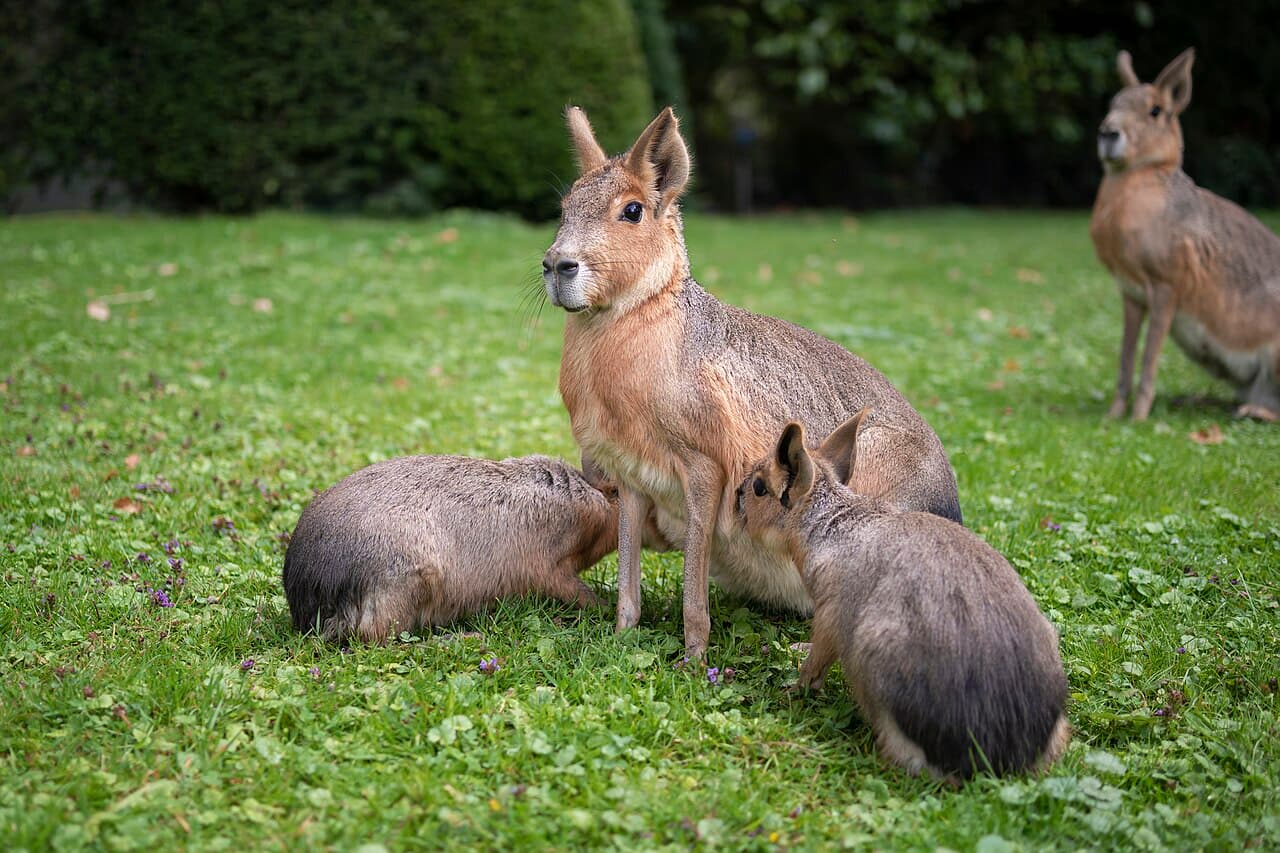
A Patagonian mara can resemble a rabbit crossed with a small hoofed animal. Its long legs and alert posture create a misleading first impression.
It is a rodent—and its family life includes another surprise: young from different pairs can share a nursery burrow.
A rodent of open country
The Patagonian mara is Dolichotis patagonum, native to Argentina. It belongs to the cavy family rather than the rabbit family.
The Smithsonian's National Zoo describes its body shape, range, and social behavior.
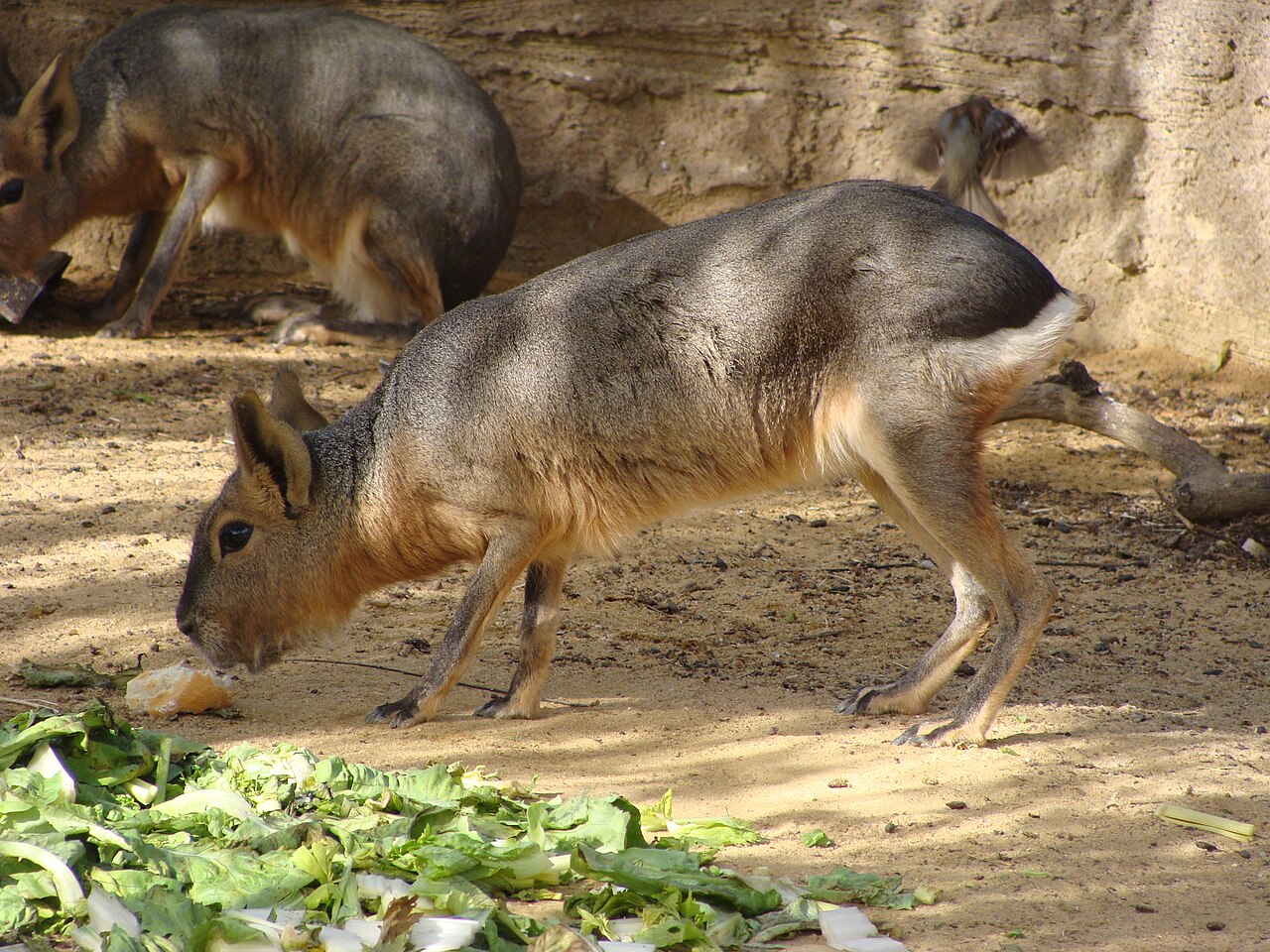
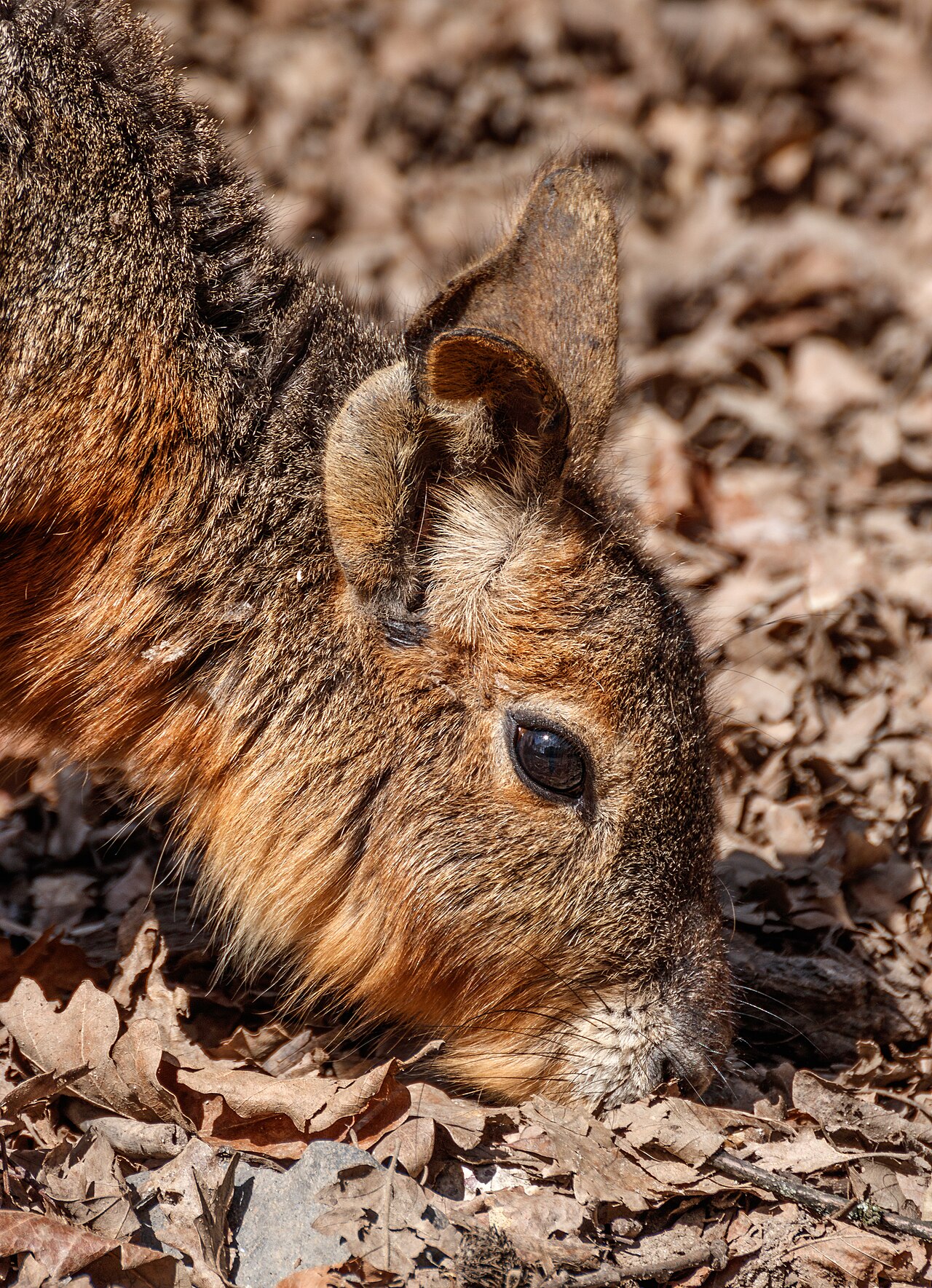
Its limbs allow quick movement across open ground. The short ears and long-legged silhouette differ from those of a typical rabbit when examined closely.
Pair life and shared space
Maras commonly form lasting male-female pairs. A pair may move through a shifting area as feeding conditions change.
When young are born, they can be placed in a communal burrow used by several families. Adults visit the nursery area while maintaining relationships with their own offspring.
Sharing a nursery does not mean all adults are interchangeable parents. Individual recognition remains important.
Young grow in an open world
Mara young are relatively well developed at birth. Their early lives combine shelter at the nursery with increasing movement above ground.
The zoo's care and species information emphasizes that these animals graze on vegetation and depend on suitable space.
The appearance of a comfortable seated mara should not obscure how much of its life involves movement, vigilance, and feeding.
Protect the landscape around the burrow
Habitat changes and hunting can affect mara populations. A nursery site is useful only within a wider area that supports the adults and growing young.
The mara shows how unreliable quick comparisons can be. A rabbitlike face belongs to a rodent, and a seemingly simple burrow can hold a much more complex social arrangement than we expect.
Photo credits
Featured image: Nikolang; Source; CC BY-SA 4.0. Resized for web display.

Body image 1: Fernando Losada Rodríguez; Source; CC BY-SA 4.0. Resized for web display.

Body image 2: H. Zell; Source; CC BY-SA 3.0. Resized for web display.
