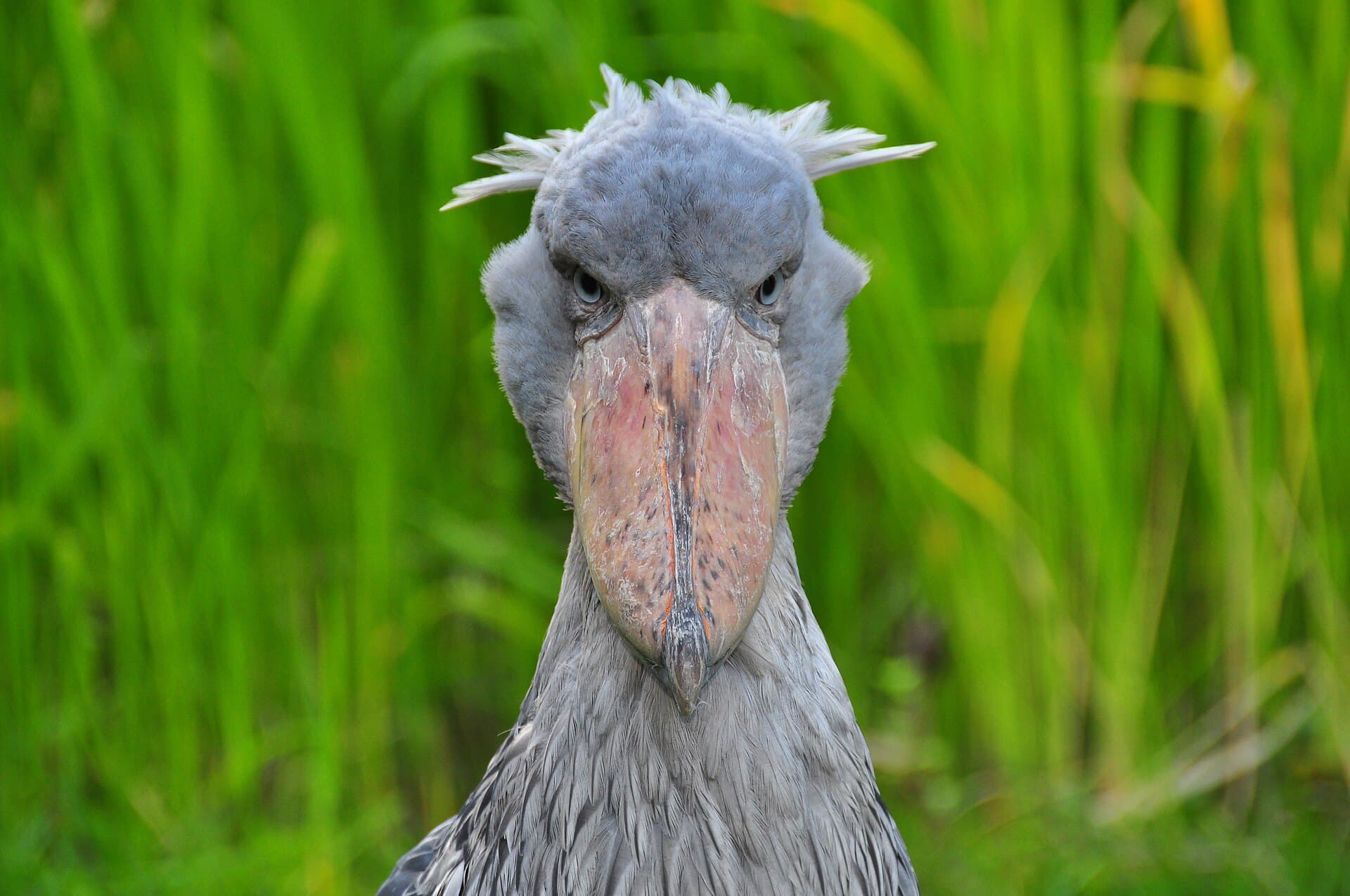
A shoebill can stand so still that it almost disappears into the reeds. Then its whole body lunges forward, driving an enormous bill toward prey in the water.
That sudden movement makes the bird’s unusual shape easier to understand. Its famous beak is a hunting tool, not just a memorable face.
A bird with a misleading nickname
Often called the shoebill stork, Balaeniceps rex is more closely related to pelicans than to storks. BirdLife International places it in its own family, Balaenicipitidae.
It inhabits freshwater swamps across parts of Africa, from South Sudan to Zambia. Its tall gray body and broad bill give it a striking silhouette among wetland plants.
Calling it prehistoric-looking describes a human impression. It is a living bird with adaptations suited to the places it occupies today.
Why such an enormous bill?
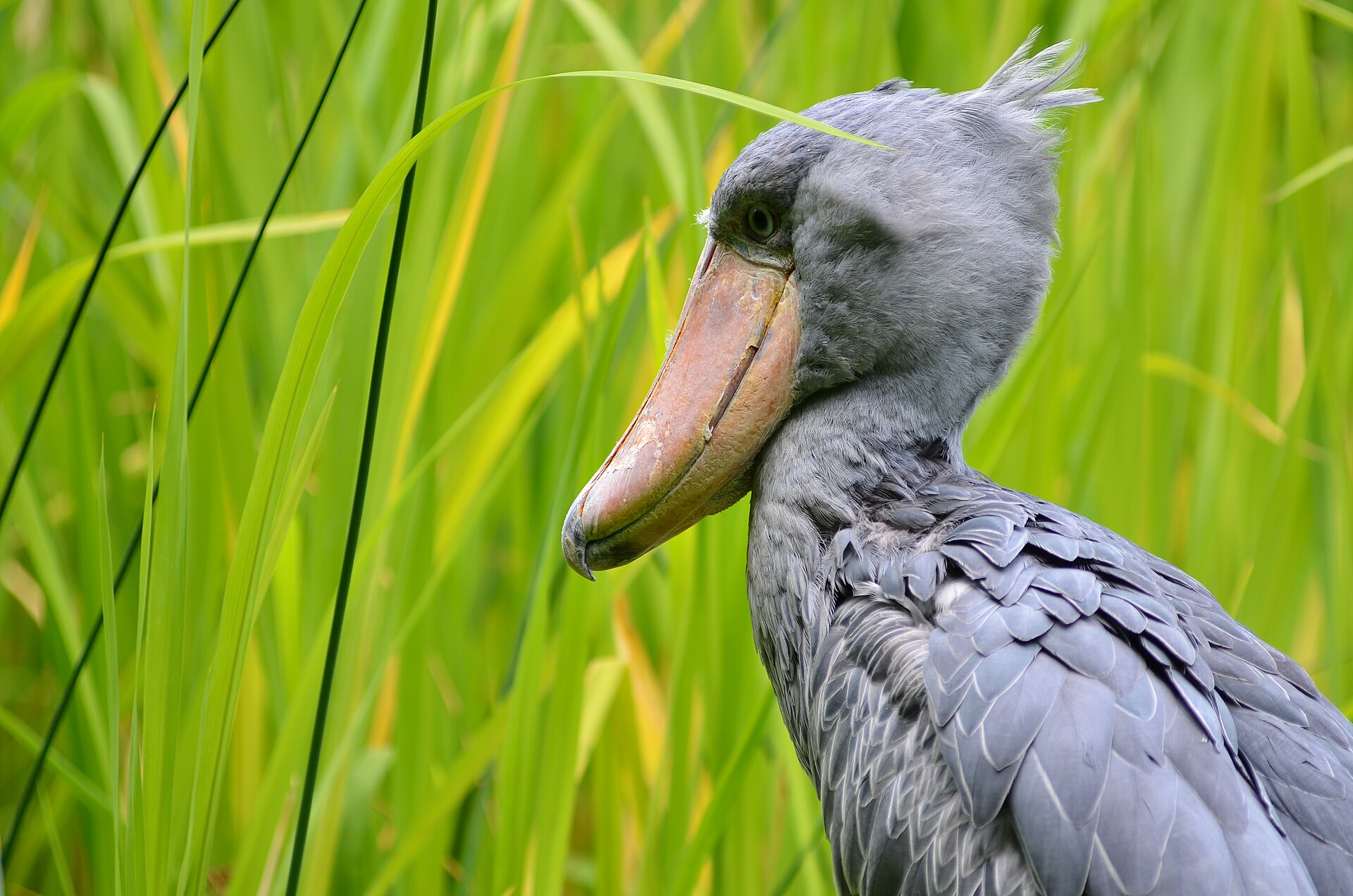
The bill’s sharp edges and hooked tip help the shoebill grip prey. Its size allows the bird to tackle animals larger than those taken by many other wading birds, according to BirdLife.
San Diego Zoo Wildlife Alliance describes its hunting method as a sudden collapse toward the target, with the reinforced bill taking the impact. Fish are an important part of its hunting story.
Stillness and strength work together. The wait puts the bird in position; the bill helps finish the job.
The same structure also serves another purpose. Adults can carry water in their bills to cool eggs and chicks at the nest, the zoo explains.
Wetlands are part of its survival equipment
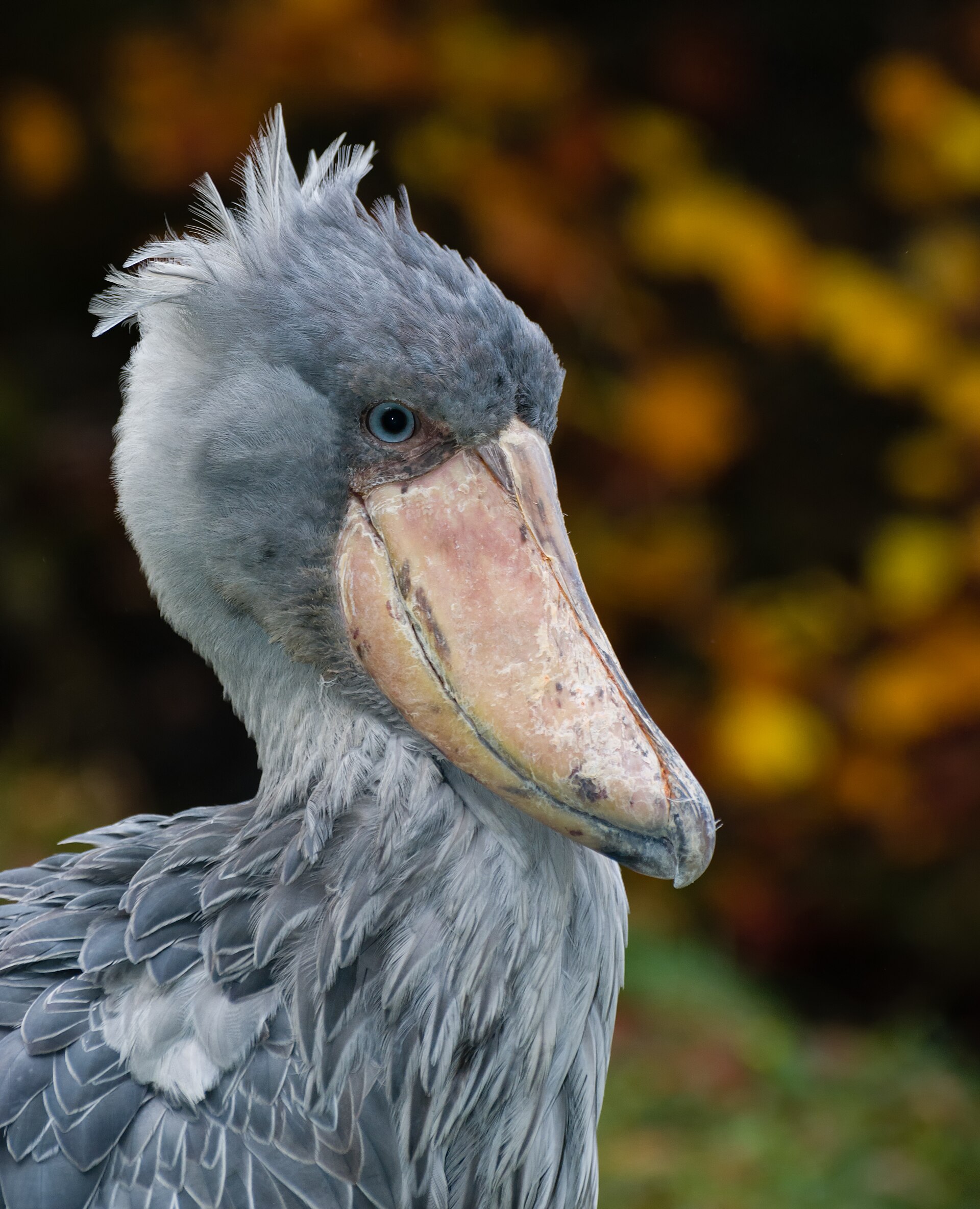
A specialized hunter needs suitable feeding and nesting places. BirdLife lists the shoebill as Vulnerable and identifies habitat loss, hunting, nest disturbance, and illegal live-bird trade among its threats.
A striking photograph can make this bird seem larger than life. In reality, its future depends on practical things: intact marshes, safe nesting areas, and reduced pressure from people.
For visitors, giving birds space and keeping clear of nests helps make observation less disruptive.
Look beyond the stare
The shoebill’s face may be what catches our attention first. Its behavior offers the deeper reward: patience, timing, and a bill shaped for a demanding way of life.
Keeping Africa’s wetlands healthy helps preserve the whole scene—the bird, its prey, and the quiet water where a remarkable hunt begins.
Photo credits
Featured image: Olaf Oliviero Riemer — CC BY-SA 3.0.

Body image 1: Olaf Oliviero Riemer — CC BY-SA 3.0.

Body image 2: Tuxyso — CC BY-SA 3.0.

Photographs are illustrative. Image adaptations remain under their respective source licenses.