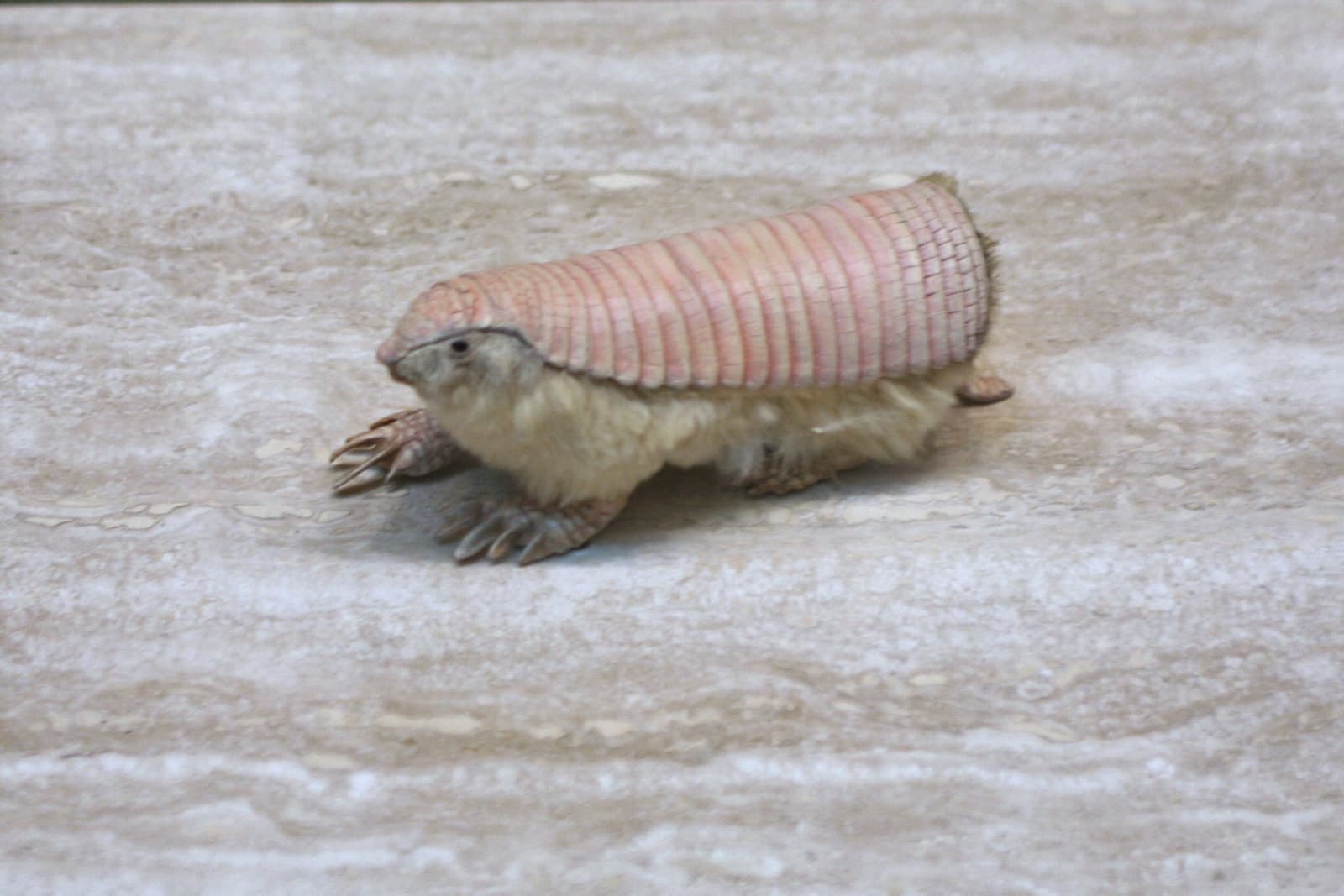
The world’s smallest living armadillo wears pale fur beneath a pink shell—and spends much of its life out of sight.
The pink fairy armadillo, Chlamyphorus truncatus, is found in central Argentina. Its delicate appearance can make it look like a storybook animal, but its body is shaped for a very practical task: moving underground.
Small armor with an unusual design
The Smithsonian Institution describes a shell that is thinner, softer, and more flexible than the familiar armor of many other armadillos.
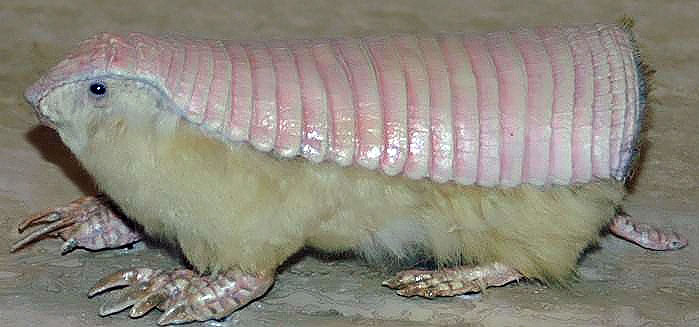
Blood vessels close to the surface contribute to its pink color. Pale fur covers much of the body, helping this small mammal retain warmth.
The combination is striking: a furry animal with a banded covering across its back. Looking at it carefully reveals how misleading a familiar label can be. “Armadillo” includes bodies adapted to very different lives.
A home in loose, sandy ground
According to the University of Michigan’s Animal Diversity Web, the species inhabits dry grasslands, sandy plains, and scrubland in Argentina.
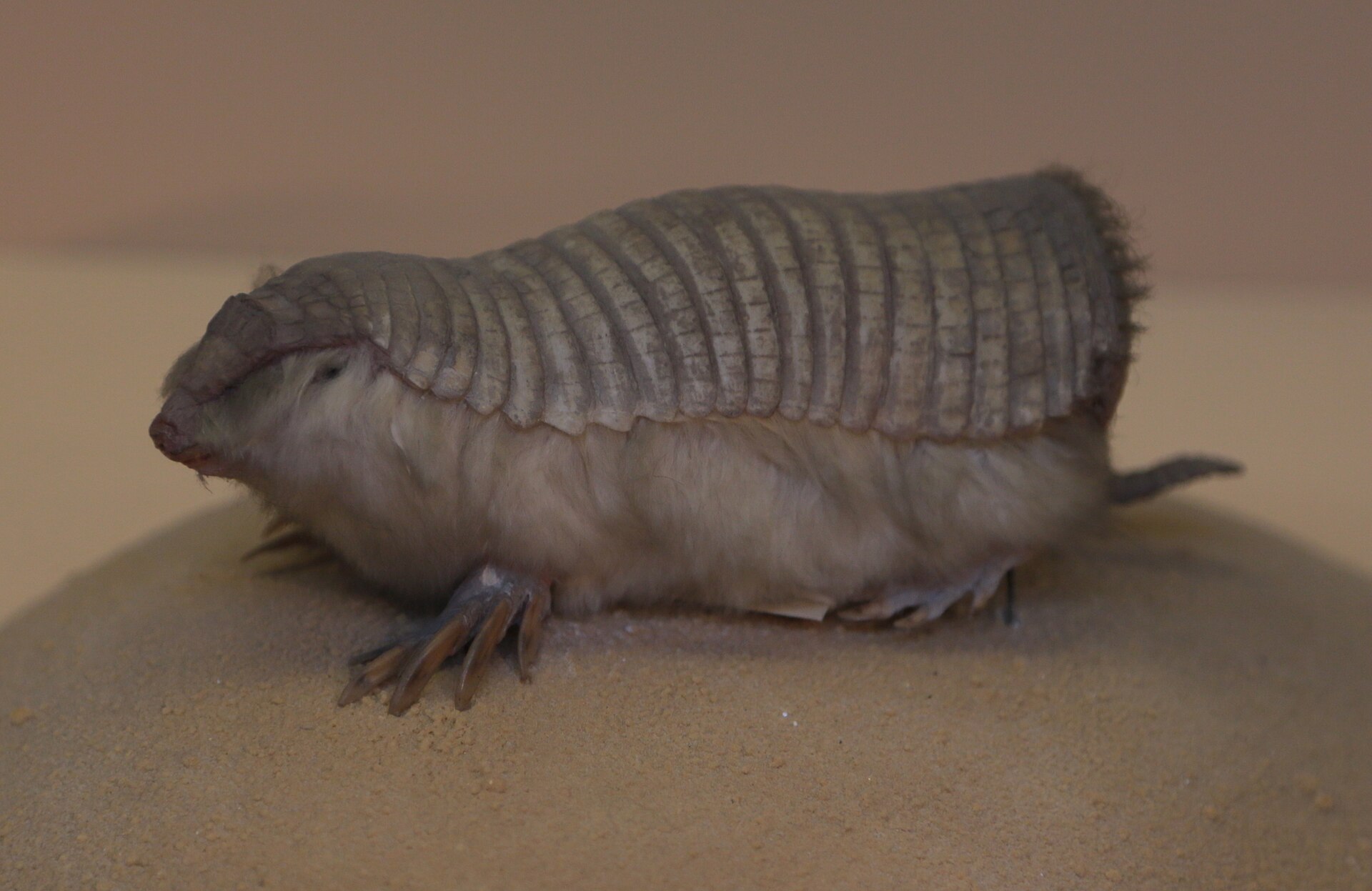
Strong front claws help it dig, while its small eyes and streamlined body fit an underground existence. Loose soil is central to that way of life.
It feeds on insects, including ants, and may also eat plant material. The details of its feeding behavior in the wild remain less well documented than its memorable appearance.
Why so much is still unknown
An animal that stays hidden is difficult to observe. The Smithsonian notes that pink fairy armadillos are rarely seen and hard to study outside their natural surroundings.
Animal Diversity Web also emphasizes gaps in knowledge about their reproduction, lifespan, and behavior. Those gaps are part of the story. They should not be filled with confident guesses borrowed from better-known armadillo species.
Wonder without turning it into a pet
Its small size and soft-looking fur can encourage the wrong conclusion: that it would be easy to keep. Published accounts instead describe poor survival in captivity and difficulties meeting its needs.
The more useful response to its unusual appearance is interest in the Argentine landscapes that support it. Photographs in this article show specimens, not a new encounter with a living wild animal.
A reminder of the world below our feet
The pink fairy armadillo makes an unseen habitat feel suddenly vivid. Beneath a dry-looking landscape, a small mammal has a life we are still learning to understand.
Its mystery is a reason to keep observing carefully—and to value the habitat that lets it remain wild.
Photo credits
Featured image: Cliff — CC BY 2.0.

Body image 1: Photo by David J. Stang — CC BY-SA 4.0.

Body image 2: John Cummings — CC BY-SA 3.0.

Photographs are illustrative. Image adaptations remain under their respective source licenses.