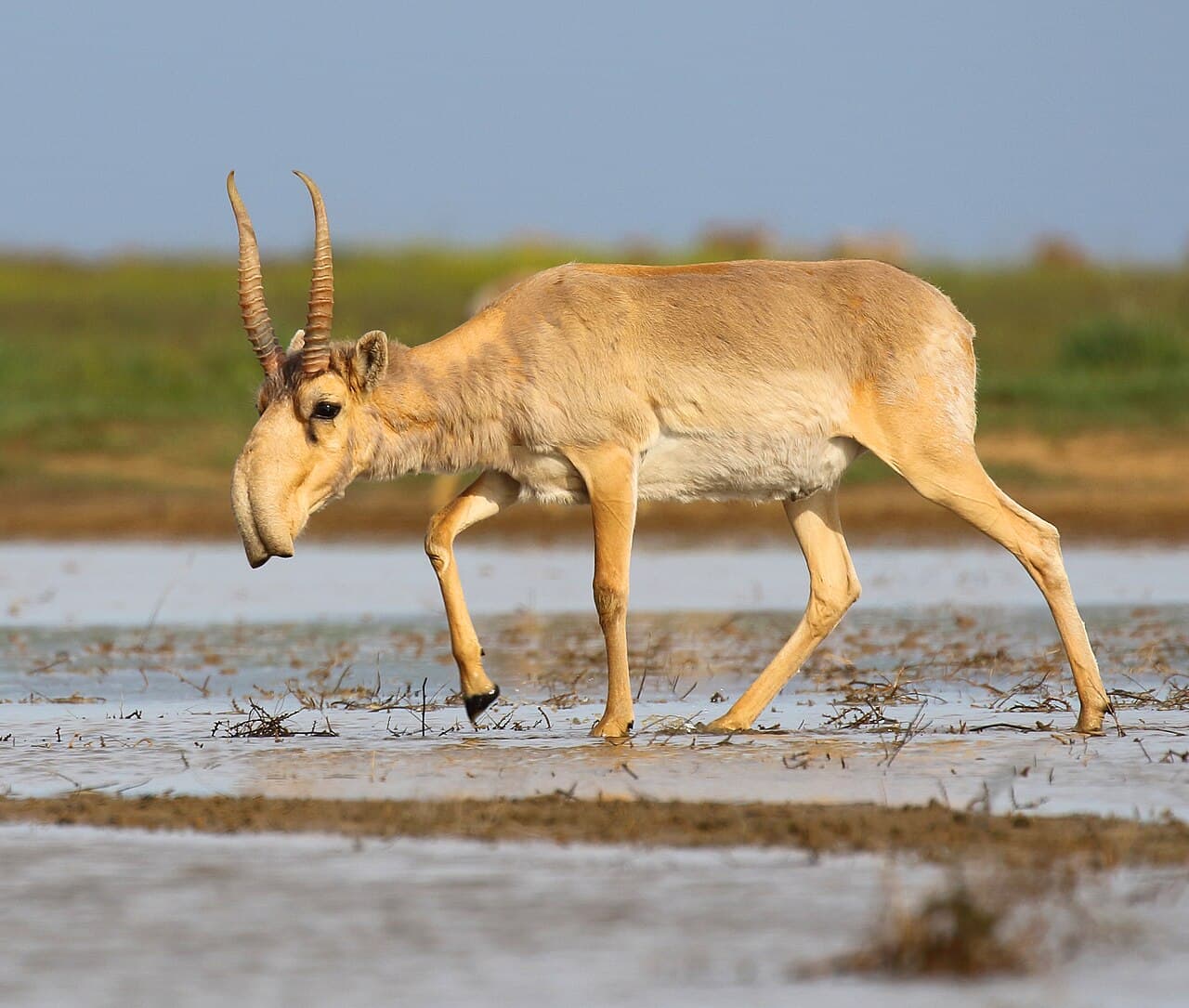
The saiga antelope carries a natural air-conditioning system on its face. Its enlarged nose helps filter dust and warm the cold air it breathes.
On the open Eurasian steppe, that strange-looking feature is useful equipment. A face that seems comic to people belongs to an animal built for long journeys through demanding country.
A nose for life on the steppe
The Saiga Conservation Alliance describes saigas as migratory antelopes of open grasslands and semi-deserts.
They eat grasses, herbs, and shrubs. Their coats change with the seasons, becoming thicker and paler for winter. Males carry ridged horns, while both sexes share the characteristic nose.
As herds move over dry ground, filtering dust helps protect the air entering their bodies. In winter, warming incoming air serves a different need. One feature helps meet two very different conditions.
A remarkable recovery, with a clear date
The species also offers a conservation story worth understanding accurately.
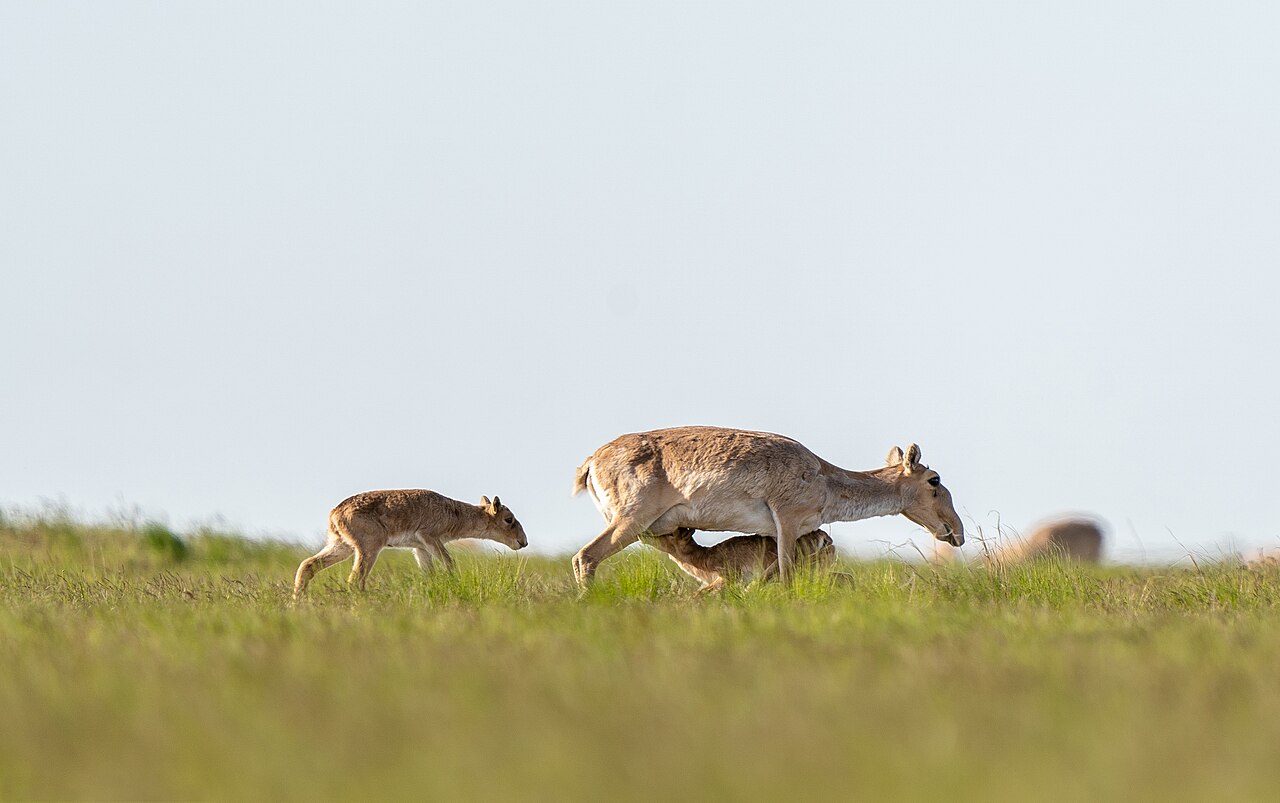
In December 2023, its global IUCN Red List category improved from Critically Endangered to Near Threatened. The Wildlife Conservation Society attributed the change to sustained protection and a major recovery in Kazakhstan.
Its announcement compared an estimated 39,000 saigas in Kazakhstan in 2005 with more than 1.9 million at the time of the 2023 reassessment. Those are dated figures, not a fresh population count for today.
The improvement shows that coordinated work by governments, researchers, and conservation organizations can matter.
Recovery still needs room to move
Saigas depend on connected landscapes. A Convention on Migratory Species factsheet describes how roads, railways, and other infrastructure can interrupt movements.
Illegal killing and disease remain concerns too. Different populations do not recover at the same pace, so a positive global headline cannot tell every local story.
Protecting an antelope is therefore about more than guarding individual animals. It also means keeping routes open between feeding areas, seasonal habitat, and calving grounds.
A face worth understanding
The saiga’s nose is a wonderful introduction to an animal whose whole life is tied to the steppe.
Its recovery brings hope, while its remaining challenges give that hope a practical direction: protect the animals, preserve their space, and let them keep moving.
Photo credits
Featured image: Andrey Giljov — CC BY-SA 4.0.

Body image 1: Dildakhmet — CC BY-SA 4.0.

Body image 2: Photographer unidentified (Wikimedia Commons record) — Public domain.

Photographs are illustrative. Image adaptations remain under their respective source licenses.