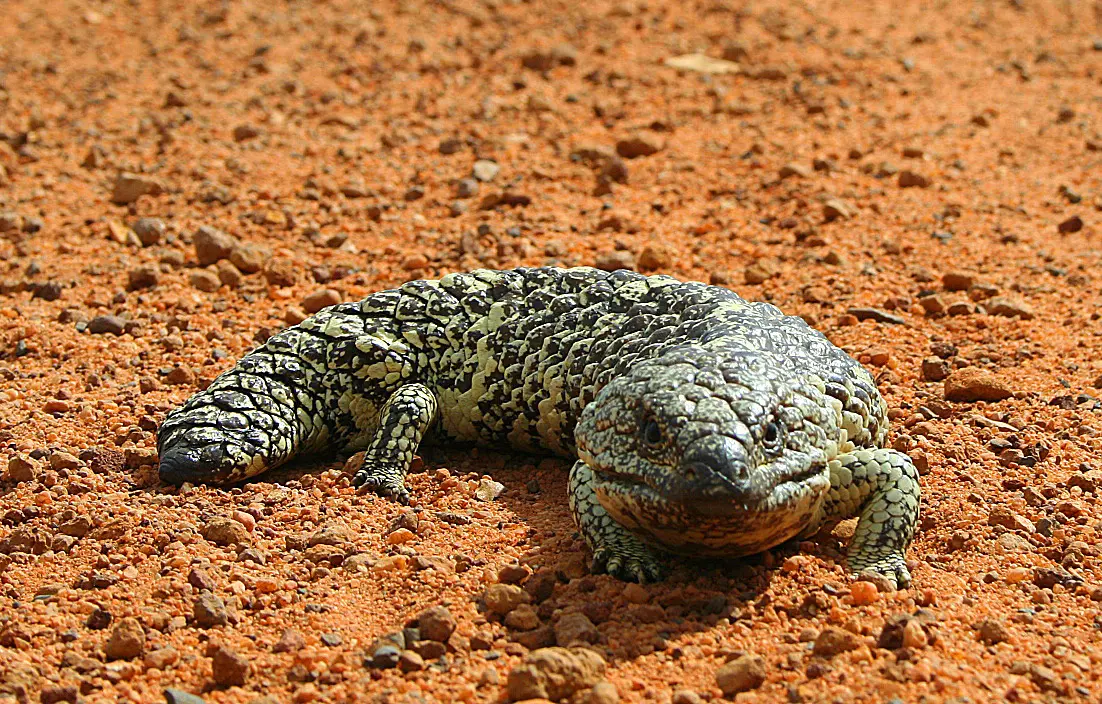
At first glance, a shingleback skink can make you wonder which end is which. Its short, rounded tail resembles its broad head, giving this Australian lizard an unusually balanced outline.
Add rough scales that look like overlapping roof tiles, and Tiliqua rugosa becomes one of the most memorable members of the skink family.
More than an unusual tail
The tail is also a store of fat. That makes it useful beyond its striking shape, helping the lizard carry energy reserves with it.
Shinglebacks move on short legs beneath a sturdy body. Their large, rough scales explain several common names, including bobtail and pinecone lizard. Each name notices a different part of the same remarkable design.
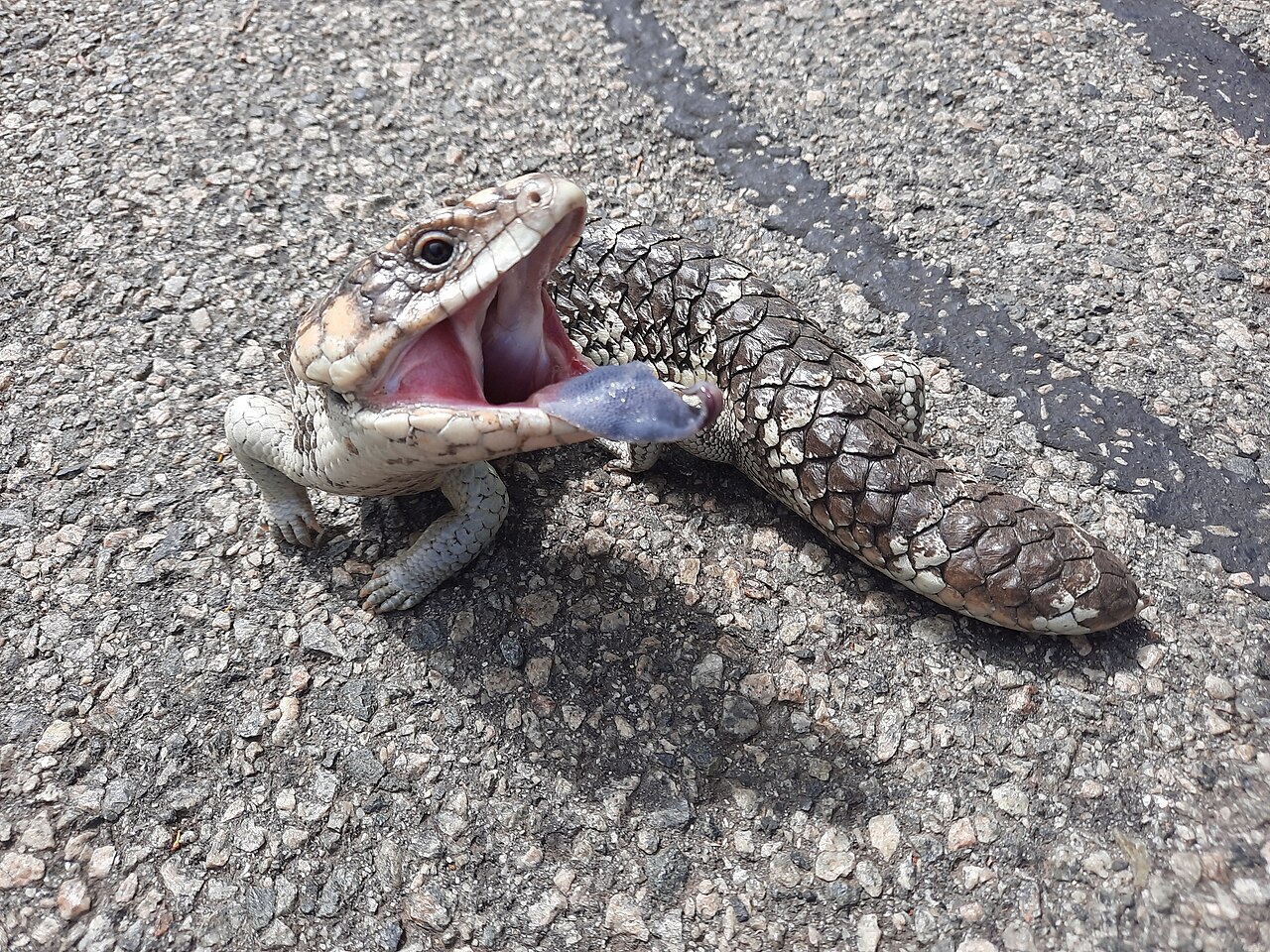
A flash of brilliant blue
Open a shingleback's mouth and another surprise appears: a blue tongue. This species belongs to Australia's blue-tongued skinks, although its rugged body looks quite different from some smoother relatives.
Shinglebacks eat both plant and animal foods. Flowers, fruit, and small invertebrates can all feature on the menu. The Australian Museum's species account explains their appearance and varied diet.
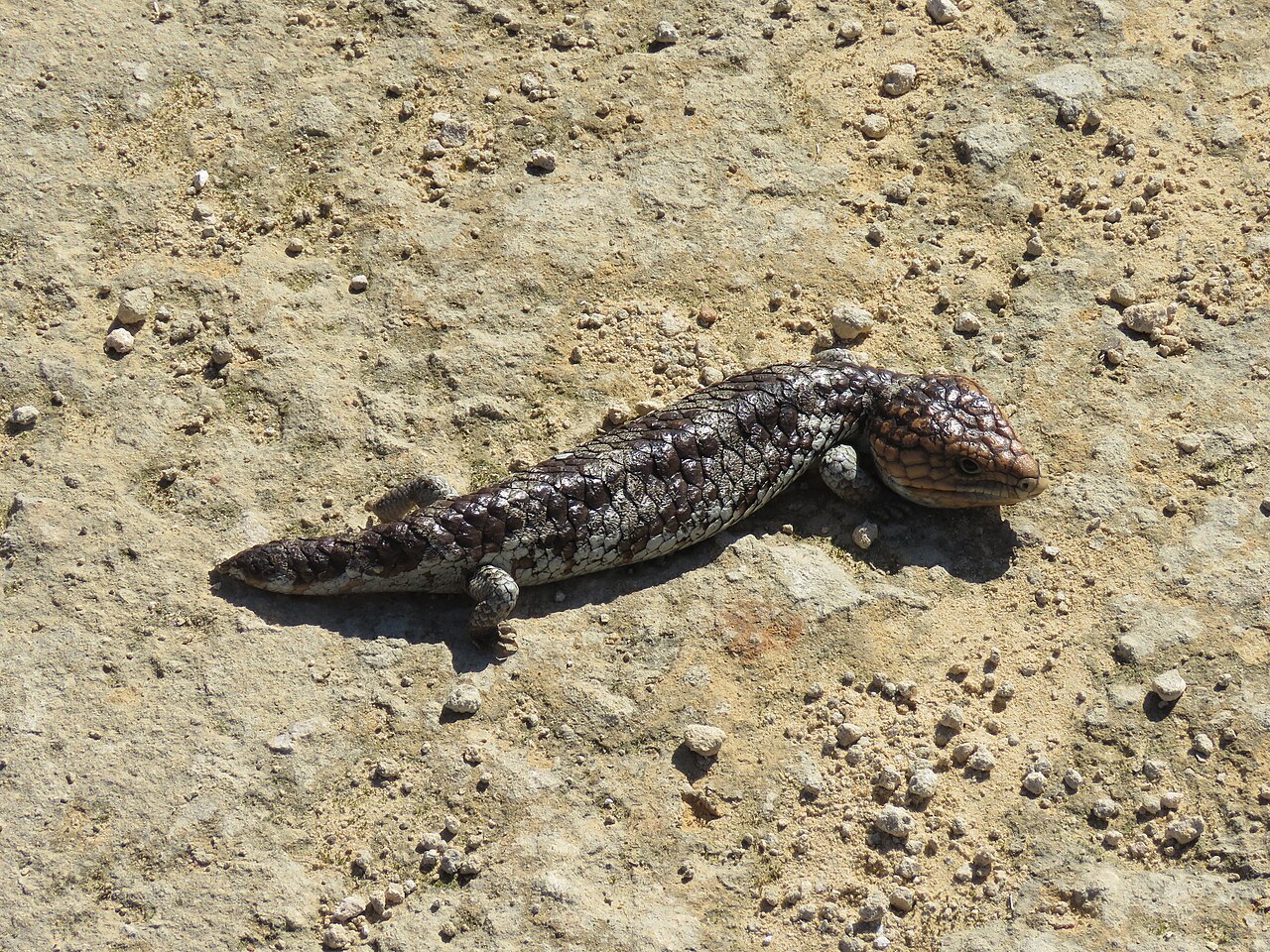
A familiar animal with an extraordinary design
Australian reptiles need more than a sunny place to bask. Natural vegetation and shelter give them places to feed and retreat. Keeping wild animals in the wild also protects the relationships they have with their surroundings.
The shingleback rewards patient observation. Its blue tongue, tiled scales, and rounded tail show how much wonder can fit into a low, slow-moving body.
Photo credits
Featured image: Tannenzapfenskink (cropped).jpg — Bäras; CC BY-SA 3.0.

Body image 1: Bob t rugosa rugosa gn.jpg — Gnangcomapp; CC BY-SA 4.0.

Body image 2: Bobtail (Tiliqua rugosa) on the rail access road at Lakelands, August 2023 02.jpg — Calistemon; CC BY-SA 4.0.

Photographs resized for web display where available. Existing crops are identified in their source filenames; captive animals and landscape context are identified in the captions.