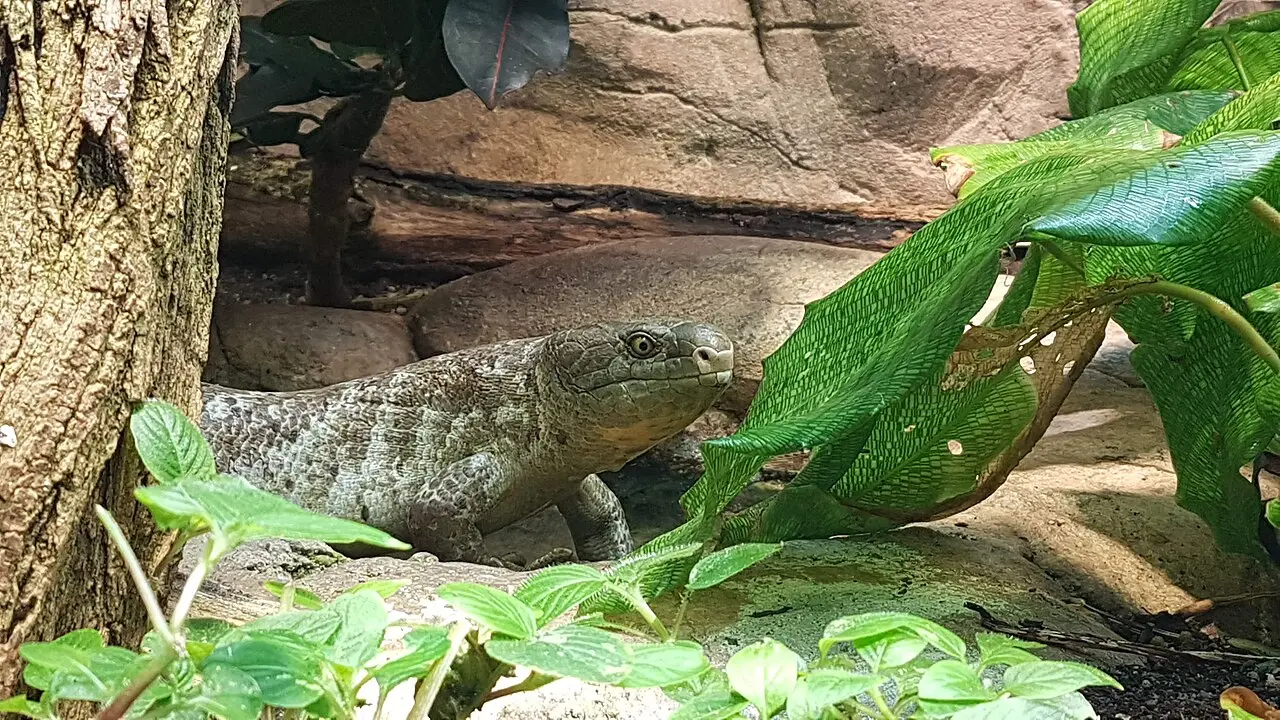
A monkey-tailed skink can wrap its tail around a branch and use it like an extra limb. High in the trees, that gripping tail helps a heavy-bodied lizard move through a world of leaves and narrow footholds.
Also called the prehensile-tailed skink, Corucia zebrata comes from the Solomon Islands. Its story includes an equally surprising detail: these lizards can live in social groups.
Built for the branches
Strong claws and a grasping tail help the skink climb. Trees provide food as well as places to hide, and the animal is particularly associated with forest canopies.
Unlike many skinks that can shed their tails, this species cannot discard its tail to escape. Its climbing equipment is something it keeps.
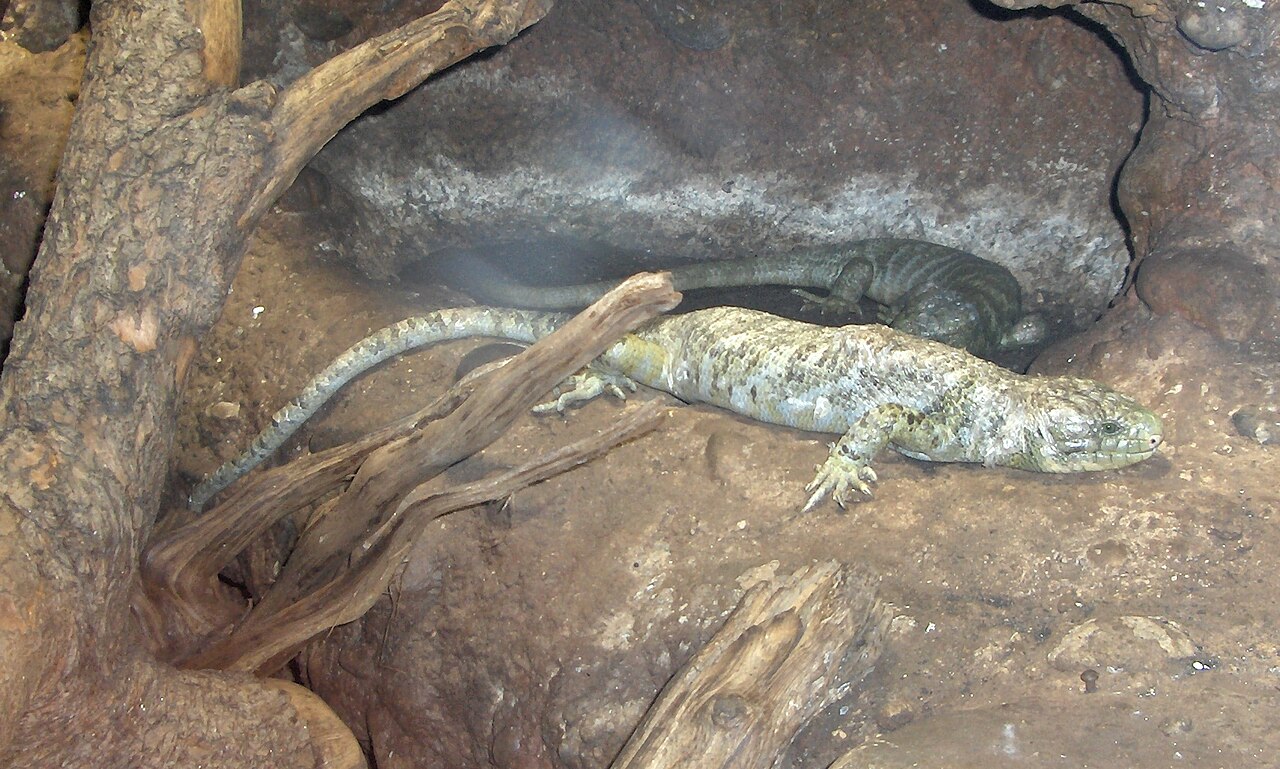
A leafy menu and a family connection
This skink mainly eats plant material, including leaves. It becomes active around dusk and at night, while daytime often finds it sheltered in a tree hollow.
Females give birth to live young. Adults in a social group may protect the young, an unusual behavior that makes these reptiles especially interesting. Smithsonian's National Zoo describes their social lives and tree-dwelling habits.
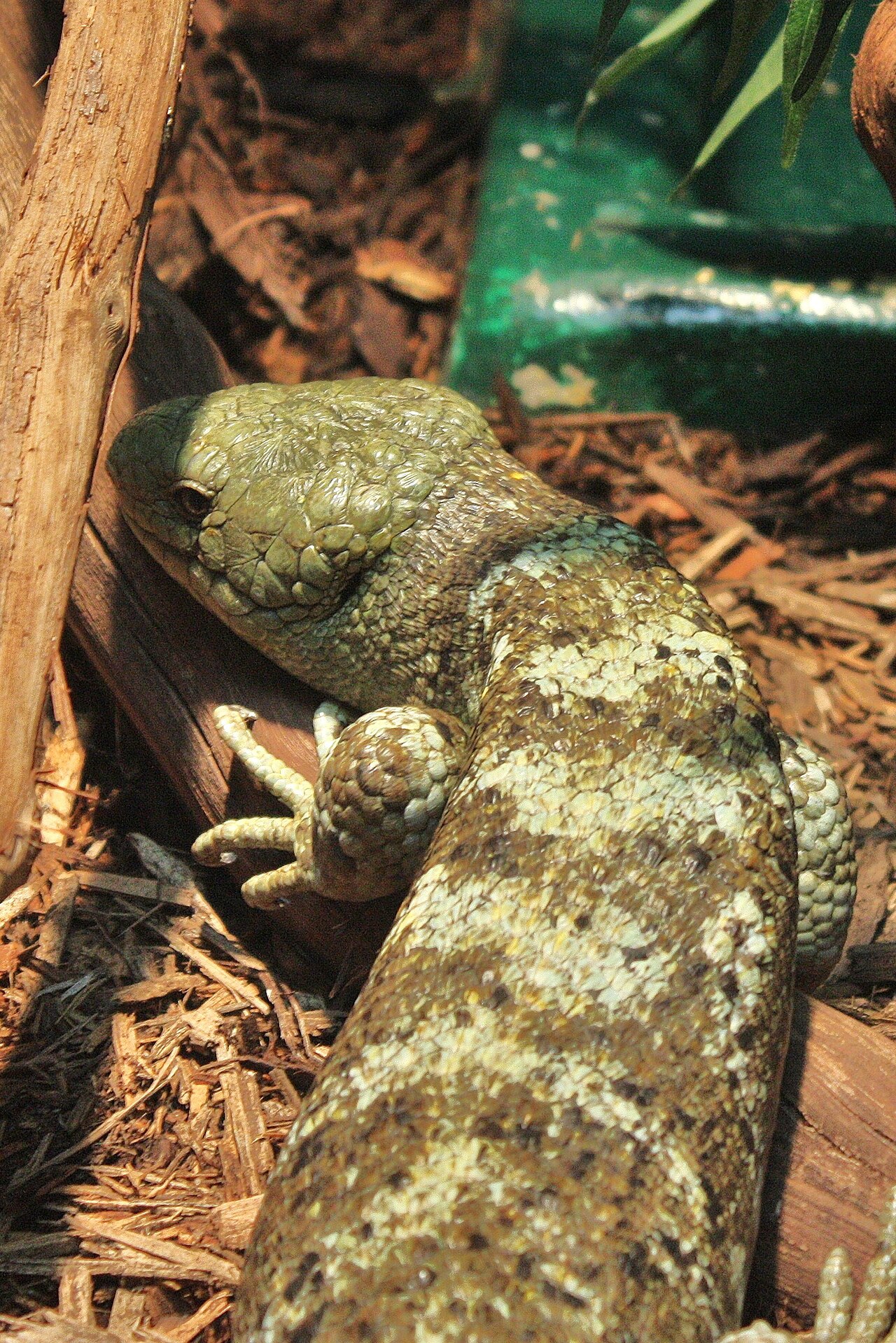
Keeping the forest connected
Logging removes more than individual trees. For an animal that feeds, shelters, and travels above ground, forest loss can take away an entire living space. Collection for trade and hunting also place pressure on the species.
The monkey-tailed skink invites us to look upward. Among the branches, a slow-moving lizard shows that a tail can be a climbing tool—and a forest can be a home in every direction.
Photo credits
Featured image: Solomon Islands skink (Corucia zebrata).jpg — JSutton93; CC BY-SA 4.0.

Body image 1: Corucia zebrata.JPG — Photographer not identified; see source; CC BY-SA 3.0.

Body image 2: Corucia zebrata at the Columbus Zoo-2011 07 11 IMG 0674.JPG — Postdlf; CC BY-SA 3.0.

Photographs resized for web display where available. Existing crops are identified in their source filenames; captive animals and landscape context are identified in the captions.