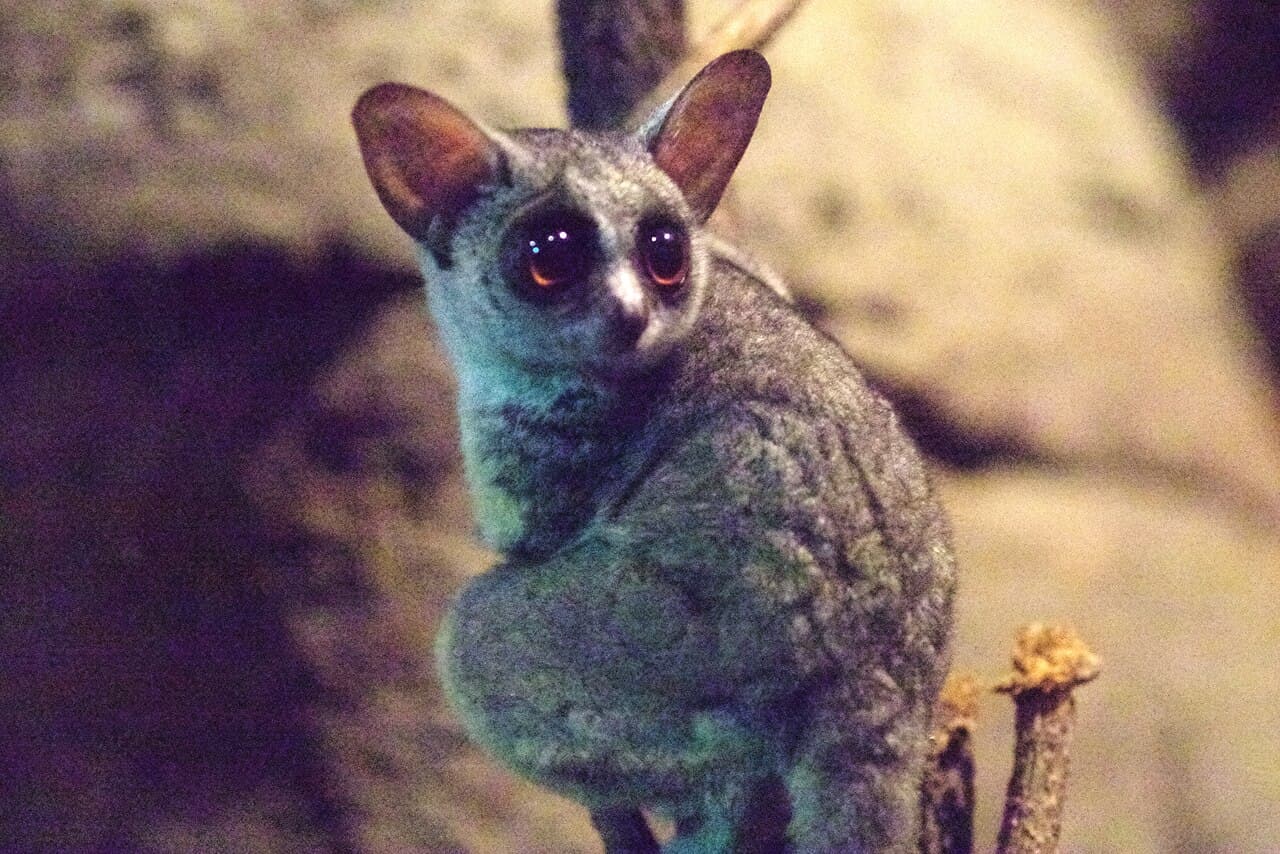
The Senegal galago can launch its small body between supports with a forceful push from its hind legs. Scientists studying its jumps have found evidence that elastic tissues help amplify the power of takeoff.
For a primate only a few inches long, movement among branches is a remarkable mechanical challenge. Its body meets that challenge with far more than strong muscles alone.
Which bushbaby is this?
The Senegal galago, Galago senegalensis, is also called the northern lesser galago or Senegal bushbaby. It is one species within the wider bushbaby family.
Its name does not mean it lives only in Senegal. The New England Primate Conservancy describes a broad African range, including many countries south of the Sahara.
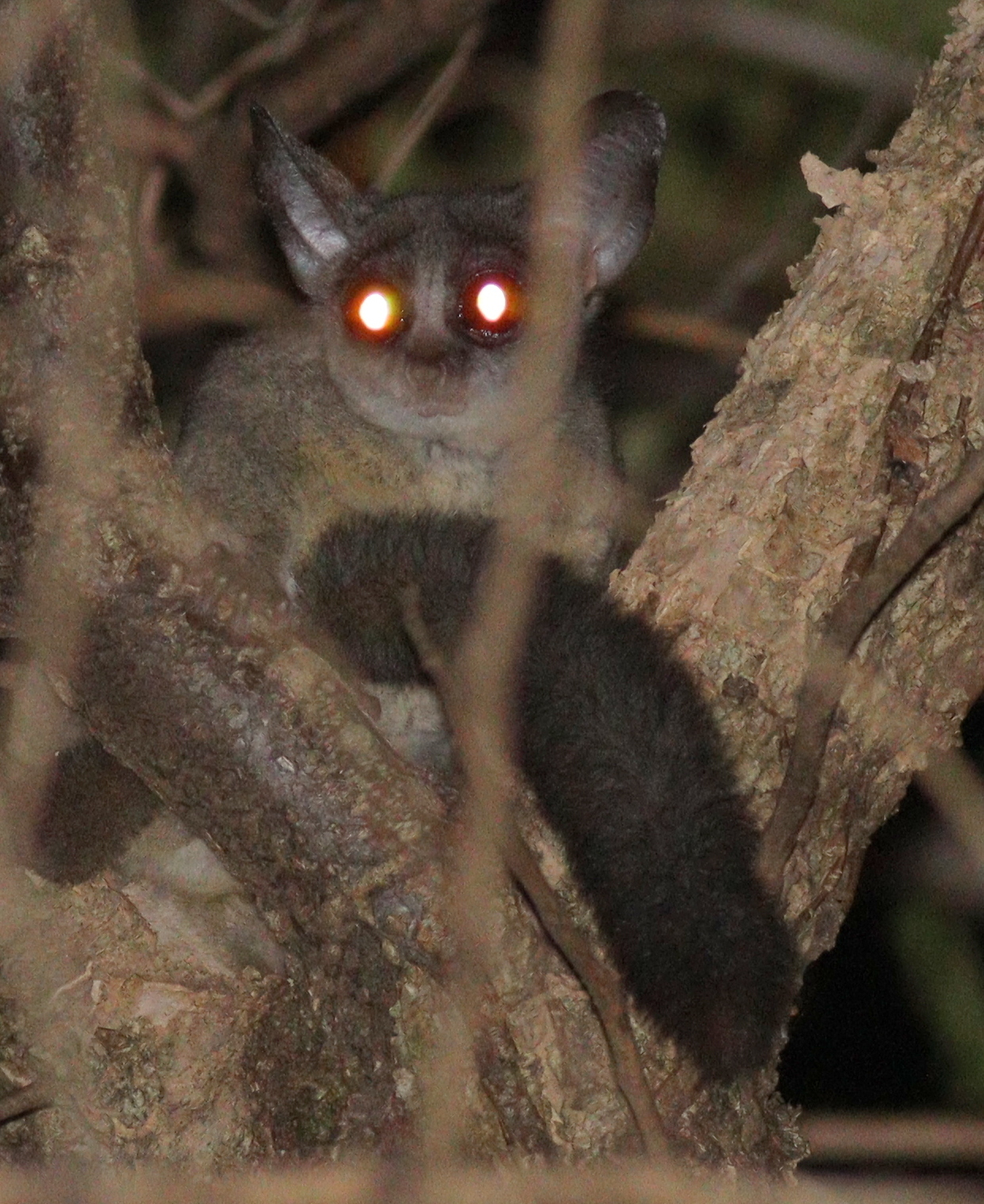
Large eyes, prominent ears, and a long tail create the animal's familiar silhouette. It is a primate, even though it looks very different from a monkey.
The science behind the jump
A 1998 study by Peter Aerts examined vertical jumping in Galago senegalensis. Measurements and mechanical analysis supported a role for elastic recoil in the muscle–tendon system.
Think of a stretched elastic band releasing stored energy. Living tissues are more complicated than a toy band, but the comparison helps explain how energy can be released rapidly during takeoff.
The result concerns the mechanics of studied jumps. It is not a claim that every galago makes the same leap or reaches one fixed distance.
Listening for dinner
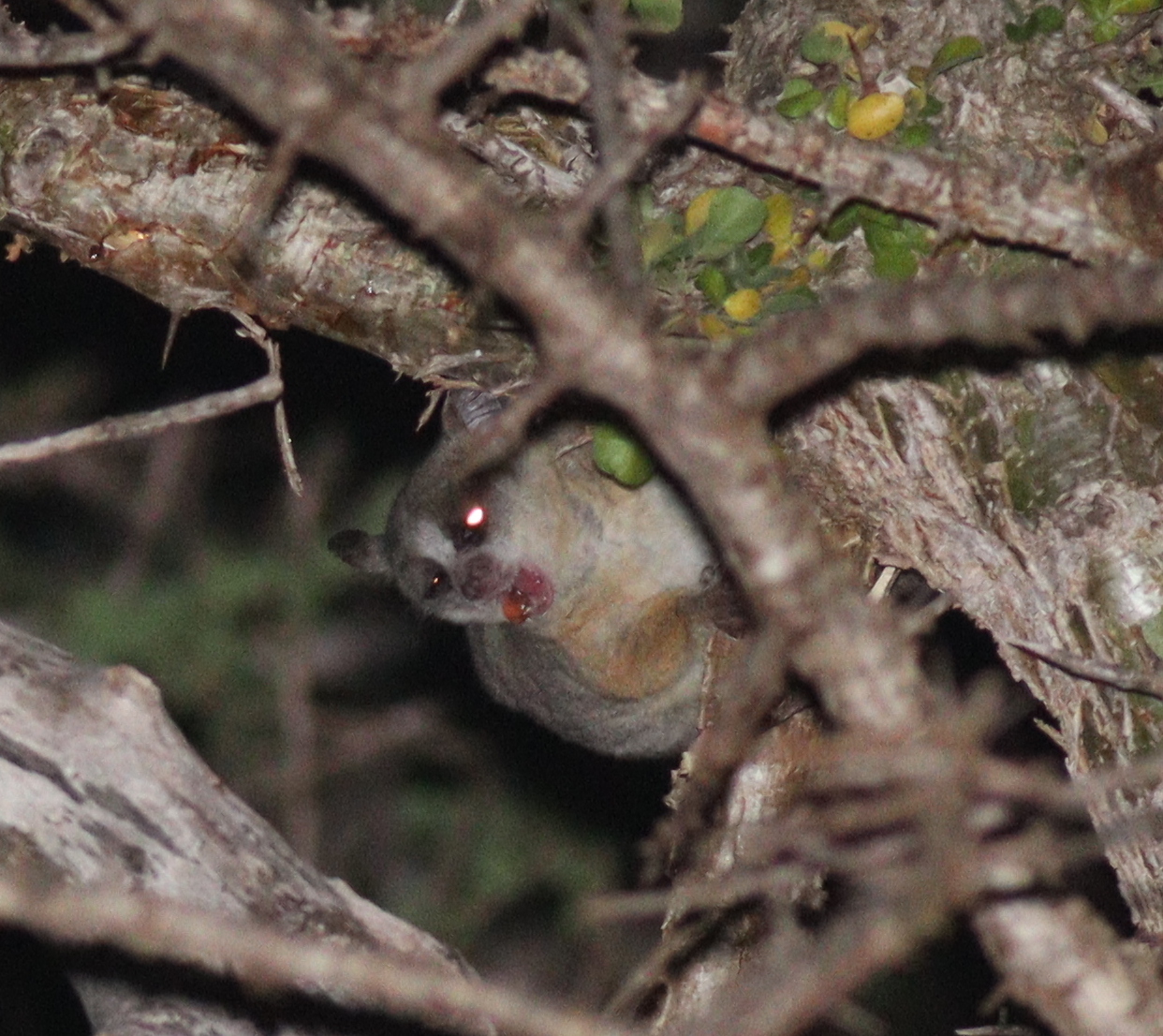
These galagos are active at night. Their diets include insects, tree gum, and fruit, with food use varying as resources change.
Their ears can move independently to help locate sounds. Powerful hind limbs help them move between feeding sites, while their long tails aid balance.
By day, sheltered resting places such as tree hollows and dense tangles provide cover.
Small animals need living connections
The northern lesser galago is listed as Least Concern, but local woodland clearance and wildlife capture can still cause harm. A broad range does not protect every population.
Keeping trees and connected cover helps preserve both feeding places and daytime shelter. Appreciating galagos in the wild also keeps attention on their natural behavior.
A Senegal galago's leap lasts only a moment. Behind it lies a remarkable combination of anatomy, stored energy, balance, and a life shaped by darkness.
Photo credits
Featured image: 240614 Senegal bushbaby.jpg — 名古屋太郎, CC BY 4.0.

Body image 1: Galago senegalensis 176011813.jpg — Jan Ebr, CC BY 4.0.

Body image 2: Galago senegalensis 176041487.jpg — Jan Ebr, CC BY 4.0.

Images supplied at up to 1,280 pixels wide for web display; smaller originals are retained at their original size. Crops or rotations are identified in their credits and captions.