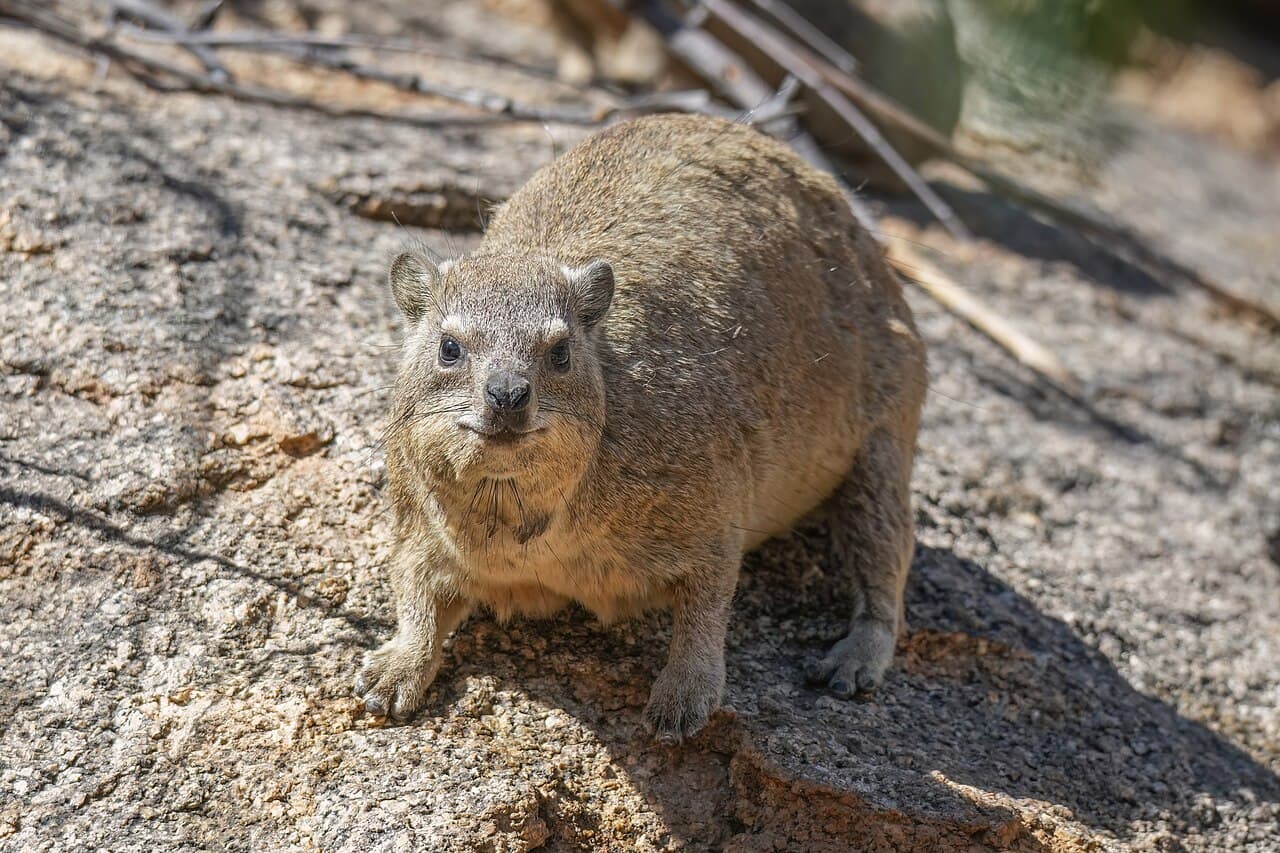
A rock hyrax may look like a large guinea pig, but its family tree leads toward elephants and sea cows. This surprising relationship makes a familiar-looking little mammal a reminder that appearance can hide evolutionary history.
The rock hyrax, Procavia capensis, is also called a dassie. It is neither a rodent nor a miniature elephant. It belongs to its own mammal order, with a long history of its own.
What connects a hyrax and an elephant?
The San Diego Zoo Wildlife Alliance explains that hyraxes and elephants share an ancestor. Similarities in their teeth, feet, and skulls help tell that evolutionary story.
A shared ancestor does not mean a living elephant turned into a hyrax. It means their family lines connect farther back in time, much as branches meet at a tree's trunk.
Their very different body sizes show how much relatives can change as they follow separate paths.
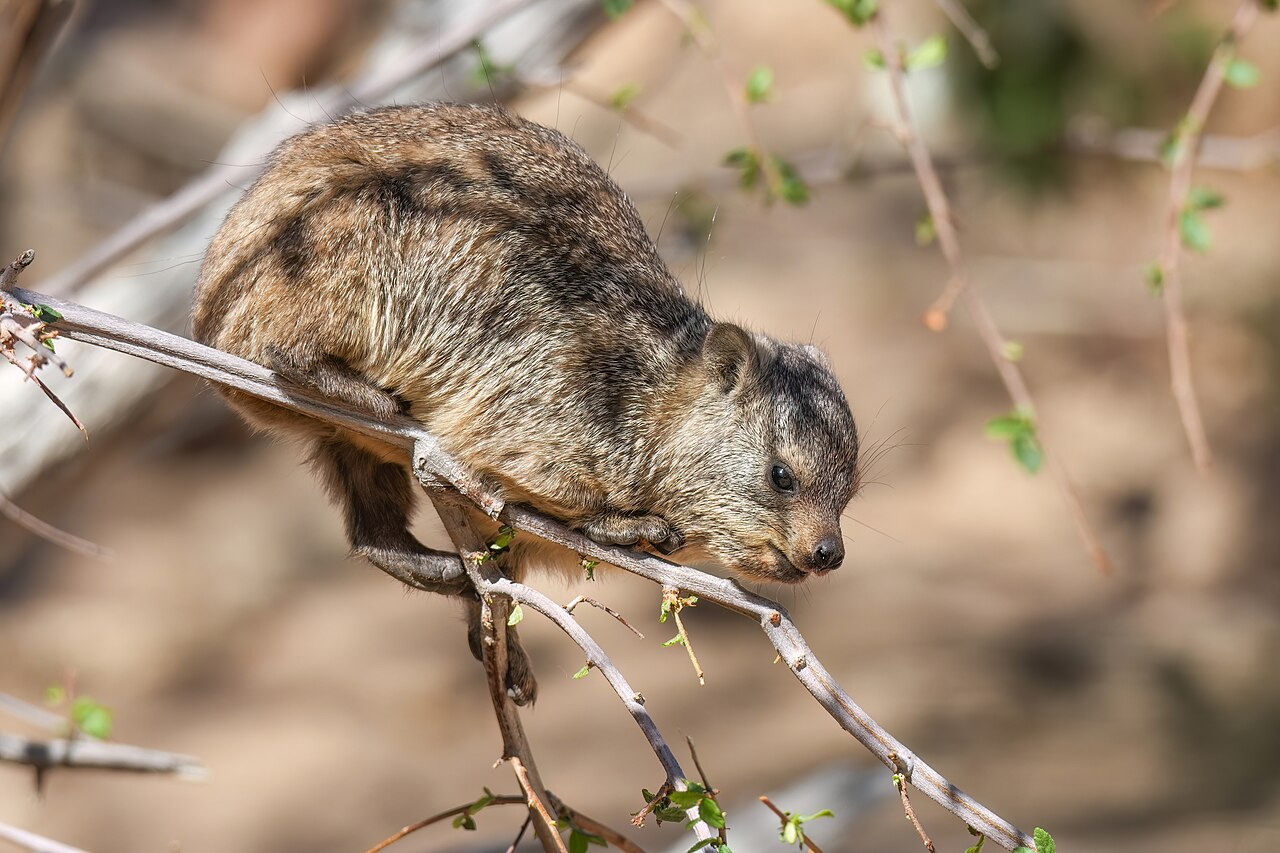
Feet made for holding on
A hyrax's feet have soft, bare pads. Glands keep the pads moist, improving their grip against rock surfaces.
Animal Diversity Web describes these pads as an important part of the animal's climbing equipment. A round body can therefore belong to a surprisingly capable climber.
Rock crevices provide shelter from predators and difficult weather. Hyraxes also climb vegetation, so their name does not describe every surface they use.
A social life around the rocks
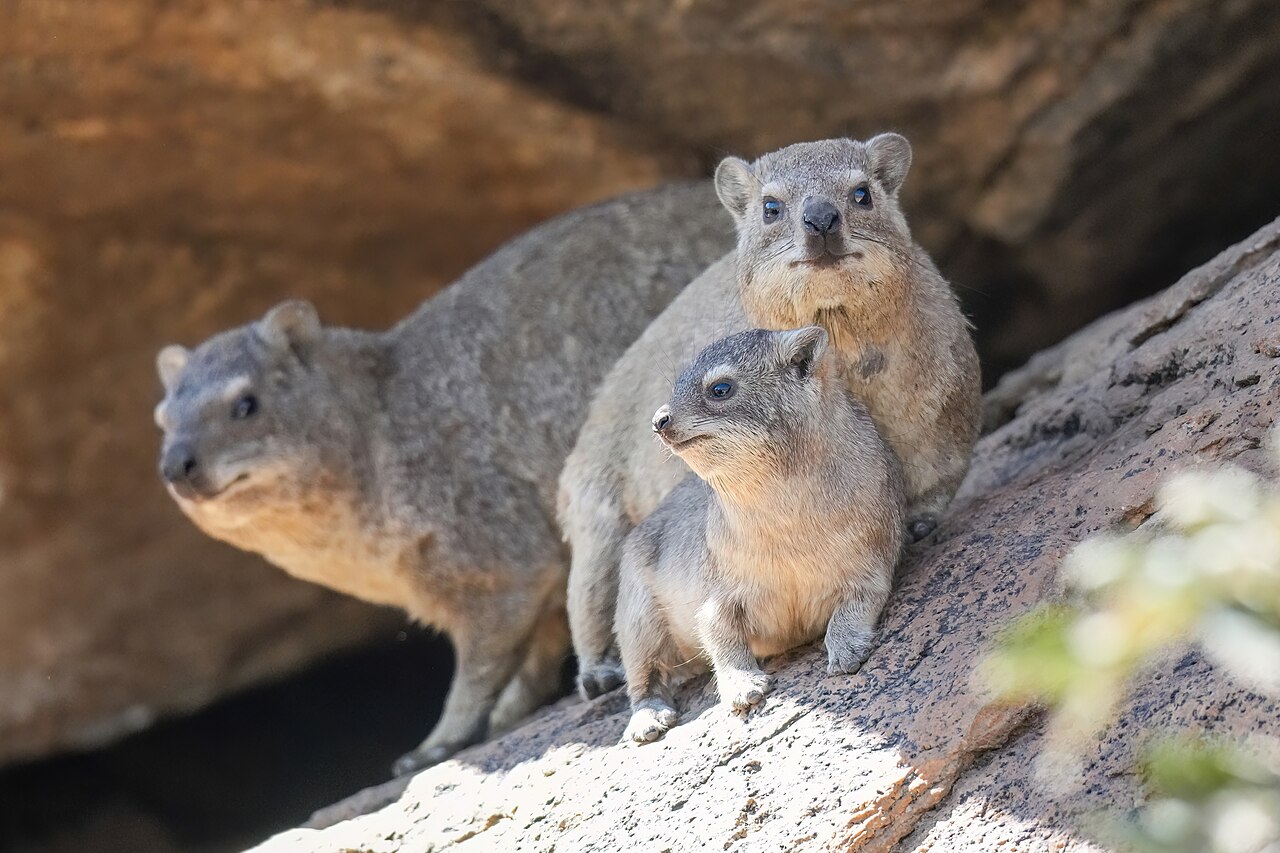
Rock hyraxes occur across much of Africa and parts of the Middle East. They often live in groups, using rocky shelters and nearby feeding areas.
They eat plants, including grasses and leaves. Group members use sounds to communicate, and alarm calls can send animals toward cover.
Young arrive well developed, with fur and open eyes. For a small mammal, the months-long pregnancy is another unusual part of its life.
A common animal can still be extraordinary
Rock hyraxes are not generally considered globally endangered. Nevertheless, local hunting, habitat changes, and conflict with people can affect them.
Their rocky homes are also part of a wider food web, providing shelter for prey and hunting opportunities for predators.
The next time a hyrax pauses on a boulder, look beyond its cuddly outline. Gripping feet and an unexpected family history make it one of nature's most rewarding surprises.
Photo credits
Featured image: 188 Rock hyrax in Damaraland Photo by Giles Laurent.jpg — Giles Laurent, CC BY-SA 4.0.

Body image 1: 189 Rock hyrax climbing a tree in Damaraland Photo by Giles Laurent.jpg — Giles Laurent, CC BY-SA 4.0.

Body image 2: 190 Rock hyrax family in Damaraland Photo by Giles Laurent.jpg — Giles Laurent, CC BY-SA 4.0.

Images supplied at up to 1,280 pixels wide for web display; smaller originals are retained at their original size. Crops or rotations are identified in their credits and captions.