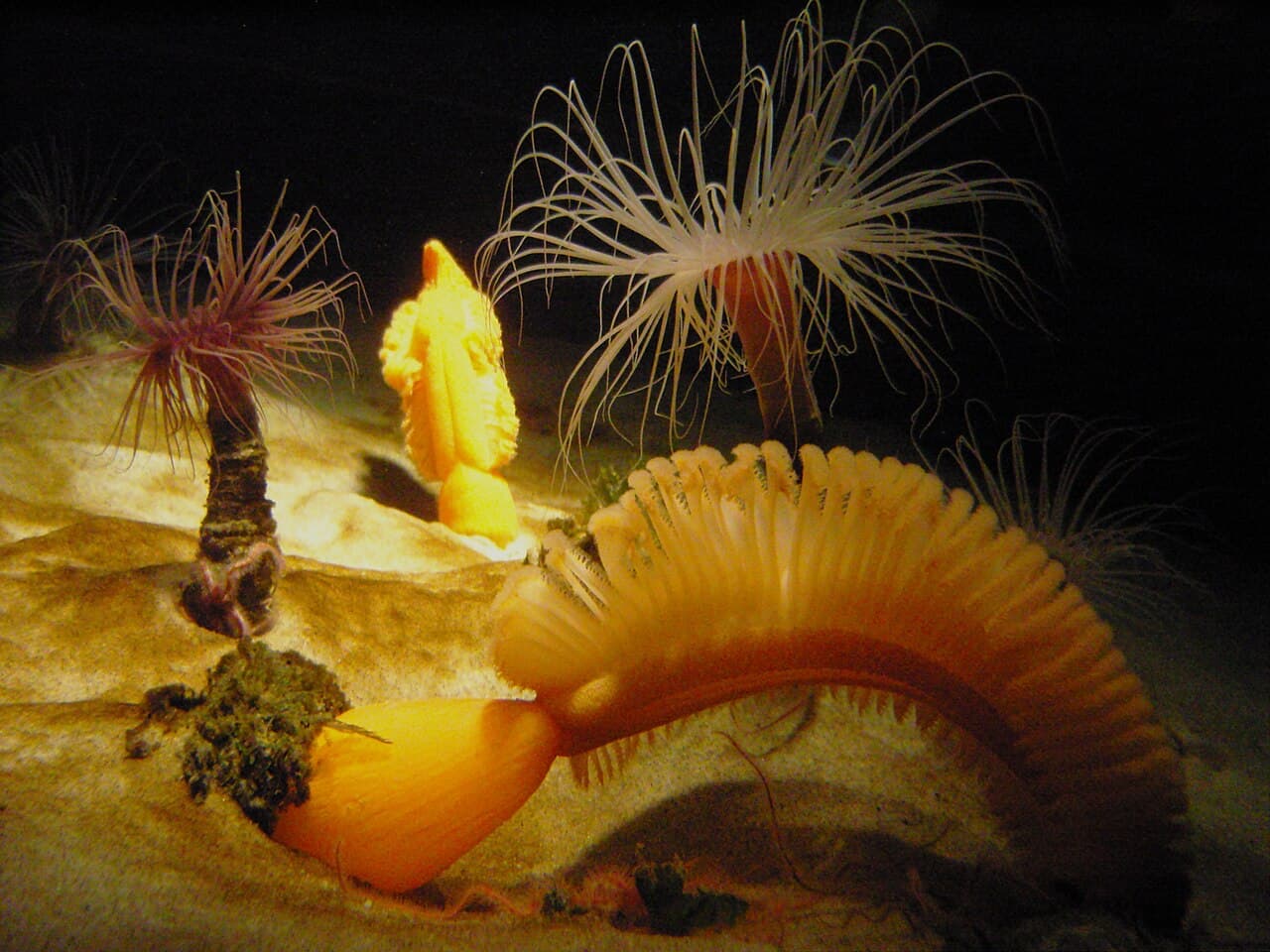
What looks like a feather planted in the ocean floor is actually a community of tiny animals. A sea pen brings many small polyps together in one branching colony.
Look closer, and the resemblance to an old writing quill becomes even more surprising. The “stem” and “feather” are living parts with different jobs.
One Colony, Many Little Workers
Sea pens are relatives of corals and sea anemones. Their polyps are small, anemone-like animals.
According to Monterey Bay Aquarium, the primary polyp becomes the stalk and the bulb that anchors the colony in soft sediment. Other polyps form the branches.
Some capture food. Others handle reproduction or help move water through the colony. This division of work allows the whole structure to function together.
Meet the Orange Sea Pen
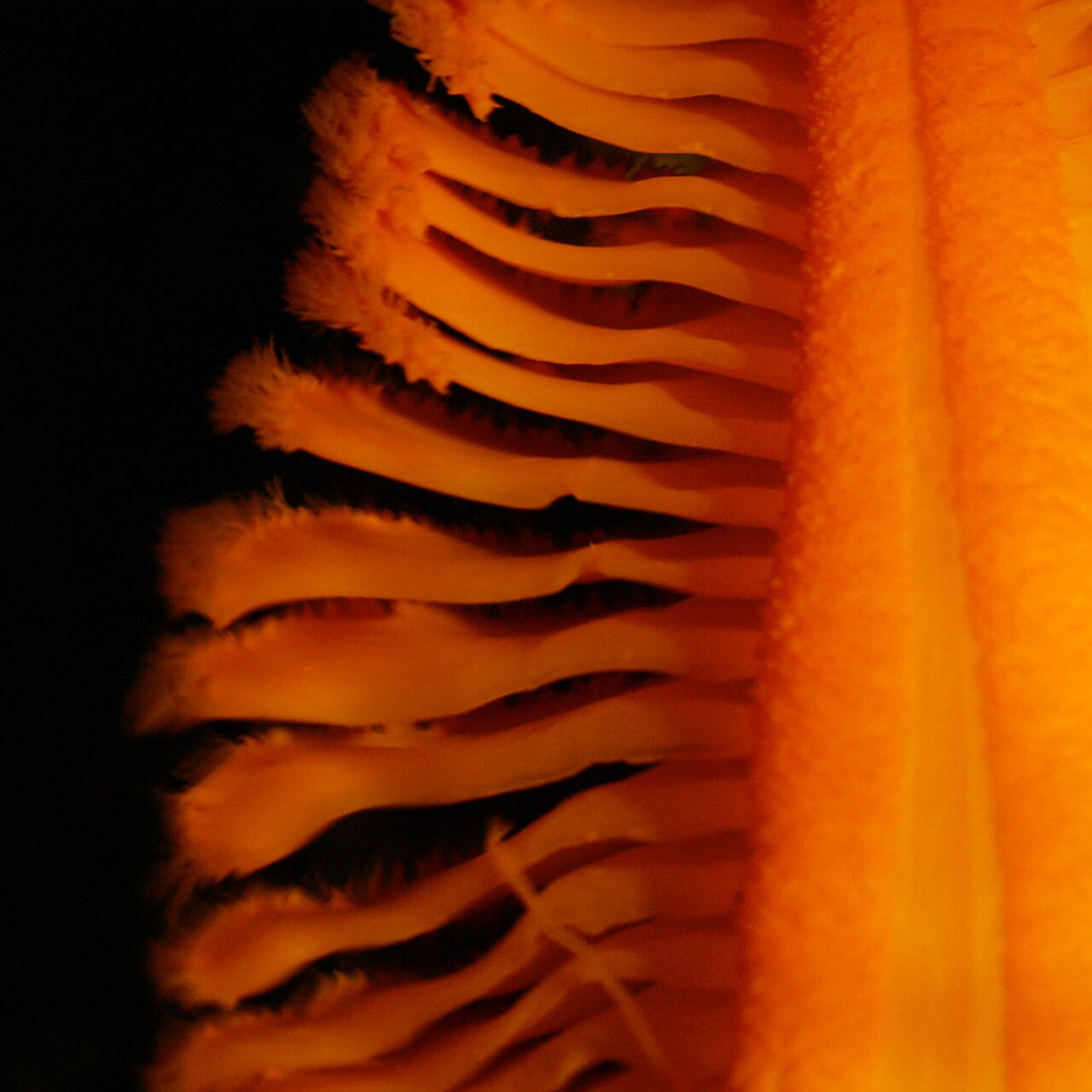
Sea pen is a common name for many species. The photographs here show the orange sea pen, Ptilosarcus gurneyi, a species from the Pacific coast of North America.
The University of Michigan's Animal Diversity Web account describes it as anchored in soft or sandy bottoms. It can reach about 46 centimeters in height.
Its branching body rises above the sediment, placing its feeding polyps in the water around it. Drifting plankton supplies its meals.
A Feather That Can Withdraw
A sea pen is anchored, but it is not as rigid as a plant stem. When disturbed, it can release water and contract toward or into the sediment.
Water helps support its expanded form. Letting that water out changes its shape dramatically.
The orange sea pen also begins life very differently from an adult. After spawning, a swimming larva settles and develops into a polyp. More polyps then grow from that starting structure.
Can Sea Pens Glow?
Monterey Bay Aquarium notes that sea pens can give off greenish light when stimulated. This ability adds another layer of wonder to an animal already easy to mistake for something else.
The sight of a living colony giving off light adds another reason to look carefully at animals that seem, at first, so plant-like.
A Seabed Worth Watching
Sea pens are part of a living seabed community. Sea stars and some nudibranchs feed on them. The aquarium reports declines in parts of Puget Sound, where the cause has not been fully established.
Those changes are a reminder that even a sandy bottom can hold a rich web of life.
A sea pen rewards a second look. What first seems like a simple feather becomes a colony, a feeding system, and a small example of how many lives can work together beneath the waves.
Photograph Credits
Featured image: Fred Hsu, CC BY-SA 3.0. Resized for display. Orange sea pen at Monterey Bay Aquarium.

Body image 1: Minette Layne, CC BY-SA 2.0. Resized for display. A close view of Ptilosarcus gurneyi photographed in Seattle.

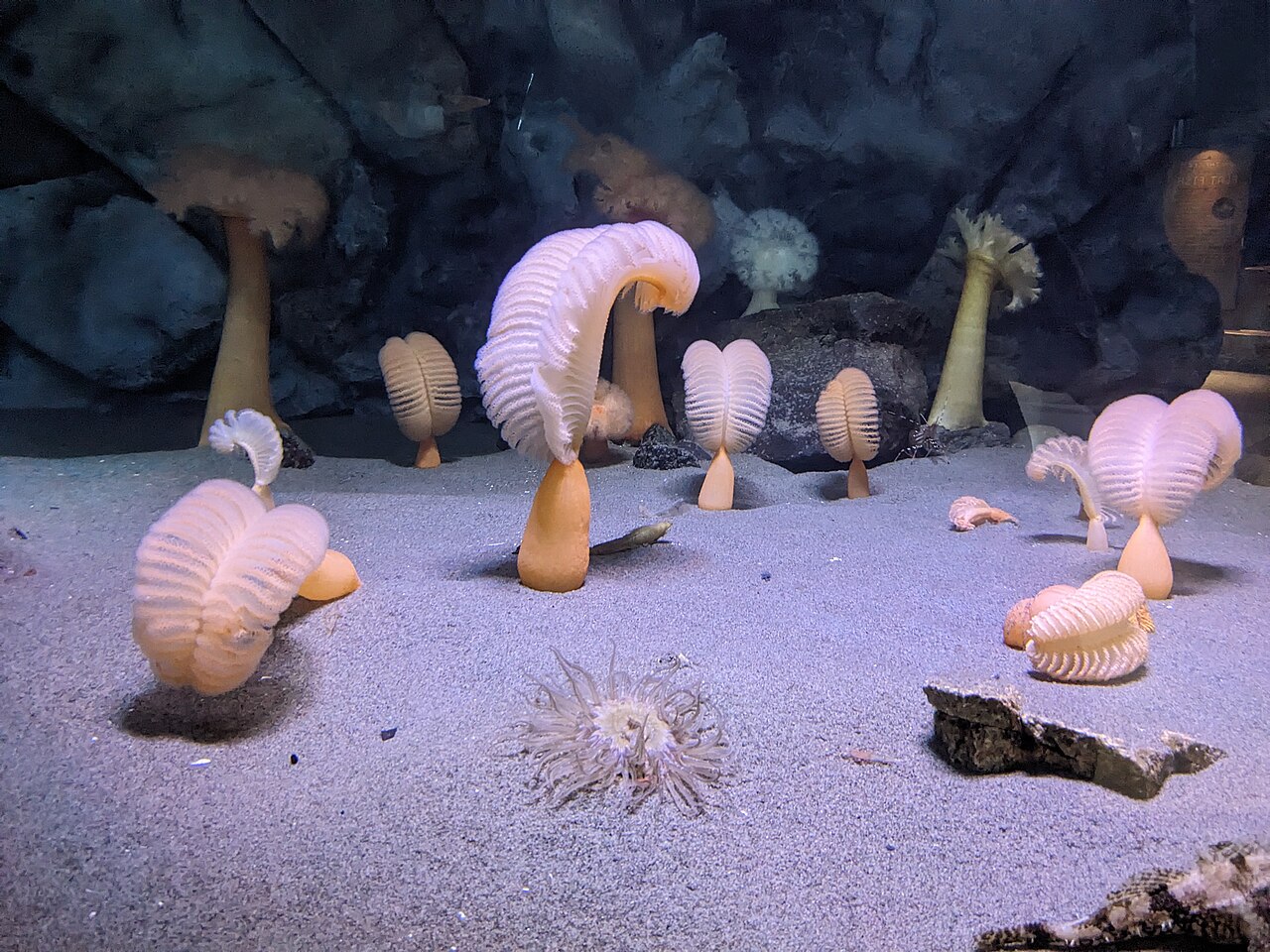
Body image 2: Jlahorn, CC BY-SA 4.0. Resized for display. Orange sea pens photographed in Vancouver, British Columbia.
