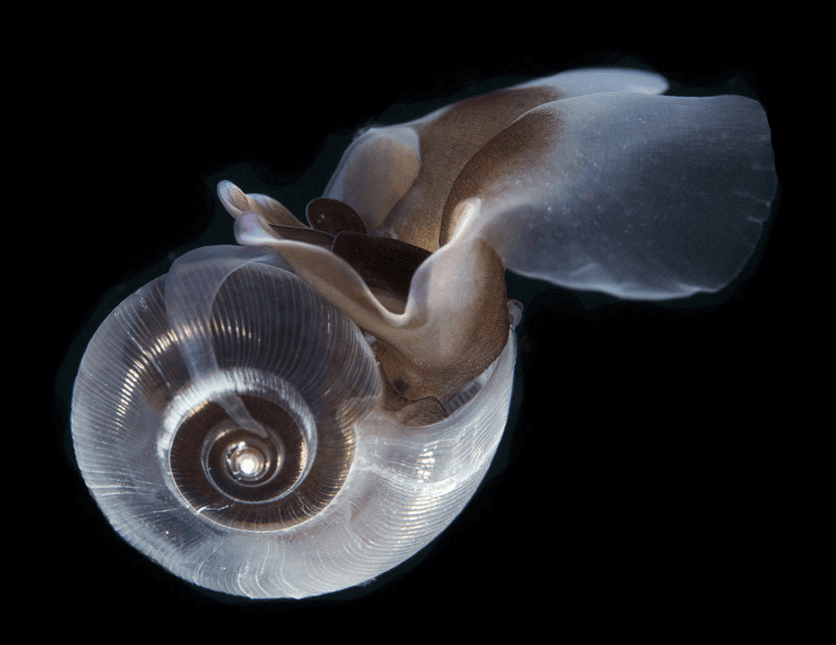
A snail does not have to crawl. A sea butterfly can beat two wing-like flaps and swim through open water, carrying a delicate shell along for the journey.
“Sea butterfly” commonly refers to shelled pteropods, a group of marine gastropods. The images here focus on Limacina, the small coiled forms often used to explain these animals.
A snail built for the water column
The flaps are modified parts of the muscular foot found in other snails. Instead of moving over a surface, they work through the surrounding water.
The Monterey Bay Aquarium comparison of sea butterflies and sea angels distinguishes these shelled swimmers from their shell-free predatory relatives.
The two names sound equally gentle, but sea angels can eat sea butterflies. A close relationship does not prevent one animal from becoming another's meal.
Small bodies, wider connections
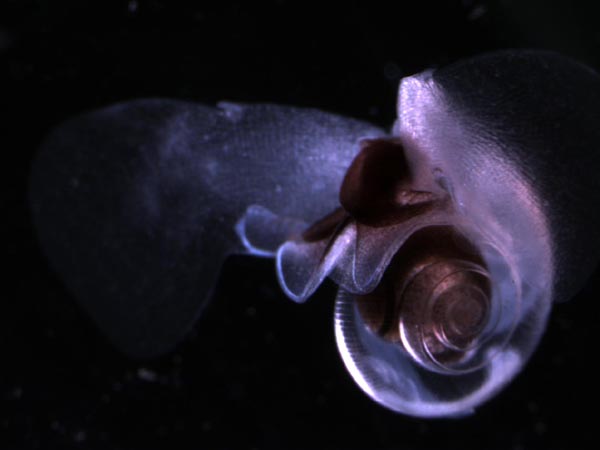
Sea butterflies belong to plankton communities and are food for other marine animals. Their small size does not make them unimportant.
A predator may depend on many such tiny meals. Changes in an abundant small animal can therefore matter beyond the individual swimmer.
NOAA's ocean-acidification programme studies pteropods as part of the foundation of marine food webs.
A shell sensitive to chemistry
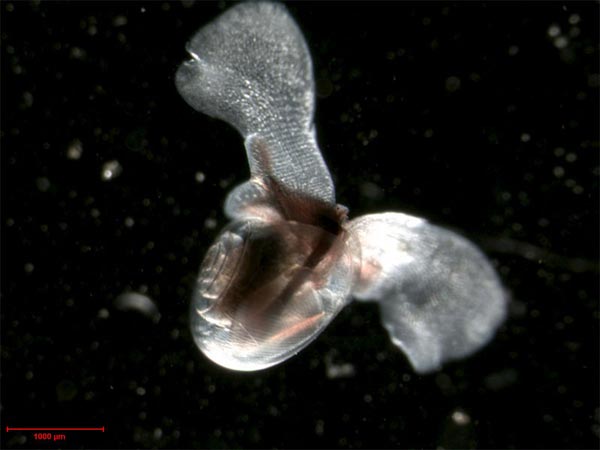
Many sea butterflies build thin shells from calcium carbonate. As seawater absorbs more carbon dioxide, its chemistry changes and can make shell-building harder.
NOAA research off the US West Coast has examined effects on pteropod shell development. Conditions vary, so one experiment should not be treated as the fate of every sea butterfly everywhere.
The larger lesson is a connection between an almost transparent shell and a changing ocean.
A sea butterfly's fluttering movement lasts only a moment in view. Learning about it reveals why even the smallest ocean residents deserve a place in our attention.
Photo credits
Featured image: Limacina helicina (10.7717-peerj.2774) Figure 2 (cropped).png — A. Chichvarkhin (2016), PeerJ 4:e2774; CC BY 4.0.

Body image 1: LimacinaHelicinaNOAA.jpg — Photo by Russ Hopcroft, University of Alaska, Fairbanks.; Public domain.

Body image 2: Limacina helicina 7.jpg — Russ Hopcroft, Institute of Marine Science, University of Alaska Fairbanks (UAF) and NOAA; Public domain.

Images supplied at web display size where available; the sea-butterfly research photograph is a credited crop.