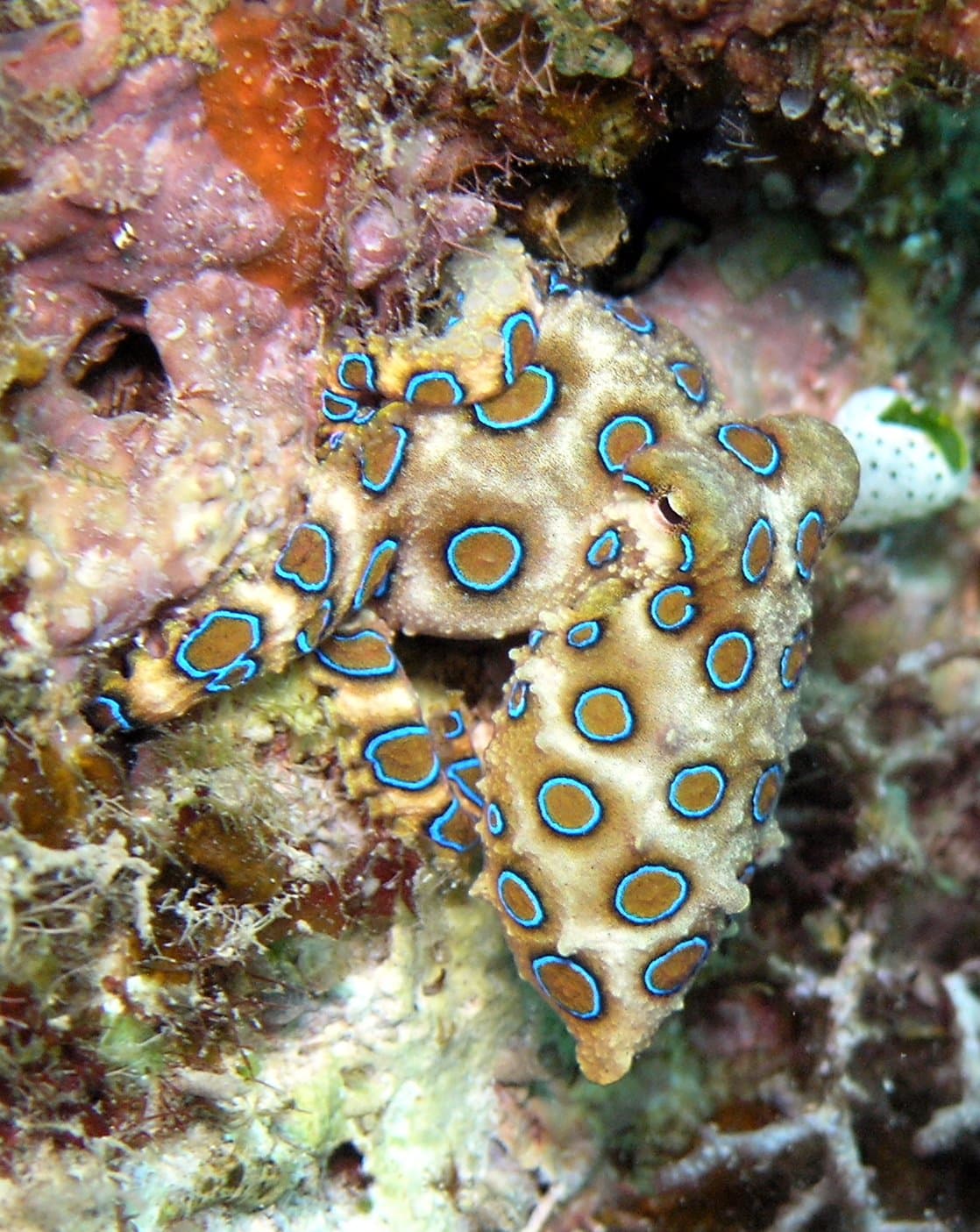
Bright blue markings can appear on an octopus small enough to hide in a shell or rocky crevice. The colors are beautiful, but they carry a serious message: leave the animal undisturbed.
Blue-ringed octopuses belong to the genus Hapalochlaena. The name covers several species, so not every photograph shows exactly the same arrangement of rings and lines.
Color that makes a message visible
At rest, an individual may blend into its surroundings. When disturbed, its blue markings become conspicuous against a contrasting body.
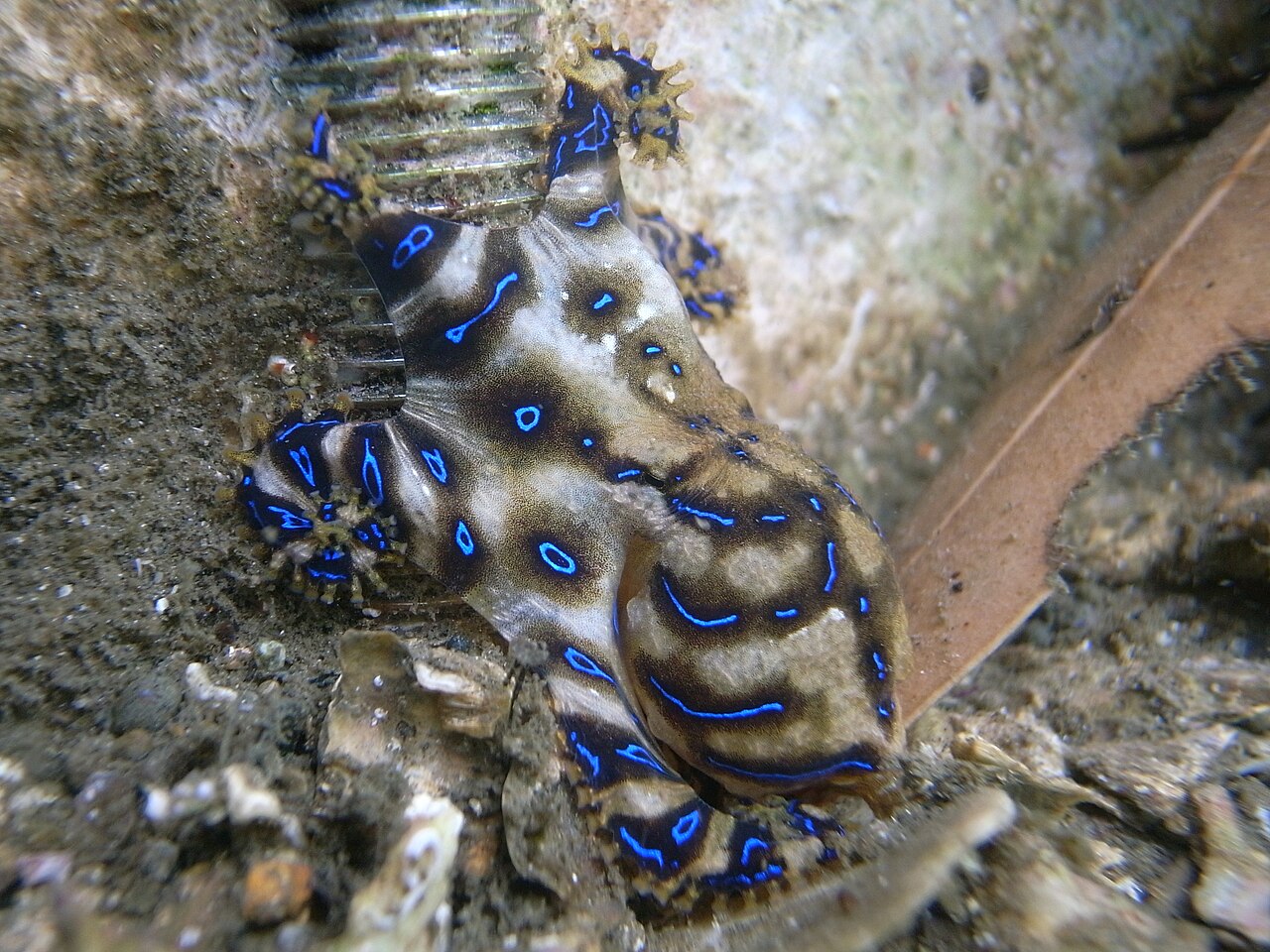
The Australian Museum's blue-lined octopus account explains this warning display in Hapalochlaena fasciata, one of the blue-ringed group.
The blue-lined form illustrates why careful identification matters: the familiar group name can include an animal with lines as well as rings.
A shy predator in a small shelter
These octopuses hunt small animals, including crustaceans and fishes. Venom helps subdue prey.
They also seek cover. A crevice, ledge, or discarded shell can offer shelter to an animal that has no protective external shell of its own.
The Australian Museum's Lizard Island field guide records blue-ringed octopuses among rubble, shells, and reef habitat. It also notes that some older species records were misidentified.
Admire without handling
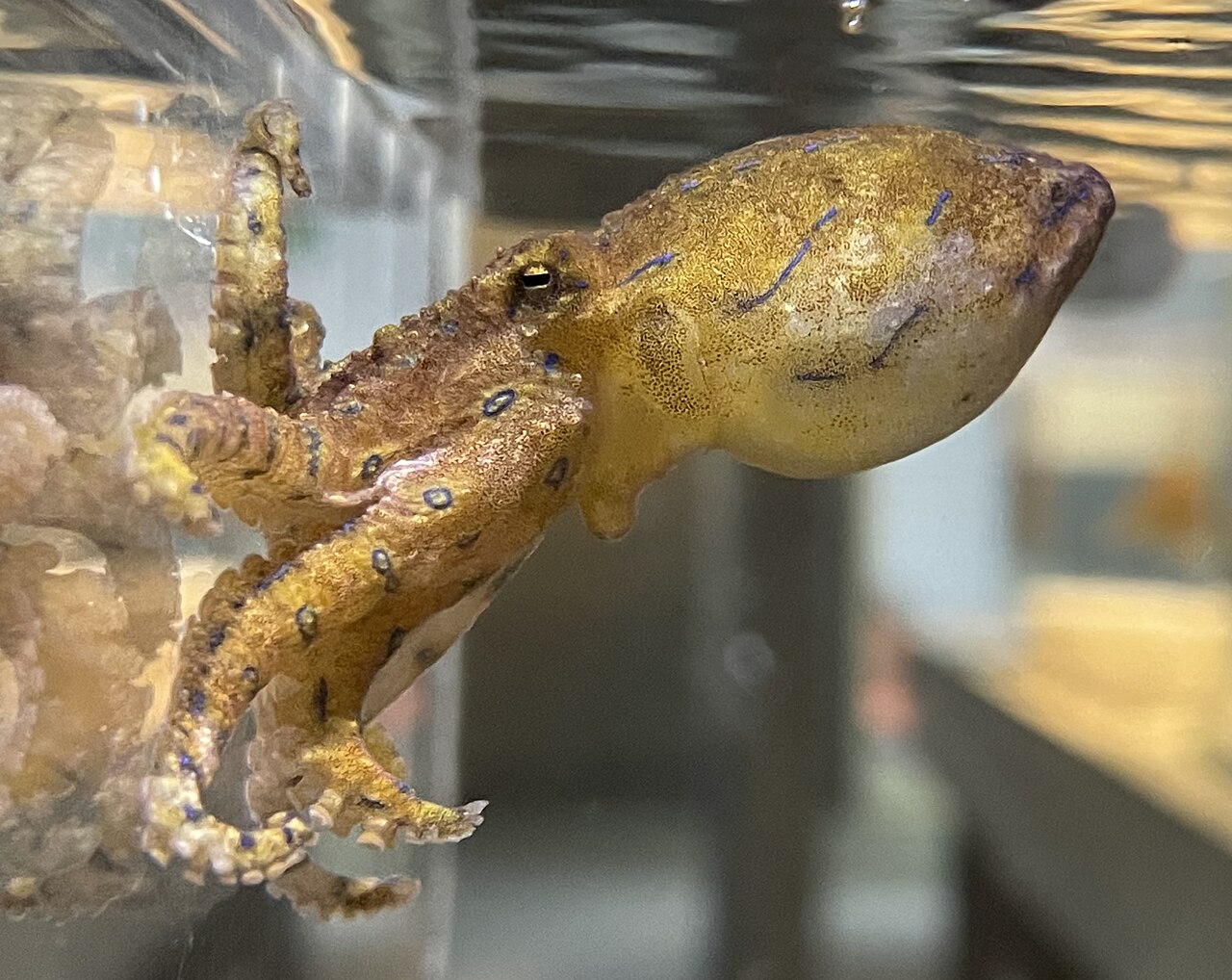
The group's venom can be dangerous to people. Avoid touching the animal or picking up occupied shells, even if the octopus appears calm. A suspected bite requires immediate emergency help.
The point is respectful observation, not fear. The museum describes these octopuses as shy animals that generally prefer cover to confrontation.
A bright detail in a busy habitat
An octopus's home includes prey, hiding places, and surrounding reef or shore life. Keeping that habitat intact protects more than one striking animal.
Those blue markings invite a closer look through a camera or from a safe distance. Understanding their meaning makes the encounter more remarkable—and lets the small hunter continue its day.
Photo credits
Featured image: Hapalochlaena lunulata2.JPG — Jens Petersen; CC BY 2.5.

Body image 1: Blue-ringed octopus (Hapalochlaena maculosa) (8593173385).jpg — Sylke Rohrlach from Sydney; CC BY-SA 2.0.

Body image 2: Hapalochlaena fasciata Toba3.jpg — Totti; CC BY-SA 4.0.

Images supplied at web display size where available.